Reform objectives and policy measures agreed at the recent Third Plenum go well beyond the economic restructuring goals that are at the center of the 12th Five-Year Plan (2011-15). China now has a more detailed and more comprehensive road map for development and reform than ever before.
It includes many non-economic objectives, including greater judiciary independence, closing the reeducation-through-labor camps, promoting social fairness and equality, relaxing family planning restrictions, and reducing the application of the death penalty. This amounts to nothing less than a plan for a second transition. The first transition, mainly focused on productivity growth, which was set in motion by the Third Plenum in December 1978 and reinforced by the Third Plenum of November 1993, has been essentially accomplished.

The need for economic restructuring to improve the sustainability of growth and create a more harmonious society was recognized over a decade ago and stood at the center of the 11th Five-Year Plan (2006-10). Little progress was made, partly because the international financial crisis that started in 2008 in the United States intervened.
To create jobs and restore growth momentum, China launched a massive stimulus program in late 2008. It was very successful in achieving those objectives, but at the expense of domestic economic rebalancing. Although the relative size of China's external surplus declined sharply, dependence for growth on investment, much of it debt-financed, increased. Fortunately, international economic circumstances are now more favorable for pursuing domestic rebalancing objectives.
It is extremely important for the world that China succeeds in its second transition. In recent years China has not only become the world's second-largest economy, largest exporter and largest player in many commodity markets, but also the world's most important growth engine. However, the big question is whether the ambitious reform plans agreed last week can be achieved without significant State-owned enterprise reform.
Although Third Plenum documents call for fair competition and the elimination of preferential policies underlying the monopoly power of some SOEs, they don't speak much about significant SOE reform, which is essential if other Third Plenum objectives are to be achieved.
The leadership decided that China's unique system of "consultative democracy" performs well and that strict control by the CPC remains essential for national development. If implemented as planned, the decisions should facilitate continued rapid economic growth, while promoting social fairness and thus, hopefully also, stability.
But the key to a successful second transition is obviously implementation. In the economic arena, some of the more difficult challenges are:
How to reform the fiscal system, including local government borrowing powers, so as to reduce the dependence of many local governments on extra-budgetary revenues from land leases and improve the balance between local expenditure mandates and local revenues? This is critical for a number of reasons, including providing equal access to social services for the more than 230 million migrants working and living in urban areas without an urban hukou and promoting capital market development.
How and when to establish rural land markets to better protect the interests of farmers and migrants, promote productivity growth and social fairness, while reducing the scope for corruption in using agricultural land for non-agricultural purposes?
How and when to establish a formal deposit insurance system to facilitate the licensing of private banks and to relax controls on deposit interest rates?
How to reduce the monopoly power and other privileges of some SOEs so as to promote fair competition and ensure that markets will indeed become a decisive factor in the allocation and use of financial resources, as mandated by the Third Plenum?
How to better protect the environment and labor rights without reducing China's international competitiveness and its attractiveness to foreign investors?
How to reform monetary and financial policies so as to increase the efficiency of financial intermediation, deepen capital markets and increase reliance on indirect controls on bank liquidity and credit expansion?
How to further improve access by new and small enterprises to financial resources?
How to further open the capital account, promote internationalization of the renminbi and increase the flexibility of China's exchange rate?
The challenges facing China today are different from the ones the country faced in 1978 or 1993, but they are no less daunting. The main question now is not where to go, but how to get there.
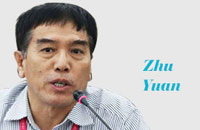
The author is professor at the School of Advanced International Studies (SAIS) of Johns Hopkins University. He served as chief of the World Bank's resident mission in China from 1993-97.
(China Daily 11/21/2013 page9)
 New type of urbanization is in the details

Copyright 1995 - . All rights reserved. The content (including but not limited to text, photo, multimedia information, etc) published in this site belongs to China Daily Information Co (CDIC). Without written authorization from CDIC, such content shall not be republished or used in any form. Note: Browsers with 1024*768 or higher resolution are suggested for this site.
License for publishing multimedia online 0108263 Registration Number: 130349