Second-child policy will restore social balance
 |
| CAI MENG/CHINA DAILY |
 |
|
Mu Guangzong [Photo/China Daily] |
The one-child policy was implemented in the late 1970s to check the rise in China's population. And the decision to ease it shows the wisdom and spirit of the Party with Xi Jinping as the core to overcome the increasingly severe demographic challenge the country faces today.
The low fertility rate under the one-child policy became the "demographic new normal", which today is not conducive to building a harmonious society.
The fifth census in 2000 showed that China's fertility rate was 1.22, which further declined to 1.18 in the sixth census in 2010. Among the challenges brought about by the low fertility rate are the shrinking working-age population and a rapidly aging society. And it's challenges such as these the second-child policy can help overcome, albeit gradually, and restore the demographic balance in the country. But the second-child policy will take about a couple of decades to solve the problems of workforce shortage and rising aging population.
The second-child policy will also facilitate the development of a harmonious society, and ensure long-lasting stability and prosperity of China. At the macro level, the second-child policy will help improve the country's unbalanced demographics, striking a balance between working-age and aging populations.
However, the success of the policy will depend on the percentage of couples having two children.
Demographers generally assume that allowing all families to have two children helps ease the pressure of aging population on society as a whole. But it cannot stem the rise of aging population in terms of numbers. And it may not necessarily arrest the decline in the labor force. Which means the benefits of allowing all families to have two children is real but its effects could be limited, because it is a remedial measure, not a catalyst to a fundamental demographic change.
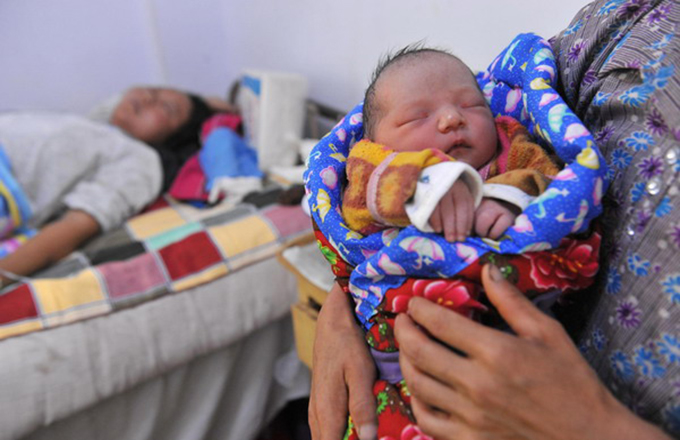
According to official figures, 17.5 million newborns were registered in China last year-or about 1 million more than in 2015, which was far less than expected. Although demographers have predicted a small baby boom this year, we should not expect the actual number of newborns to be very high compared with previous years because of many couples' reluctance to have two children owing to certain economic and social factors.
According to a recent All-China Women's Federation survey, 53.3 percent of the respondents said they don't want to have two children, with 26.2 percent saying they haven't yet decided whether to have two children. Only 20.5 percent of the respondents said they have decided to have two children. With more than half of the childbearing couples deciding not to have two children, how can we have a baby boom?
Since demographics directly influence social and economic development, China should pay greater attention to the challenge of aging population in the coming decade. And a good way of meeting the challenge is to help increase the labor force, which can be done by encouraging couples to have two children, by implementing favorable social policies, improving the public service system and reducing the childbearing and education costs.
The author is a professor at the Population Research Institute of Peking University.