China-ASEAN ties still face challenges
On Sunday, China and ASEAN members highlighted the achievements their strategic partnership has made over the past 15 years, and agreed to deepen bilateral cooperation, according to a joint communiqué of the 50th ASEAN Foreign Ministers' Meeting in Manila.
On the South China Sea issue, Chinese Foreign Minister Wang Yi and his counterparts from the ASEAN member states welcomed the approval of the framework for the Code of Conduct in the South China Sea and pledged to hold further negotiations.
During the past half a century the 10-member bloc has made notable progress in establishing regional mechanisms and maintaining unity within the Association of Southeast Asian Nations. The ASEAN Regional Forum, for one, is the largest multinational security dialogue in the Asia-Pacific region. And the regular participation of regional powers, including the Democratic People's Republic of Korea which often keeps away from international dialogues, means ASEAN continues to have a big say in regional affairs despite facing challenges.
ASEAN has also managed to keep its member states together most of the time by abiding by the principle of non-interference in other countries' internal affairs. It also has stayed true to the mission of building a community of shared security and economic prosperity in Southeast Asia.
Aspiring to balance the demands of all its member states without making any party "uncomfortable", ASEAN also influences, though in limited capacity, the security agendas on East Asian and Asia-Pacific affairs. It cannot risk denting the hard-earned unity within the bloc, nor can its diplomatic decision-making be exempt from intervention in the face of escalating strategic competition between major powers.
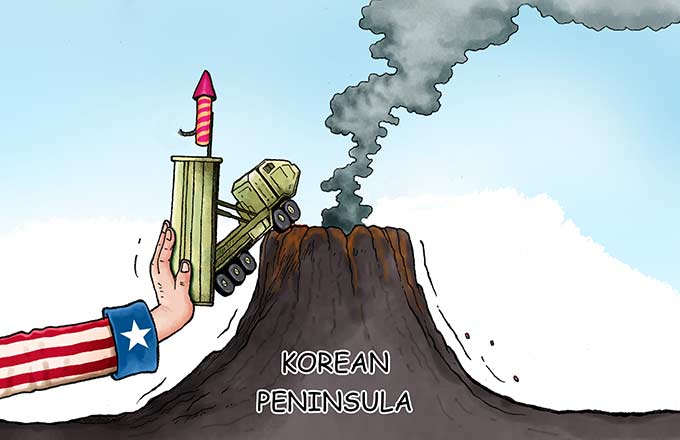
The just-concluded meeting in Manila suggests the bloc is striving to participate more actively in non-ASEAN security issues such as the denuclearization of the Korean Peninsula.
On Saturday, the ASEAN foreign ministers released a statement expressing "grave concerns" over escalating tensions on the Korean Peninsula, as well as Pyongyang test-firing intercontinental ballistic missiles in July and conducting a nuclear test last year. They also urged the DPRK to fulfill its nuclear obligations and abide by the UN Security Council's resolutions, marking a turning point for ASEAN's security policy and ASEAN-DPRK ties.
ASEAN member states have good reason to make efforts to calm the occasionally rough geopolitical waters in the South China Sea, not only for regional security but also for shared regional prosperity. So does China.
In this regard, the approval of the Code of Conduct framework by China and ASEAN is an inspiring achievement that carries multiple implications.
More important, the situation in the South China Sea will keep improving, as China and ASEAN reached a consensus without third-party interference. Shared interests under the framework of the 21st Century Maritime Silk Road (which, along with the Silk Road Economic Belt, is part of the China-proposed Belt and Road Initiative) have convinced most ASEAN economies to let misjudgments be a thing of the past and take the high road to permanent peace and prosperity. The muddled Southeast Asia policy of the Donald Trump administration means the United States may not be a reliable partner to ASEAN.
Challenges to China-ASEAN ties can emerge from many directions, though. A joint statement issued by foreign ministers of the US, Japan and Australia on the sidelines of the Manila meeting called on China and the Philippines to respect last year's "international arbitration ruling", which repudiated Beijing's legitimate sovereign rights in the waters. And certain ASEAN members still seek Western intervention in the hope of containing the rise of China.
The framework for the Code of Conduct, despite not having specific provisions and clauses as of now, is not an "accommodation of Chinese interests". Instead, given the complex nature of the South China Sea disputes, it is arguably the best way to resolve them through constructive interactions, and fully implement the Declaration on the Conduct of Parties in the South China Sea.
The author is a researcher at the National Institute of International Strategy, Chinese Academy of Social Sciences.