Plan to produce a manufacturing powerhouse
 |
|
A pedestrian carries a shopping bag as she passes a giant Apple Inc logo outside a new Apple store, still under development, on Princess Street in Edinburgh, UK. [Photo/VCG] |
One of the reasons the launch of Apple's iPhone 8 in China reportedly drew a muted reaction is Chinese consumers can now get much of what Apple offers in domestically developed smartphones, such as those manufactured by Xiaomi and Huawei.
And smartphones are only one of the technological breakthroughs China has made in recent years. China now leads the world in high-speed railways, mobile payments and e-commerce.
One of the pillars of this innovation-driven growth is the Made in China 2025 strategy introduced by the government in 2015, which aims to boost manufacturing innovation and transform China into a leading manufacturing powerhouse. China has long realized that the world factory model for its economy, based on low-end, lowage, low added-value production, is no longer sustainable. And it has been feeling the pressure of competition both from traditional manufacturing leaders such as Germany and the United States, which are vigorously pursuing a manufacturing renaissance following the global financial crisis, and from emerging economies such as India and Brazil, which now have lower labor costs.
In the emerging fourth industrial revolution, China has to focus on innovation and move up the industrial value chain. This is where the Made in China 2025 strategy comes in. Over the past two years, the plan has been implemented smoothly, yet it has also drawn criticism from some Western countries, who claim that it is an industrial policy based on unfair government support for Chinese companies and forced technology transfers from Western companies in exchange for access to the Chinese market.
Growing anxiety about losing their market share and technological lead to China is understandable, but misplaced. The strategy explicitly embraces the "market-based" principle and sees the government's role as "creating a stable policy environment for enterprises". China is further streamlining government administration by releasing its seventh revision of the Foreign Investment Catalogue, which has introduced a nationwide Negative List and scrapped up to 30 special administrative measures restricting foreign investment.
And as repeatedly pointed out by Premier Li Keqiang, all businesses registered in China, be they domestic or foreign, are considered Chinese businesses and thus entitled to enjoy the policy incentives offered by the strategy. Furthermore, there are no mandatory technology transfer requirements for foreign companies operating in China, and the government has been working hard to protect the intellectual property rights of innovators both domestic and foreign.
Opening-up is another key element of the Made in China 2025 plan, the phrase appears 16 times in the policy document. As Premier Li Keqiang noted at the meeting of the New Champions 2017, the plan does not shut the door on imports of foreign equipment; instead, the plan emphasizes cooperation for win-win results.
However, even as the opportunities for cooperation with Chinese companies have multiplied, the preferential treatment foreign-invested ventures used to enjoy in the early stages of China's opening-up and WTO accession have petered out, and Chinese companies have proven to be formidable in catching up with the latest technological and industrial trends, which has placed them more or less at the same starting point vis-à-vis their Western counterparts in the fourth industrial revolution.
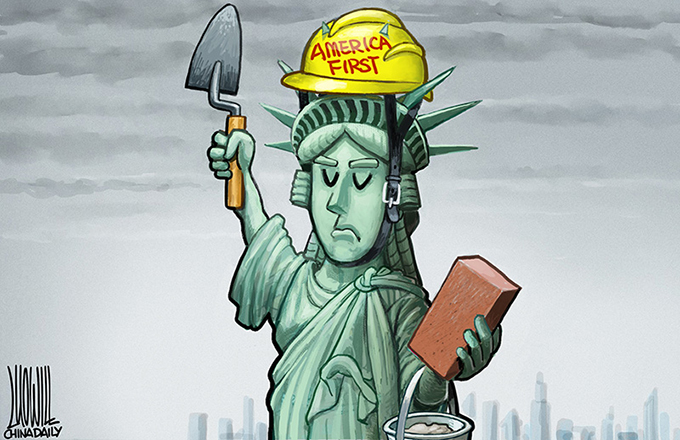
The test, therefore, lies in whether countries can turn competition into win-win cooperation, or succumb to darker instincts of protection. Greater competition is to be welcomed as it lowers costs and fastens innovation. Misguided attempts to hold back the tide would only end up hurting the opportunities for common development and undermine free and fair trade.
Thus China welcomes global cooperation under its Made in China 2025 plan, as it will boost innovation-driven growth. This in turn will benefit more people not just in China but also the world.
The author is a Beijing-based researcher on international studies.