



Ways to revitalize the agricultural sector









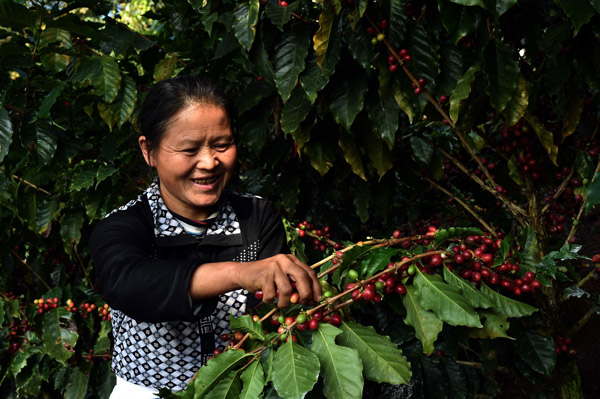
The rural revitalization strategy is part of China's overall strategy to build a prosperous and strong country, which also found mention in the report of the 19th National Congress of the Communist Party of China.
The main aim of the rural revitalization strategy is to help rural residents to lead a better life, and that goal can be achieved only with the strong support of a modern economic system. To improve the mechanism and policy system of integrative urban-rural development, the authorities should change the old relationship between urban and rural areas.
First, they have to establish a unified urban-rural factor market, and take measures to ensure the free flow of factors between urban and rural areas. The economic contribution of the urban economic sector is remarkably higher than that of the rural sector in China, which shows the free flow of production factors has not yet been achieved.
The market for construction land and farming land in urban and rural areas is unbalanced, resulting in the excessively high land price. One way of solving this problem is to promote integrative development between urban and rural areas through marketization of land.
Second, the authorities should change their mindset that the countryside is a "reservoir" of surplus labor and impoverished people that can be used as cheap labor. Rural areas should not be made to bear this heavy burden any more; instead, rural residents should be encouraged to become "modern farmers".
Third, improving agriculture competitiveness should be incorporated in the strategy for improving the overall competitiveness of the national economy. In recent years, China's service industry and manufacturing exports have become more competitive, but the comparative advantages of its agriculture industry are gradually waning. Although the agriculture industry is improving, its international competitiveness is weaker compared with that of the manufacturing industry.
China's agriculture industry cannot afford to lose its competitiveness, and its survival should not depend on high government subsidy. The authorities should take measures to build a strong capital-intensive agriculture industry, along with the technology-intensive manufacturing industry, to achieve a competitive trade pattern, and the rural development campaigns can help achieve that goal.
Fourth, economic policies should help promote the needed adjustment in China's population distribution. At present, labor productivity in urban areas is much higher than in rural areas. But if the urban-rural division is adjusted, the urbanization rate can increase to about 62 percent.
The agricultural GDP will reduce to about 5 percent of China's overall GDP and agricultural population to about 10 percent of China's overall population by 2035, which means a remarkable increase in agricultural labor productivity. By that time China's Engel coefficient-which measures the living standard of a country with a lower coefficient indicating a higher standard of living-is expected to be lower than 20 percent, and the urbanization rate will increase to about 80 percent. But for that, a stronger agricultural sector and higher farmers' income are necessary, which in turn will narrow the income gap between urban and rural residents, and promote integrative urban-rural development.
Fifth, rural policies should be changed. The present urban-rural division and population mismatch are unreasonable, preventing urban-rural integrative development even with supportive policymaking. So the authorities have to change the existing rural policy, in order to promote the integrative development of urban and rural areas.
To achieve the goal of rural revitalization strategy, a series of social and economic policies have to be adjusted. The authorities should develop advanced agricultural technology that can save water and fertilizer and still increase agricultural productivity and improve the rural environment.
Also, the land protection policies should be unified to better safeguard farmland, and the urban-rural administrative division model changed according to the availability of construction land and population density.
Moreover, the urban-rural social governance model should be changed to meet the demands of rising urbanization and population redistribution in urban and rural areas. Accordingly, the land property rights system and the agricultural management system should also be changed to facilitate balanced urban-rural development.
The author is a researcher in rural development at the Chinese Academy of Social Sciences.





