



US economic show marred by zero-sum thinking









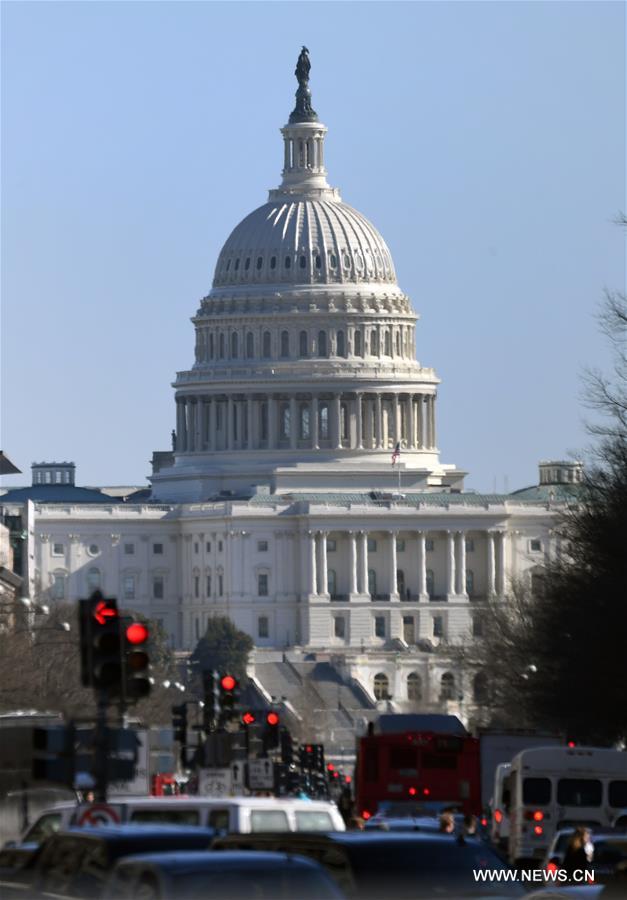
The brightest point for US President Donald Trump in his first year in office is definitely the economy-the lowest jobless rate this century, a relatively healthy GDP growth, and the robust securities and financial sectors thanks partly to deregulation and other economic incentives, have injected vitality into the US market. But the economic performance has failed to fully stabilize US society, as was expected.
The Charlottesville racist violence, the Las Vegas shooting, the terrorist truck attack in New York City, in which eight people were killed and nearly a dozen injured, and other violent incidents testify to the US' failure to address the social malaises and contradictions.
In the face of such problems, Trump has chosen to respond either by following the traditional but unhelpful Republican position or by resorting to a more radical "nativist" agenda, as represented by the "immigration ban". For a "country of immigrants", such an extremely conservative stance on immigrants will have negative effects, and the social fissure widened by the Trump administration is unlikely to be bridged in the coming years.
On the global front, Trump has vowed to "re-strike a balance" between US economic interests and security strategy, by "swapping strength for economic benefits" rather than "swapping strength for international leadership", a strategy advocated by his predecessors. Only four days after assuming office, Trump withdrew the US from the Trans-Pacific Partnership agreement-widely seen as a move to erase his predecessor Barack Obama's legacy and bid adieu to multilateralism. Like Obama, Trump realizes the US needs a role adjustment in international relations. But the US' withdrawal from global bodies and agreements is not the adjustment it needs.
Trump first visited the Middle East in May 2017, in a move to highlight the US' return to the region. But the "US' return" has neither struck the much-needed balance among the Middle East players in terms of interests nor created more space for US maneuverings in the region. And Trump's unconventional moves on the Iranian nuclear deal and the Jerusalem issue (declaring Jerusalem as the capital of Israel) have raised doubts over Washington's ability to set agendas, apart from further complicating the situation in the region.
Besides, after declaring Obama's "pivot to Asia" strategy is "dead", Trump floated the "Indo-Pacific" concept during his first visit to the Asia-Pacific in November. Which, in other words, means Trump will take forward Obama's Asia-Pacific strategy despite his desperate efforts to differentiate himself from his predecessor.
In terms of relations with US allies, Trump has been forcing them to make more concessions to seek more benefits for the US. But the US president should recognize the "stabilizing status" of the US allies in its global strategy. Some of the traditional US allies, from NATO countries to Japan and the Republic of Korea, still turn to it for security, but they have been increasingly at odds with the US when it comes to economic and other development agendas.
Compared with its failed attempt to improve ties with Russia, the Trump administration managed to boost its relations with China, and this hard-won achievement should be cherished. But the Trump administration's National Security Strategy report in December termed China and Russia as "strategic competitors", reflecting its zero-sum thinking, which is bound to add uncertainties to Trump's foreign policies.
Trump in his first year in office has not represented the majority of the US people. Instead, he has epitomized polarized politics. The Trump administration's policies and actions are ostensibly aimed at making the US a "unilateral power", in contrast to the general world trend of multilateralism. But if Trump believes that making "America Great" again is same as making it a "unilateral power", he could not be more wrong.
The author is a researcher at the Institute of American Studies, Chinese Academy of Social Sciences. The article was first published in Beijing News.





