



Reform and opening-up will continue









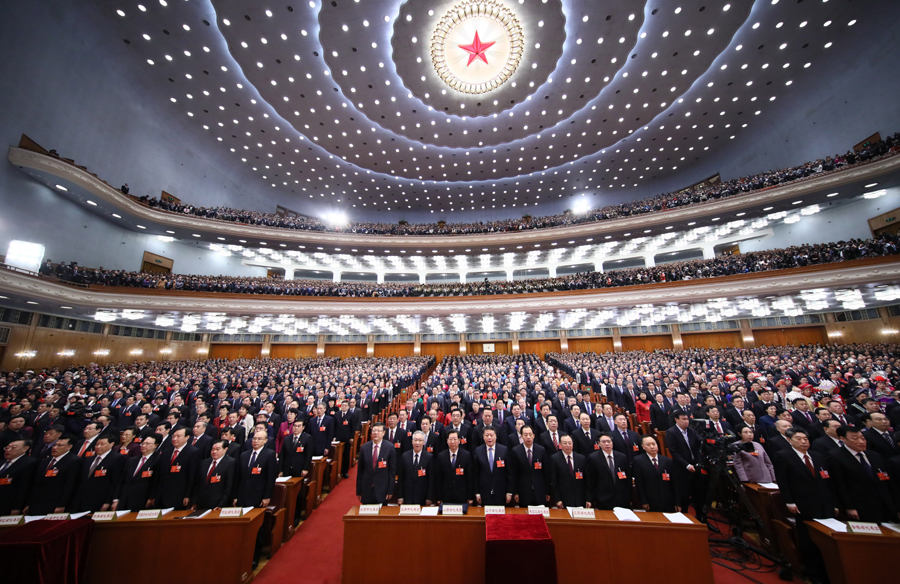
Premier Li Keqiang presented the Government Work Report to the National People's Congress, China's top legislature, on the first day of its annual session on Monday, which summarized China's achievements in the last five years and laid out plans and targets for this year.
After several years of economic slowdown, China's economy began a new growth cycle last year, with its GDP growing by 6.9 percent, enterprises' profits increasing by 21 percent, and trade volumes rising by 14.2 percent.
This year marks the 40th anniversary of China's reform and opening-up, and Li announced several new reform initiatives in his speech. For international observers, perhaps the most important is China's pledge to continue reform and opening-up.
The world economy is in a precarious state after the Donald Trump-led United States administration announced that it would impose high tariffs on steel and aluminum imports. The European Union has threatened to retaliate, and other countries are moving quickly to bargain for exemptions. China's exports contribute to 40 percent of the US' trade deficit according to US statistics. So China is one of the obvious targets of Trump's high tariffs.
Many market observers were worried that China would retaliate against the US, with some Chinese observers fearing the country could reverse its course of opening-up. And the recent investigations against some private companies that have invested heavily abroad seemed to have reinforced the worry.
Li's report should allay those concerns. Over the last five years, China reduced two-thirds of the restrictions imposed on foreign direct investment, and shortened the negative list. Those progressive steps have been well received by business communities across the world and, as a result, foreign companies have increased their investment in China. The actual foreign direct investment last year was $136.3 billion, and the number of foreign experts increased 40 percent over the past five years.
Reform efforts will continue in all fields
Domestically, China will continue to intensify economic reform. One of the most significant moves would be subjecting domestic companies to the negative list. As a relic of the planned economy, administrative review and approval has long been the standard regulatory method used by the Chinese government, as it believed the entry of enterprises and their projects should be controlled in order to maintain an orderly economy.
However, this method cannot pass the information test proposed by Nobel Prize-winning Austrian economist Friedrich Hayek: How can the planner get sufficient information to make the right judgment? This question has become more acute as China moves toward an innovative economy. Innovations are risky and unpredictable, so the market, not the government, is more competent to select the winners.
Li has also pledged to drastically reduce the length of the negative list and promote a "one-stop" approval process in every business field. For foreign companies, he has promised to open more areas and reduce the number of restrictions. In particular, China will get rid of the ceiling set for foreign equity in banks and other financial companies, unify the entry regulations for foreign and domestic banks, and defer taxes paid on the profits invested in China. In sum, China "will strengthen its compliance of the internationally prevailing commercial rules".
As for the investigations against some domestic companies, they are more about those companies' unlawful practices to gain or consolidate their hold on the market by buying political influence. In the long run, breaking the business-political alliance will create a level playing field for everyone.
In his report, Li has stressed the importance of protecting private property and providing equal rights to private companies. These moves should be enough to ease the doubts of China skeptics. China's economic success has been driven by its relentless efforts to reform the market despite the West's belief that it has relied on State power to push forward its agenda. Private enterprises, including foreign companies, are still a strong driving force for China's growth.
Those who have forgotten that China had a massive reform program in the late 1990s that transformed many State-owned enterprises into market-oriented entities can draw comfort from Li's report, in which he has called for steady SOE reforms, including the introduction of private equity to change SOEs' corporate governance structure.





