



China, US agree to win-win energy deal









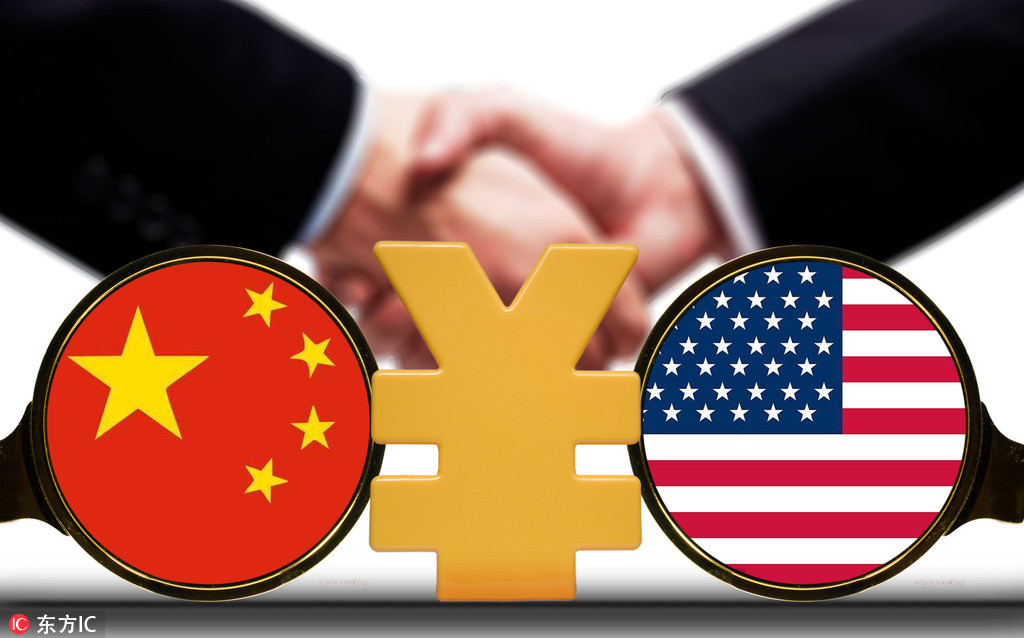
China and the United States reached a consensus on Saturday that there will be no trade war and agreed to take measures to decrease the US trade deficit by, for example, China significantly increasing purchases of US goods and services. A joint statement issued after Saturday's round of Sino-US trade talks also said the two sides agreed on "meaningful increases" in US exports of agricultural and energy products, and greater efforts to increase bilateral trade in manufactured goods and services.
The agreement between the world's two largest economies is enough to make the rest of the world heave a sigh of relief.
China's decision to import more US agricultural and energy products is also in line with the principle of win-win benefits. As the world's largest energy importer, China can narrow, if not eradicate, its energy price gaps with major industrialized countries if it can continuously import fuels from the US at a reasonable price, and thus eliminate one of the biggest factors that could raise its manufacturing costs and undermine the sector's competitiveness in the global market.
The decision also serves the interests of the US, a leading oil and gas producer, as it gets a stable exporting destination for its ever-increasing fuel production.
In 2017, China's crude oil imports increased by 10.1 percent year-on-year to about 420 million metric tons, or about 2.2 times of its domestic crude oil output. And its natural gas imports were 95.3 billion cubic meters, up 26.9 percent year-on-year, which means China could soon replace Japan as the world's largest gas importer.
But given that China is already one of the world's largest oil and gas importers, many are asking whether its increased oil and gas imports from the US would undermine its energy security.
The answer is "no". On the contrary, increased imports of fuels from the US will help boost China's energy security, especially for natural gas.
To improve its negotiating status in the energy trade, China does need multiple fuel exporters and diversified importing channels. Considering that the expanded Panama Canal has been operating for nearly two years, it has become easier for the US to sell its crude oil and liquefied natural gas to China and other markets in East Asia at competitive prices. Also, increased gas imports from the US will help reduce gas prices in the East Asian markets, including China, and simultaneously raise the excessively low prices in the US' domestic market.
Besides, the narrowing of the energy price gap between China and the US could help reduce, if not eliminate, the energy cost disadvantage of China's manufacturing sector, while preventing some Chinese companies from shifting their manufacturing units to the US in order to access cheaper supplies of oil, gas and other raw materials.
Increased US oil and gas exports to China will not compromise the US' interests, as some have claimed, because the Sino-US oil and gas trade is by no means a zero-sum game. In fact, the US can benefit a lot. For example, in terms of higher export revenues, by exporting more fuels to China. Lawrence Summers, former US secretary of treasury, has even said that the prospects for US oil and gas exports would be dim if it does not become a big supplier to the Chinese market.
The increased US oil and gas production because of its expanded exports to China will also help more evenly distribute the US' huge fixed asset investment costs, and thus reduce the sector's average cost and enhance its international competitiveness and profitability, which is very important to capital-intensive industries such as oil and gas.
For the US, excessively low oil and gas prices will make it more difficult for its producers to sustain their production, which would ultimately undermine the US' "energy independence" strategy. Relatively high oil and gas prices, because of increased exports to China, will thus help US oil and gas enterprises to financially sustain their operations.
The author is a researcher at the International Trade and Economic Cooperation Institute of the Ministry of Commerce.





