



Advanced world's reality: six versus one









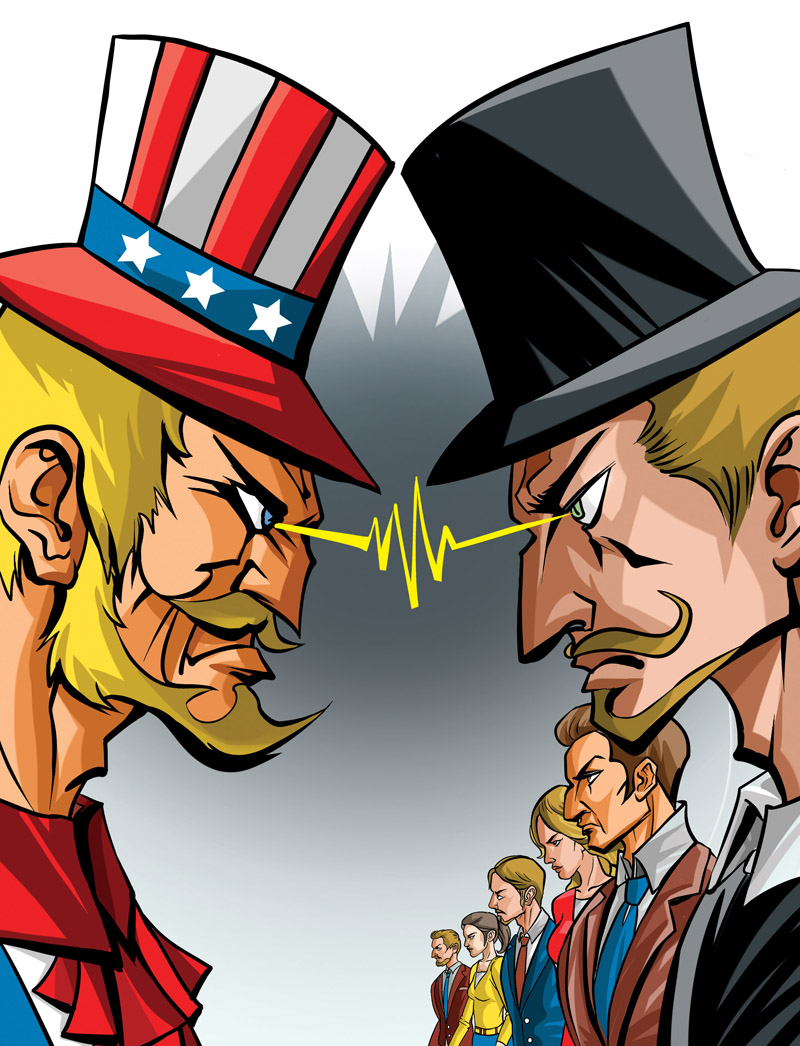
The G7 Summit in Charlevoix, Canada, is split between the United States and six other major advanced economies, as US President Donald Trump's unipolar economic and strategic doctrines continue to undermine US alliances with other countries, world trade-and the US itself.
When Trump assumed the presidency, markets experienced an unsustainable boom, as corporate America expected him to fulfill his pledges of radical liberalization, privatization and deregulation.
Trump's hands were quickly constrained, however. With the investigation by Robert Mueller (into alleged Russian links with Trump's presidential campaign) hovering over the White House, Trump has been governing mainly through executive orders because the latter do not require US Congress' support. Robert Mueller is special counsel for US Justice Department.
Trump's quest to foster US geopolitical primacy is alienating the very same allies and partners he would need to sustain the US' economic and strategic leadership. And what the leaders of the advanced economies are coping with is not a "G-Zero" world, but one in which major advanced economies seek multilateral cooperation-which Trump sees as a threat to his "America First" worldview.
Trump has withdrawn the US from the Trans-Pacific Partnership agreement, set aside the Transatlantic Trade and Investment Partnership, and pledged to bury the North American Free Trade Agreement unless its terms are more favorable to the US.
Consequently, he has targeted those economies with which the US has a major trade deficit, thus fully ignoring economically and strategically critical bilateral and multilateral ties in foreign investment, finance, advanced technology, even security. In Trump's view, the "deficit-offenders" include major economies such as China, Japan, Germany, Italy, India, Mexico, the Republic of Korea and Mexico. Instead of seeking to reduce import demand in the US, the Trump administration is trying to bully US trade partners into compliance, while offering temporary exemptions to those whose support it needs strategically.
The underlying tensions of the G7 Summit reflect the ongoing friction. Germany opposes US trade protectionism, as do France and Britain, not to mention Italy, Japan and Canada. While major European Union member states are very concerned about the future of a US-EU free trade deal, the crumbling NAFTA has sent Canadian Prime Minister Justin Trudeau to "modernize" bilateral deals in Europe, while seeking new partners in Asia. These "G6 economies" oppose US policies against Iran and its one-sided policies in the Middle East. Many are uneasy about the US' new "Cold War" against Russia.
As global trade continues to linger, world investment and financial flows remain far behind their pre-2008 crisis peak. In the dire status quo, the "G6 economies" must either defend the multilateral trading regime together with China and other emerging economies, or risk a return to the kind of global conditions that resulted in a nightmare in the 1930s.
It's time for the "G6 economies" to walk the talk.
The Trump administration is endangering not only international peace and world trade, but also the US itself. Since the 1980s, the US' middle-class has shrunk dramatically, union power is largely gone, lower-middle class workers are the new normal. In the past decades, only 1 percent of the US population has benefited from a windfall of economic gains.
As 41 million Americans (12.7 percent) live in poverty-and half of them in extreme poverty-children account for one in three poor and the US has the highest youth poverty rate among the G7 economies. Recently, UN special rapporteur on extreme poverty and human rights called on US authorities to provide solid social protection and address underlying structural challenges, rather than "punishing and imprisoning the poor."
Unfortunately, there may be more ahead. In the US mid-term election in the fall, the Democrats could capture a majority in the House of Representatives-with an extraordinary number of former intelligence and military operatives from the CIA, Pentagon, National Security Council and State Department seeking nomination as Democratic candidates.
In the past, the G7 countries were united by joint values and interests, but those days have been fading since the George W. Bush era. As "America First" tensions have come to stay, so will G7 tensions.
The author is the founder of Difference Group and has served at the India, China and America Institute (USA), the Shanghai Institutes for International Studies (China) and the EU Centre (Singapore).





