



Right price holds key to battle against cancer









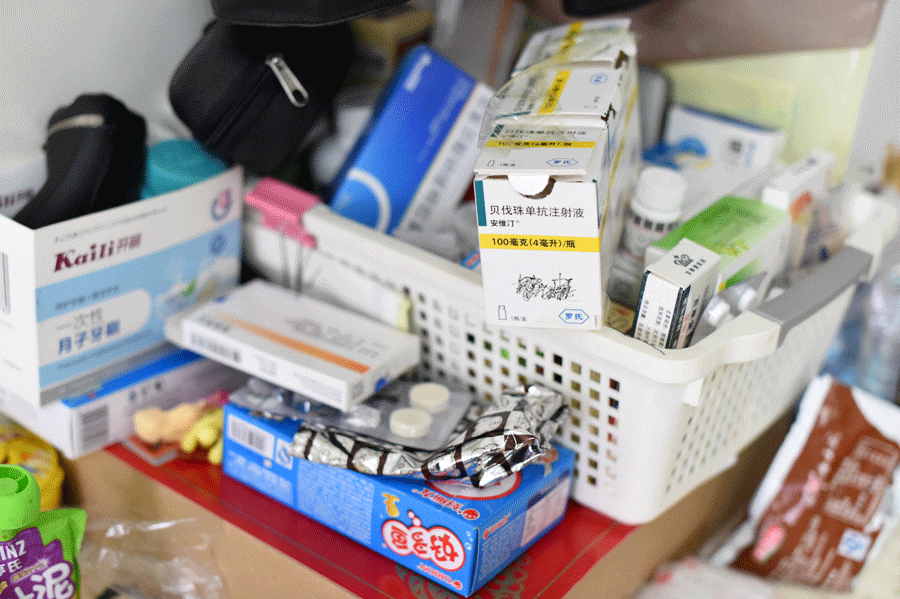
In May, the country lifted tariffs on all imported antineoplastic drugs, and reduced the value added tax on them significantly, a measure which could reduce prices by about 8 percent, according to some experts.
Central government departments, including the National Health Commission, have held negotiations with pharmaceutical companies on the prices of 39 patented drugs, including 17 antineoplastic treatments, resulting in the prices of the 39 drugs being reduced by more than half on average, the commission said.
For example, the cost of Herceptin, a drug for breast cancer patients developed by Swiss company Roche, has been reduced to 7,600 yuan per procedure after negotiations, 70 percent less than the original price, according to the commission.
All the drugs have been included in the reimbursement list for the national medical insurance programs to ease the burden on patients, the commission said.
Before 2016, some areas, including Zhejiang and Jiangsu provinces, had already started to negotiate prices with foreign pharmaceutical companies, which is an internationally adopted practice, and included some antineoplastic drugs for patient reimbursement.
At a meeting held by the National Medical Security Administration on July 11, officials from the administration held talks with representatives from 10 overseas antineoplastic manufacturers and eight domestic ones over price negotiations to be held later this year.
The administration and the enterprises reached agreement at the meeting, and the administration said it will speed up efforts so that patients can have access to antineoplastic drugs with higher quality and lower prices as soon as possible.
Zhao, from the Cancer Foundation of China, said government negotiation is the best way and a reasonable method to reduce the price of antineoplastic drugs.
Through price reductions, pharmaceutical companies can make their drugs reimbursable through basic medical insurance programs, which can greatly improve sales, he said.
Li Ling, a professor of economics from Peking University, said more measures are needed to encourage domestic pharmaceutical companies to engage in research and innovation of antineoplastic drugs, which will be crucial to improving their accessibility and affordability.
Zhi, from Xuanwu Hospital, said that with the rising incidence of cancer in China, it is crucial to accelerate research and development of new drugs in the country to offer cheaper drugs to patients.
However, China's ability in research and development of innovative drugs still lags far behind that of some countries, such as the United States, and China will need time to catch up, he said.
Most effective targeted drugs for lung cancer used in hospitals in China are imported, he said.
Zhao said that in recent years private pharmaceutical companies in China have been increasingly enthusiastic in the research and development of new drugs, and breakthroughs will be made soon.
Jiang Canwen, CEO of Sinovant Sciences, a Chinese company that researches and develops antineoplastic drugs, said although China lags behind some European countries and the US in the research and development of such drugs, Chinese companies have made remarkable progress in recent years on both innovative drugs and generic drugs.
The company has signed an agreement with China Liver Health, a nongovernmental organization that promotes liver health, to develop innovative drugs for liver cancer, a major cancer in China.
"I think China can make greater progress in the research and development of antineoplastic drugs over the next 10 years," Jiang said.
"However, domestic companies face challenges such as a lack of experienced talent and stable investment. We hope to see an improved environment to encourage innovation, better policies to cultivate talent and introduce talent from overseas, and more long-term investment from the private sector."


- China's top political advisory body unveils agenda of the annual session
- Geologists brave rugged terrain in Yunnan prospecting mission
- Senior enterprise official facing probe
- China's anti-graft authorities reveal extent of year's work
- Former Haikou Party chief gets death sentence with reprieve
- Purchase of US-made weapons to push Taiwan closer to the peril of war: spokesman







