



Reform can play positive role during trade war









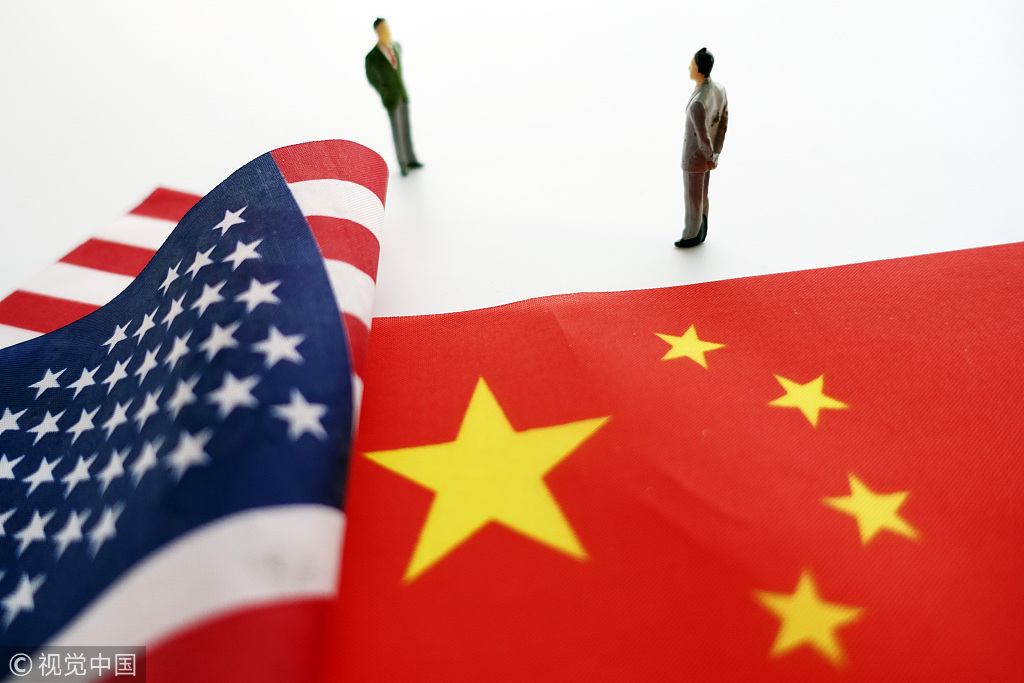
Last June, The Economist lamented that "Donald Trump is undermining the rules-based international order," as he seeks "short-term wins for America" at the cost of "long-term damage to the world." With Trump now escalating his trade war with China-and with both sides seeming to be girding for protracted competition over technological leadership-the threat is only growing.
For a long time, trade appeared to benefit everyone. This assumption underpinned a broad global consensus on trade rules, including the relatively consistent protection of property rights. China, for example, has managed to integrate itself into the global economy because its companies learned how to operate and compete within the framework established by the World Trade Organization.
But, as the Nobel laureate economist Joseph Stiglitz has repeatedly pointed out, the neoliberal obsession with unfettered markets failed to account for the distributive costs of efficiency gains. Inequality has risen sharply, spurring many populations to become increasingly disillusioned not just with the specific factors fueling it, but with openness and globalization in virtually all its forms, including immigration and free trade.
That is how Trump got elected. But the backlash is not exclusive to the United States. The United Kingdom's vote to leave the European Union was driven by similar concerns, as has been the rise of right-wing populist political forces in many EU countries, from Italy to Poland. These political developments-and they are political, not economic-have spurred a process of re-writing, if not dismantling, the existing rules-based world order.
This is forcing profound transformation at the national and international levels. But, as Stiglitz and Harvard's David Kennedy wrote in the 2013 book Law and Economics with Chinese Characteristics, "markets are built upon a foundation of legal arrangements and stabilized by a regulatory framework." This means that addressing the distributive effects of market failures requires the construction of new judicial, administrative and regulatory frameworks-a process that will take time.
China-a favorite target of those who are attacking the rules-based global order-is under particularly intense pressure to make changes. Because its market grew faster than its tax, regulatory and judicial arrangements could evolve, the country has been beset by rising income inequality, pollution, financial risks, and corruption-all of which must be addressed in the next phase of structural reforms.
China's reforms will heed people's concerns
What precisely those reforms should be, however, remains subject to heated debate among China's elites, policymakers, and disadvantaged groups, as well as foreign stakeholders. And as the trade war with the US continues to escalate, calls for policy clarity are growing more urgent.
China's entrepreneurs and its rapidly expanding middle class are concerned, first and foremost, about their property rights, including the security of their accumulated wealth, amid regulatory tightening with regard to taxation, finance, cross-border capital flows, and even the environment. Meanwhile, Chinese young people and low-income households worry about high and rising home prices, job insecurity and the fast-growing market power of a few tech giants squeezing small and medium-size enterprises.
For their part, foreign businesses operating in China, as well as trade partners such as the United States, are focusing on inadequate protection of intellectual property rights, excessive government support of State-owned enterprises and an industrial policy geared toward technological upgrading. Policymaking in this area would also need to account for the disruptive impact of new technologies on business models, supply chains, lifestyles, and even politics within China.
It is imperative that China's leaders mount a firm and decisive response to these divergent and sometimes even conflicting concerns. This means pursuing a set of bold reforms that not only bolster confidence, but also strengthen China's hand in negotiations with the US and foreign investors.
The first step for China should be to reaffirm the authorities' 2013 commitment to ensuring that markets play a decisive role in allocating resources. China should follow up by creating a level playing field for market competition among foreign companies, private Chinese businesses and SOEs.
The good news is that far-reaching reforms can actually be easier to justify during periods of uncertainty, transition, or even crisis. Yet one important factor could impede such action: risk-aversion on the part of local officials.
In the past, local-level experimentation and innovation have proved integral to China's progress, with competition among provinces, cities and companies often helping the country to break out of bureaucratic and structural logjams. But many local officials now hesitate to pursue daring initiatives.
Much as Deng Xiaoping did with his 1992 "south China tour," China's leaders today need to redouble their efforts to unleash the "animal spirits" of domestic businesses, while spurring local governments to spearhead their own reforms. Although trading partners like the US may object to the State-led nature of this approach, the end result will be more stable and dynamic markets.
China has only limited influence over the evolution-or even survival-of the rules-based world order. But, by bringing its property-rights arrangements into line with those of the advanced economies, it can support shared prosperity and mutually beneficial engagement, potentially defusing some of the tensions that have lately been fueling instability worldwide.
Andrew Sheng is a distinguished fellow of the Asia Global Institute at the University of Hong Kong and a member of the UNEP Advisory Council on Sustainable Finance. Xiao Geng, president of the Hong Kong Institution for International Finance, is a professor at Peking University HSBC Business School and at the University of Hong Kong's Faculty of Business and Economics.
Project Syndicate





