



'Big Food' sweetens its poisonous propaganda









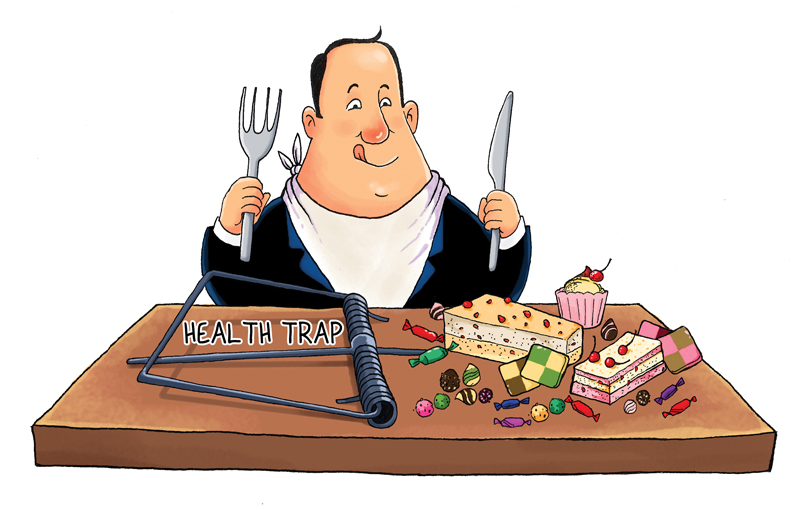
Every advertising executive knows the difference between marketing and propaganda. One uses facts to espouse a point of view, while the other relies on falsehoods and deceit. But if the difference is truth, what is the commonality? Dopamine, say scientists. For the processed food industry, that fact has been worth trillions of dollars.
Dopamine is the neurotransmitter of the brain's reward center, and it is activated by stimuli like cocaine, nicotine, and alcohol. But it is also triggered by information. For example, brain scans show that when people hear a statement that they believe is true-the veracity is irrelevant-they get a dopamine hit. Propagandists have taken advantage of this quirk in our brain physiology for centuries, and today, this neuroscientific flaw can be individually targeted to weaponize populist politics.
But the biggest opportunists are businesses. Several sectors have propagandized their products to the public, systematically suppressing concerns about real harms; the petroleum, tobacco, and opioid industries immediately come to mind. But no industry has provided more disinformation over the years-and contributed to more morbidity, mortality, public cost, and economic havoc-than the processed food industry.
Noncommunicable diseases (NCDs) account for about 50 percent of the global disease burden and some 75 percent of total healthcare spending. The role of processed foods in these chronic conditions is undisputed; every country that adopts the high-fat, high-sugar "Western pattern diet" is plagued by the same diseases and costs. But the big question for health professionals is whether the quantity or the quality of foods is to blame. This is an important distinction, because quantity is determined by the user, while quality is determined by the industry.
Some health experts argue that specific components of processed foods-in particular, sugar-are as addictive as cocaine and heroin. For example, sugar is consistently the ingredient with the highest score on the Yale Food Addiction Scale, which measures people's food cravings.
Good, bad and ugly
The processed food industry says, "You need sugar to live." Dietary sucrose-or common table sugar-is composed of two molecules in equal proportion: glucose and fructose. But despite being calorically identical (4.1 calories per gram), they behave very differently when consumed.
Glucose is the energy of life; it is burned by every cell in the body. Glucose is so important that if you stop eating it, your liver compensates with a process called gluconeogenesis. Conversely, fructose, while also an energy source, is a vestigial nutrient for humans; our cells do not need it to function. My research has shown that when fructose is eaten in excess of the liver's ability to metabolize it, the surplus is turned into liver fat, and those deposits can promote insulin resistance and contribute to development of NCDs.
Fructose also influences dietary sugar consumption. For example, studies on animals have shown that sucrose alters the brain's dopamine and opioid receptors in a way similar to morphine and establishes hard-wired pathways for craving. In laboratory rats, sweetness even surpasses cocaine as a coveted reward.
Human brain scans demonstrate that glucose activates the cerebral cortex (the "cognitive" part of our brains), while fructose suppresses that signal and instead lights up the limbic system (your "lizard" brain). Moreover, while sugar does not exhibit classic withdrawal symptoms, it does lead to tolerance and dependence that can cause bingeing, craving, and cross-sensitization to narcotics. These are some of the reasons why the World Health Organization and the US Department of Agriculture recommend that people reduce the amount of sugar in their diets.
The addictive qualities of sugar are embedded in its economics. Like coffee, sugar is price-inelastic, meaning that when costs increase, consumption remains relatively constant. Purchases of soft drinks and other sweetened foods are not dramatically affected by taxes or fluctuating prices.
Not everyone who is exposed to sugar becomes addicted; but, as with alcohol, many do. While refined sugar is the same compound found in fruit, it lacks fiber and has been crystallized for purity. It is this process that turns sugar from a "food" into a "drug", allowing the food industry to "hook" unsuspecting consumers. The evidence is visible in every aisle of every grocery store, where a staggering 74 percent of all food items are spiked with added sugar. In fact, sugar's allure is a big reason why the processed food industry's current profit margin is 5 percent (up from 1 percent), and why so many of us are sick, fat, stupid, broke, depressed, and just plain miserable.
Playing tobacco's tricks
Propaganda has been essential to sustaining mass addiction. Since at least 1954, food-industry executives have known that excess sugar consumption causes health problems. Using the same tricks as tobacco companies-and in some cases, the same people-they covered up the evidence and doubled down. They funded shoddy science, co-opted researchers and critics, shifted blame, advocated for weaker government oversight, and even marketed their products to children (as with Tony the Tiger, breakfast cereal's equivalent of Big Tobacco's Joe Camel).
As my colleagues at the University of California, San Francisco, have reported, the Sugar Research Foundation-the industry's trade group-even sought to persuade clinical medicine to focus on saturated fat instead of sugar, and pushed clinical dentistry to focus on a vaccine for tooth decay rather than sugar reduction. In other words, Big Food's tactics are no different from Big Tobacco's.
Treating any kind of addiction is difficult once the brain's limbic system becomes so damaged that dopamine no longer generates reward. The best solution is to prevent addiction in the first place, and in the case of sugary processed foods, that means marketing truth to consumers. We have already lost one generation to the scourge of NCDs. It is time to hold Big Food's feet to the fire before we lose a second.
Robert H. Lustig is professor emeritus of pediatrics in the Division of Endocrinology at the University of California, San Francisco. He is the author of Fat Chance: Beating the Odds Against Sugar, Processed Food, Obesity, and Disease and The Hacking of the American Mind: The Science Behind the Corporate Takeover of our Bodies and Brains.
Copyright: Project Syndicate, 2018. www.project-syndicate.org





