



Embryo researchers make promising discovery that could lead to disease prevention









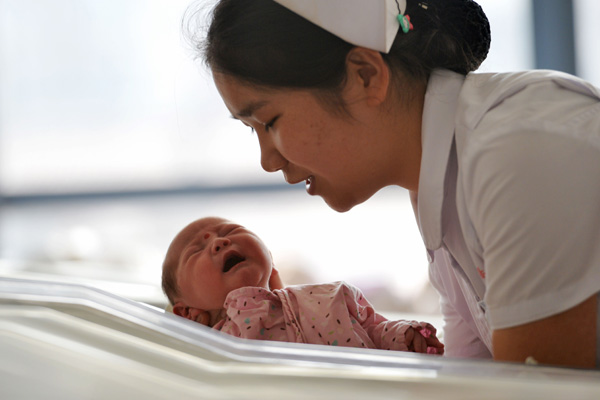
Shanghai researchers have discovered a method to detect and correct abnormalities in nonhuman mammal eggs to prevent certain hereditary diseases in offspring.
Screening for some rare diseases currently relies on gene sequencing, but in some cases, the embryo's genes are normal but diseases develop later in the fetus, researchers said.
Such cases mainly arise during cell development, or epigenesis.
"In other words, some switches in the genes go wrong," said Sun Yun, a leading researcher on the team and director of the reproductive medicine center at Renji Hospital Affiliated with Shanghai Jiao Tong University School of Medicine.
In lab tests on mice, Sun's team was able to identify certain abnormalities in eggs and found that they can be edited and corrected to a normal state through gene editing technology.
A paper about the team's four years of research was published in the United States-based Journal of Proceedings of the National Academy of Sciences on May 14.
Sun, who chairs the reproductive medicine branch of the Shanghai Medical Association, said the next step is to see if the detection method works for humans, and to block the inheritance of abnormal genes from a mother's egg and make corrections before a baby's birth.
"If the research is to be applied clinically one day, the targets include mothers whose first child developed a rare disease," Sun said.
Another researcher on the team, Du Yanzhi, who is also director of the genetic lab of the Reproductive Medicine Center of Renji Hospital, said the study first focused on rare disorders, such as Angelman syndrome, whose main clinical manifestations include learning and behavioral difficulties.
But the study may also bring insights into new therapies for other conditions, such as autism, researchers said.
"There are studies showing that only 5 percent of autistic people have problems in their gene sequencing, so probably many of the rest get the disease as a result of epigenetic changes in the genes of the fathers' or mothers' reproductive cells," Sun said.
They looked at eggs rather than sperm in the research, because an egg contributes much more to the process when an embryo is formed, researchers said.
"Sperm only provides 23 chromosomes with genetic information, and an egg does the same. But the cytoplasm and mitochondria of an egg also carry a lot of genetic information to the offspring," Sun said.
The technique, if applied clinically, may also be useful for in vitro fertilization, to check for risks of epigenetic changes in the reproductive cells, Sun said.


- Jinan in Shandong immersed in Lantern Festival joy
- Scoop up yuanxiao to uncover Hefei's charm
- China's CPPCC session to open Wednesday
- Shanghai Cherry Blossom Festival 2026 to illuminate Gucun Park with nighttime blossoms
- China lauded for role in global poverty reduction
- Jiangsu awash in Lantern Festival joy





