



Reforms lift remote ethnic groups out of poverty









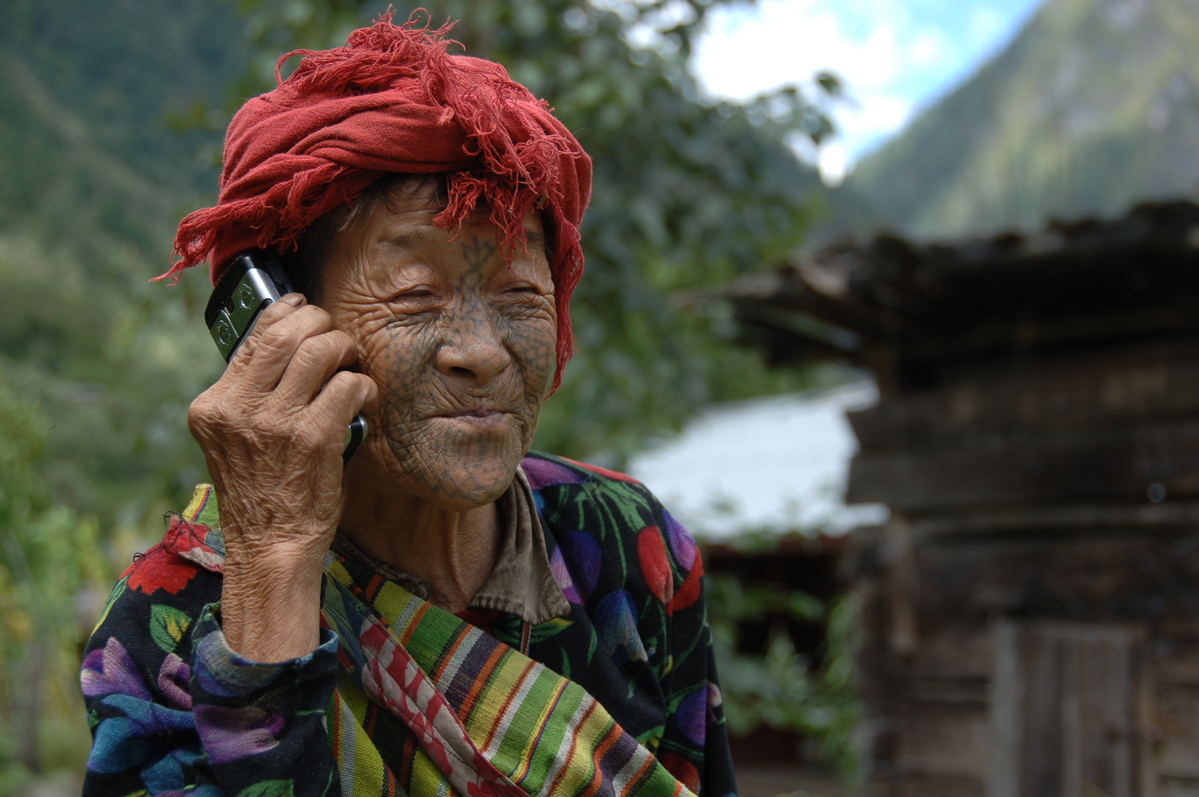
With its churning rivers, jagged karst outcrops, towering mountains and vast array of plants and animals, Yunnan province is a true natural paradise.
The southwestern province is home to the remote city of Shangri-La which has long lured romantic travelers in search of the paradise, real or imagined, described in the 1933 novel Lost Horizon, by British author James Hilton.
Yunnan's complex landscape and biodiversity may also have contributed to its rich culture. Twenty-five of China's 55 ethnic minority groups have been living there for generations, accounting for more than 30 percent of the province's population.
Some of the ethnic minority groups live mainly in remote mountain areas and gorges near the borders with Vietnam, Laos and Myanmar. They are almost isolated from the outside world.
Many of their traditional practices were originally seen as less-advanced when compared with modern societies, and most of the groups have struggled with poverty until recent years.
But in 2016, a five-year provincial plan was undertaken to lift nine of the 25 ethnic minority groups out of poverty by 2020.
The plan aims to implement free basic education, promote the use of Mandarin, export labor, launch safe housing projects, cultivate specialized industries, strengthen infrastructure and enhance ecological environmental protection.
Shanghai, Guangdong province and some State-owned enterprises have also undertaken poverty-alleviation efforts under the plan.
Earlier this year, Yunnan announced that three of its native ethnic groups, the Derung, De'ang and Jino, had emerged from absolute poverty, with less than 3 percent of the populations classified as underprivileged.
Tens of thousands of people from these ethnic groups are now living in the modern world with new residences, cars, clean toilets, internet access and smartphones.
Dulongjiang, a township which borders Myanmar, is home to 4,112 people. It's the major settlement of the Derung people, who constitute 99 percent of the population.
The opening in April 2014 of a 6.68-km tunnel, built at an altitude of nearly 4,000 meters, means the township is no longer blocked to the outside world from October to April due to blizzards.
Besides a stable electricity supply, the township now has 4G internet access. A 5G base station has also been completed.
By last year, hundreds of local people had obtained driving licenses.
Products like tsaoko, a condiment for traditional Yunnan cuisine, the medicinal herb Paris polyphylla, walnuts and local honey are being sold online, with orders also being placed for chicken and livestock.
Professions such as agricultural commodities broker, driver, chef and delivery man are springing up in the community, along with travel guide services for tourists.
By the end of 2018, the local average annual income was 6,122 yuan ($888), nearly eight times the amount in 2008, Yunnan Daily reported.
In 1979, the Jino were recognized as China's 55th ethnic minority group. Most of the Jino people live in the Jino Mountain township in Xishuangbanna Dai autonomous prefecture. Rubber, tea and tourism are the main pillars of their economy.
In the first five months of the year, over 100,000 people visited the scenic mountain village to experience Jino culture, including food and wine, and song and dance.
The average annual income of Jino villagers reached 11,757 yuan last year, 110 times the level in 1978, according to a Guangming Daily report.
The provincial government said more ethnic minority groups would be lifted out of poverty this year.


- Foreign visitors taste the delicacies of Tianjin's ancient town
- China introduces a standard framework for humanoid and embodied intelligence
- CPPCC unveils agenda of the annual session
- Geologists brave rugged terrain in Yunnan prospecting mission
- Senior enterprise official facing probe
- China's anti-graft authorities reveal extent of year's work







