China, EU can propel multilateral trade









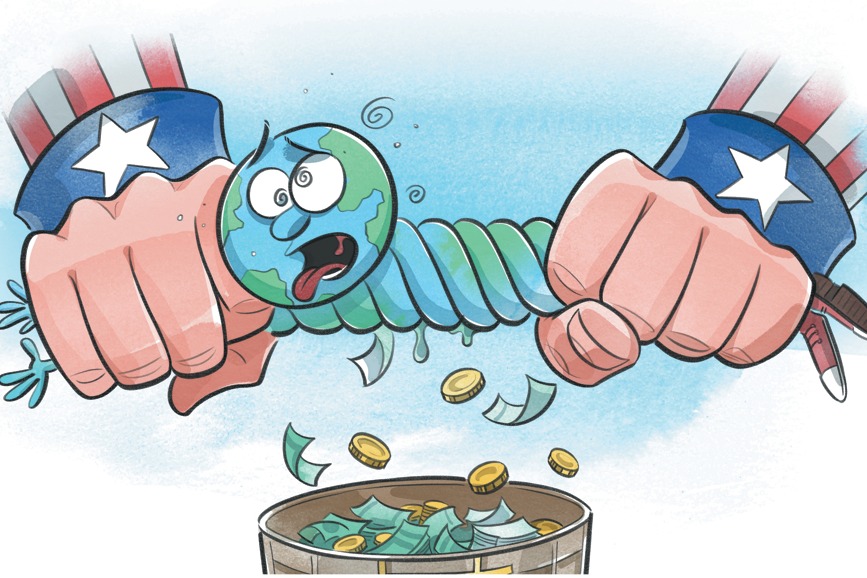
The trade war the United States has launched against China is having negative impacts on not only the two economies but also other economies, contributing to the uncertainty over global economic growth. The biggest threat of the trade friction, however, is that it represents a new approach to international trade negotiations-bilateralism-that is inefficient, divisive and unable to address new threats to the world economy.
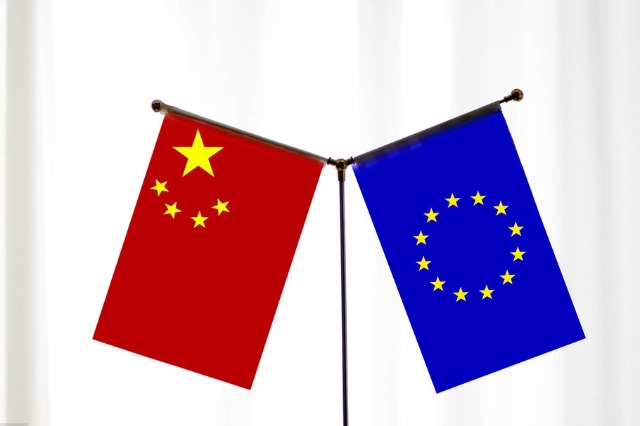
China and the European Union, as major beneficiaries of the multilateral trading system, should take the lead in trying to save it.
The impacts of the trade war on China and the US have been limited so far. US tariff hikes have reduced Chinese exports to the US in key sectors (down 12 percent year-on-year in September 2019) and affected demand from China's suppliers across Asia.
But the extension of US punitive measures to new areas (such as banning the exports of certain products, components or software to China) is designed to disrupt global value chains, which would lower business confidence and the outlook for economic growth. The trade war is therefore increasing the uncertainty over the world economy, with the World Trade Organization and the International Monetary Fund highlighting growing concerns in October about economic downturn in some regions.
The trade war has had little impact on the European Union, apart from lowering market confidence, but, if prolonged, it would increase competition between the EU and China for four reasons:
First, because Chinese exports would be diverted to the EU market from the US market.
Second, because there could be further growth in Chinese direct investment in the EU at a time when the EU is nervous about investments in strategic industrial sectors such as robotics and advanced manufacturing, and has established an EU-wide monitoring system for inward foreign direct investment.
Third, due to a reduction in the EU's export opportunities in third-country markets, as China seeks to compensate for its losses in the US.
Fourth, because of a possible reduction of EU market opportunities in China if China decides to offer the US privileged access to the Chinese market in areas where EU companies are also competitive.
The direct impacts of the trade war on the EU economy would, however, be much less important for the EU than its potential damage to the multilateral trading system. The US-China trade war is the most serious of the many international trade disputes initiated by the US administration, characterized by the use of unilateral trade barriers to apply pressure on partners, the by-passing of international rules for settling trade disputes, and the reduction of trade negotiations to a bilateral power game in which all available means are mobilized to achieve results.
Many other trade partners of China, including the EU, share the US' concerns that China should "open up" its economy fully to international competition. The EU believes China, the world's second-largest national economy, can no longer justify denying access to important areas of the Chinese market to its global partners. Access to international markets has contributed enormously to China's growth and economic development, and China now needs to go further with significant economic reform, which would be a "win-win" outcome for China and its global partners.
But the fact that the US is ignoring international trade rules and going its own way in bilateral trade disputes has highlighted the need for Europe to work with its other trade partners, including China, to try to save the multilateral trading system, even though the US-EU strategic and economic partnership remains central for the EU.
A competition between the three "mega-economies" of the world, the US, the EU and China, to secure bilateral agreements with their economic partners has already started. But bilateralism is an inefficient and slow way of opening up international trade and investment. There is a limit to how many trade negotiations an economy can pursue at the same time, even the biggest economy. Large-scale free trade agreements take several years to negotiate and implement.
More important, bilateralism will not solve the most pressing challenges the world economy faces today, in particular, alleviating poverty and achieving environmental sustainability. Bilateralism leaves the smaller and poorer economies behind. Because negotiating resources are scarce, negotiators from the mega-economies focus their efforts on other big players. That is rational but also unfair toward less-powerful countries.
Multilateralism, on the other hand, acts as a multiplier for the limited negotiation resources of poorer and smaller countries, which can deal with the rest of the world at the same time.
Also, bilateralism cannot address problems such as climate change and environmental sustainability, which are changing the facts of life across economies. These global challenges call for an inclusive, multilateral approach to negotiation, in which the highest possible number of parties can be encouraged to join the negotiations, take on commitments and share the benefits.
The EU and China, both highly dependent on international trade, have a major interest in and responsibility of keeping multilateralism alive as the preferred management tool for the world economy. They have much at stake in the current international system and have already cooperated in making proposals for reforming the WTO dispute settlement mechanism. They are also committed to sustainable economic growth.
Closer coordination between them on other aspects of WTO reform will be essential for building a common program for strengthening the WTO, which can be supported by developing as well as developed economies. And China should do more to respond to the concerns of its trade partners.
The author is senior adviser at EU-Asia Centre in Brussels, Belgium and an associate at Oxford University China Centre. The views don't necessarily represent those of China Daily.