



Sino-EU investment protection pact needed









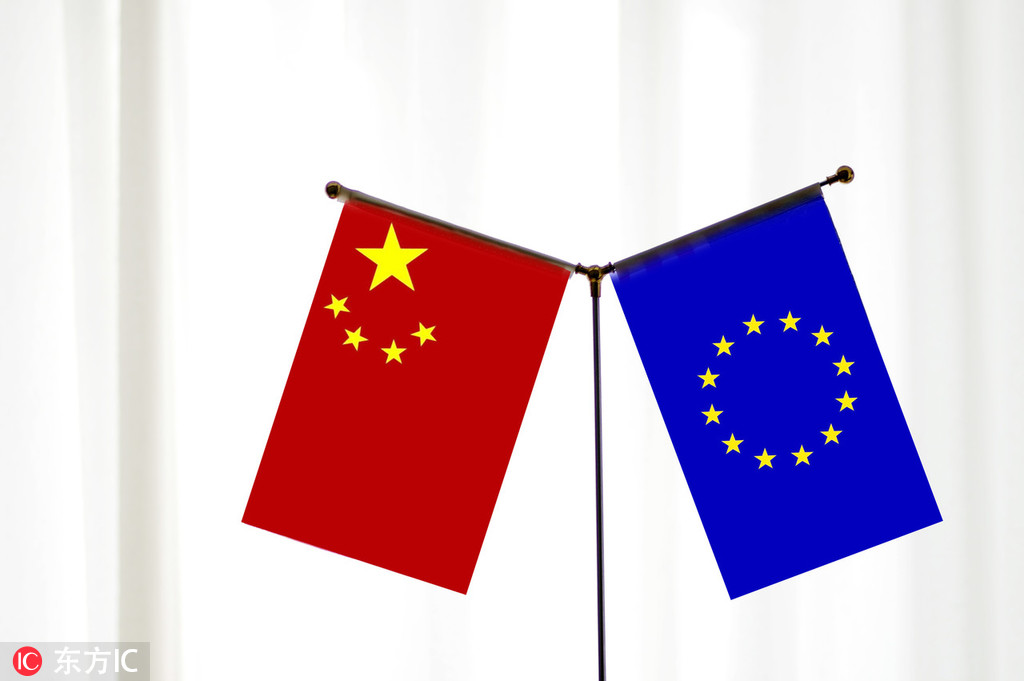
A new era in China-European Union relations heralds the approach to improving market access, promoting reciprocity, ensuring a level playing field, establishing fair competition across all areas of cooperation, dealing with overcapacity and engaging at multilateral levels.
Ambitious economic reforms enacted in China have prioritized the opening-up of the nation's economy to foreign investors.
The current legal and regulatory framework between China and the EU comprises 25 bilateral investment treaties. China is the EU's biggest source of imports. China-Europe trade is well over 1 billion euros ($1.1 billion) a day.
The EU's imports from China are dominated by industrial and consumer goods, with bilateral trade in services amounting to just one-tenth of the total trade in goods.
Of the EU's exports to China, services comprise 20 percent. Investment flows show great untapped potential, considering the size of the two economies.
China accounts for less than 3 percent of overall EU foreign direct investment, whereas Chinese investments in Europe are rising, but from an even lower base. The EU currently has a trade deficit with China.
A strategic investment agreement is pivotal for Sino-EU relations. Negotiations began in 2013 and covered overall objectives in relation to future EU-China investment relations.
The EU's objectives include improving protection and treatment of EU investments in China, reducing barriers to investing in China and increasing bilateral FDI flows.
The EU feels investors need better market access and an environment that is nondiscriminatory for investments before and after establishment. It wants to ensure a level playing field to remedy any advantages enjoyed by Chinese State-owned enterprises.
It also wants to ascertain the right of parties to take measures necessary to achieve legitimate public policy objectives, including environmental, social, labor, corporate social responsibility and human rights objectives, on the basis of the level of protection they deem appropriate.
In particular, the EU has sought increased certainty and legitimate expectations on screening and assessment controls of European investment into China that are based on national interest beyond national security requirements.
The EU has also stressed the need for the highest possible level of uniform standards of legal protection, including protection of intellectual property rights for European investors in China, moving away from existing treaties that provide for different levels of investor protection, and allowing for swift dispute resolution systems such as arbitration.
China's objectives include the need to improve legal certainty of Chinese investors in the EU, with intra-corporate transferees, business visitors and their family members having access to visas and work permits. It also wants to preserve its current access to the EU.
China's key interests focus on a uniform European treatment and protection for its investors, particularly clarity on control of FDI inflows on the basis of national security or industrial policy requirements and maintaining goods access to European markets, since the EU has established a high degree of openness for FDIs.
The EU and China can establish an investment protection agreement, replacing the 25 existing treaties and improving the level of protection of EU investments in China.
An investment protection agreement is preferable to China during negotiations, since it has declared its main interest to be investment protection.
The EU's main concerns relate to the establishment of a level playing field on investment access and treatment in China, which such an agreement would not address.
Alternatively, China and the EU could establish a combined agreement for market access and investment protection that would address the main problems of the current EU-China investment relationship.
A combined agreement for market access and protection would achieve the same results as an investor protection agreement with regard to increased legal certainty under investment protection and address the current imbalance regarding openness to FDI in China.
Under a combined agreement for market access and investor protection, China and the EU would stand to gain in regard to economic growth, competitiveness, productivity and employment, without affecting the right of states to regulate to pursue legitimate policy objectives in areas such as environment, employment, social rules and human rights.
A comprehensive EU-China investment agreement would benefit both the EU and China by ensuring open markets and access to investment in both directions and providing a simpler, secure and predictable legal framework to investors.
The author is a professor of international business law at University of Hull in the UK. The views do not necessarily reflect those of China Daily.










