



China on its way to end poverty by 2020









During the last four decades, China has been praised worldwide for its economic growth represented by a series of impressive numbers. Among this data, China is frequently shown as the leading Asian country in terms of the number of billionaires created each year as a consequence of capital shifting from West to East. Cities such as Beijing, Shanghai, Hong Kong and Shenzhen have constantly climbed up the rankings of cities where the highest number of millionaires and billionaires live and work.
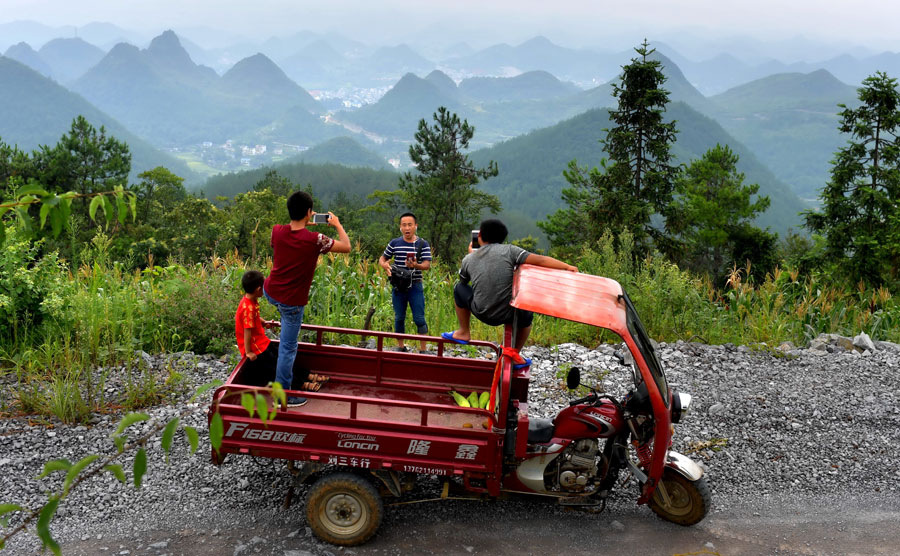
This glittering data cannot hide the fact that China is still a developing country where poverty remains present, especially in rural areas and the western part of the country. The latest data released on Feb 15 of this year by the Chinese National Bureau of Statistics show that at the end of 2018, there were over 16 million people living below the official poverty line.
According to the goals of China's government, poverty reduction will have been accomplished when standards such as access to food, clothing, compulsory education for children, basic medical treatment and good living conditions are all met.
In order to deliver these goals by 2020, China should lift out of poverty an average of 8 million rural residents each year from now to 2020. The country has seen a steady decline in the number of impoverished rural residents from nearly 100 million in late 2012 to 16 million by the end of 2018, as shown in data from China's National Bureau of Statistics. By the end of 2019, this number should be around 6 million and reach zero by the end of 2020.
Most of the poor in China live in the countryside, where farming is generally the only form of employment. One option could be migration to big cities, which have the best job opportunities, but the household registration system or hukou creates a lot of limitations, such as living conditions in the outskirts of the cities and restricted access to schools for children.
The elimination of rural poverty represents without a doubt one of the main policy goals of President Xi Jinping. Last year it was identified, along with financial risk and curbing pollution, as one of the "three tough battles" for controlling economic policy, and it was also central to the commitment of the Fifth Plenary Session of the 18th Chinese Communist Party (CCP) held in October 2015 to deliver a "moderately prosperous society" by 2021, when the CPC will celebrate its centenary.
The government has in the last few years strongly increased its financial support, and local government funding has also been part of the equation. Financial institutions such as the Agricultural Development Bank of China, Agricultural Bank of China and Rural Credit Co-operative have increased their contributions of issued loans for relevant projects.
Local and provincial levels have been given political pressure, as the central government has set poverty alleviation as an indicator that government officials are evaluated on, besides GDP and social stability. In order to avoid any shortcuts, government officials have been forbidden from simply distributing funds without finding ways of reaching sustainable and steady income streams.
The strategy deployed by the government is to go for the final mile toward full eradication by targeting individual households in need of support, instead of whole villages, counties or provinces. In this way the funds provided at a discounted rate by government and financial institutions will be utilized for building rural infrastructure and will encourage self-development, creating sustainability through a mass entrepreneurship and innovation campaign.
If China is able to accomplish its 2020 goal, it will be 10 years ahead of schedule to meet the United Nations Sustainable Development Goals' target of ending global poverty by 2030.
China’s contribution to global poverty reduction has been remarkable during the last four decades, having lifted out of poverty over 700 million people, more than the entire population of Europe, and serving as an example for countries afflicted by the same problem, such as those in Africa.
When poverty is officially eliminated, it will certainly become one of the most important legacies of President Xi and a very admirable one, since poverty eradication is a common goal for humankind.
The author is a finance professional at ICBC in Beijing and a member of the China Task Force at the Italian Ministry of Economic Development. The views don't necessarily represent those of China Daily.





