



More research on virus sought









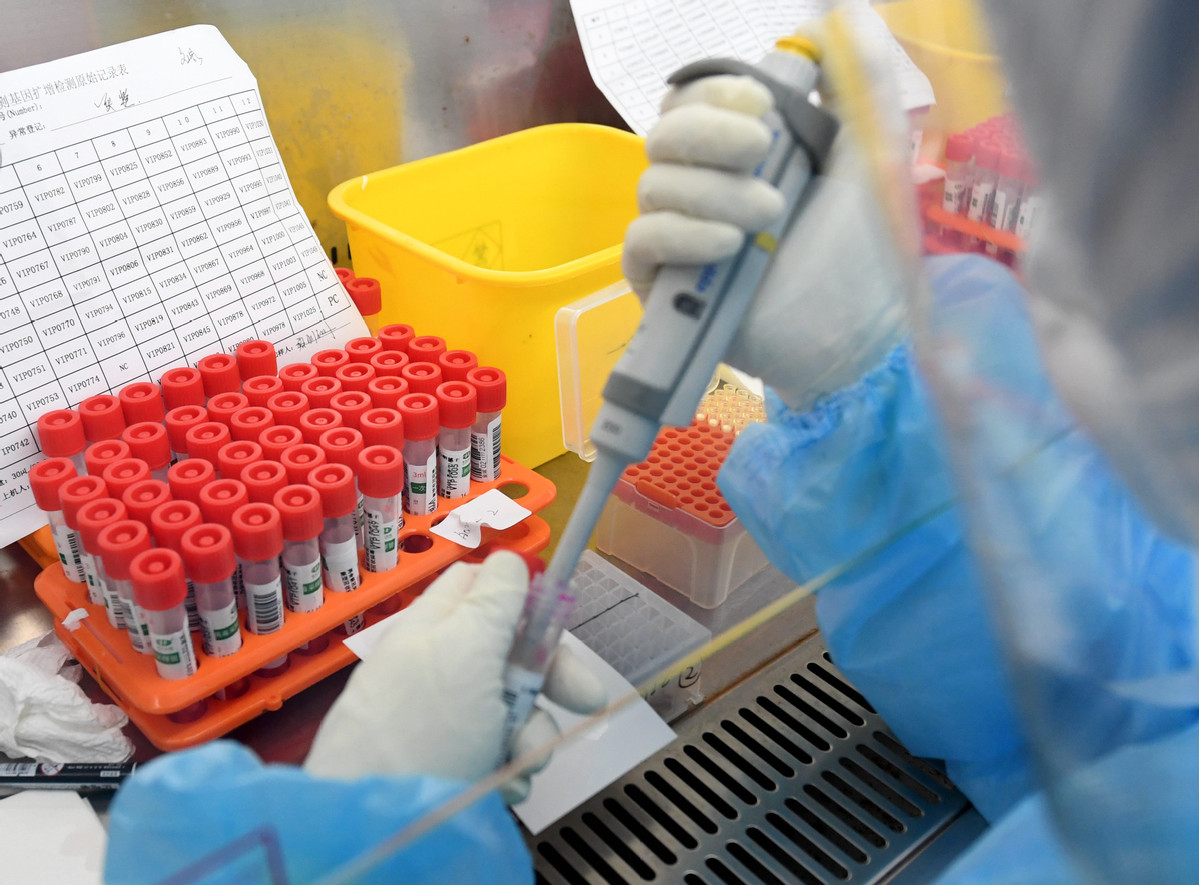
Experts call for increased international unity to learn about long-term maladies
As the long-term effects of COVID-19 begin to surface, experts are calling for more research and global collaboration as well as a better mechanism to monitor recovered patients and greater public education initiatives to reduce unnecessary fear or speculation.
According to the journal Science, the list of lingering maladies from COVID-19 is longer and more varied than most doctors could have imagined. They include fatigue, shortness of breath, muddled thoughts, a persistent loss of sense of smell and damage to the heart, lungs, kidneys and brain.
The Mayo Clinic, a nonprofit medical research center based in the United States, said most people who have COVID-19 recover completely within a few weeks, but some, even those who had mild versions of the disease, continue to experience symptoms.
Gregory Poland, a COVID-19 expert at the clinic, said the virus is "wicked" and "has a number of mysteries involved compared to the usual respiratory virus." This includes the emerging idea of COVID-19"long-haulers," a term used to describe people who develop long-term and ongoing complications.
"I think what we're going to find out is that a large portion of that (the lingering symptoms) is likely to relate to the significant cellular-level damage that this virus can cause," he said in an online interview.
Some of the possible long-term effects can even affect patients who are asymptomatic or have mild cases, he added.
"I think it's an argument for why we take this disease so seriously."
"We're going to see more and more of the longer-term consequences come out, and we're going to need to study those as vigorously as we did the acute symptoms. Catalog them, understand them and then do clinical trials to figure out how best to treat them," he said.
Such research is already underway around the globe. The COVID Symptom Study, an app that allows patients in the US, United Kingdom and Sweden to report their symptoms for research, has garnered nearly 4.1 million users.
In July, the UK National Institute for Health Research and UK Research and Innovation launched an 8.4 million-pound ($11 million) research study that would follow 10,000 COVID-19 survivors for a year or longer to generate insight that will help patients recover as fully as possible.
Zhang Jinsan, a medical and biology professor at Wenzhou Medical University in Zhejiang province, said these long-term studies are not only crucial for understanding the disease's lingering effects on physical and mental health, but also for predicting who is at risk of what symptoms and how to fend them off while treating the acute symptoms of the illness.
Inflammation, overreaction of the immune system, blood clotting and others may contribute to COVID-19's lingering symptoms, though conclusive evidence is still lacking, he added.
"The novel coronavirus may impact many organs simultaneously, but its long-term consequences may not manifest all at once, so it is key to keep a constant eye on the survivors," Zhang said.
For instance, the hormone level of COVID-19 survivors may normalize relatively quickly after recovery, but the harm done to the lungs, liver, brain and cardiovascular systems may take years before turning into complications that warrant medical attention, he added.
"The pandemic is still in full swing, and we don't know enough about the virus to make a concrete assessment on its long-term effects," he said.
"Apart from intensifying research, our public health authorities may need to craft new mechanisms and social programs to routinely monitor the survivors, collect data on major organs affected by the virus and help cover parts of these survivors' medical bills should long-term consequences emerge."
Mao Yonghui, a senior nephrologist at Beijing Hospital who treated severe cases of COVID-19 in Wuhan, said many of the lingering symptoms are the result of insufficient recovery time and are unlikely to become chronic conditions based on current evidence.
"When patients are discharged, it only means they have passed the acute infection phase of the illness and that the long-term recovery stage can start. It does not mean the patient has fully recovered," she said.
As a result, fatigue, shortness of breath and joint pain are common lingering aliments reported by patients. "Most of them do eventually recover from some, if not all, of these symptoms," she said.
"I have read that many media outlets are already calling the feeling of tiredness as chronic fatigue syndrome, or the loss of smell and taste as a neurodegenerative disease, or that protein in urine means there is kidney damage," she added. "These are all blown out of proportion."
"The truth is that global research on COVID-19 is moving at breakneck speed, and there is a lot of junk science. Even findings of peer-reviewed, published papers may not hold true after a while," Mao explained.
"Such is the nature of exploring a new scientific frontier. We debate new findings constantly, and the foundation of knowledge for COVID-19 is not as solid as people outside of the scientific community perceive."
When a study comes out that examines the correlation between novel coronavirus and some long-term symptoms, the findings should not be immediately taken as causal facts, she said.
"There should be more scientific outreach efforts to answer the public's pressing questions, to educate them on the scientific process and alleviate some of their anxieties and fears," she added.


- Senior enterprise official facing probe
- China's anti-graft authorities reveal extent of year's work
- Former Haikou Party chief gets death sentence with reprieve
- Purchase of US-made weapons to push Taiwan closer to the peril of war: spokesman
- WIC calls for submission of cultural heritage digitalization cases
- China calls for global opposition to Japanese neo-militarism










