



Xinjiang rebuts claims about 'racial genocide'









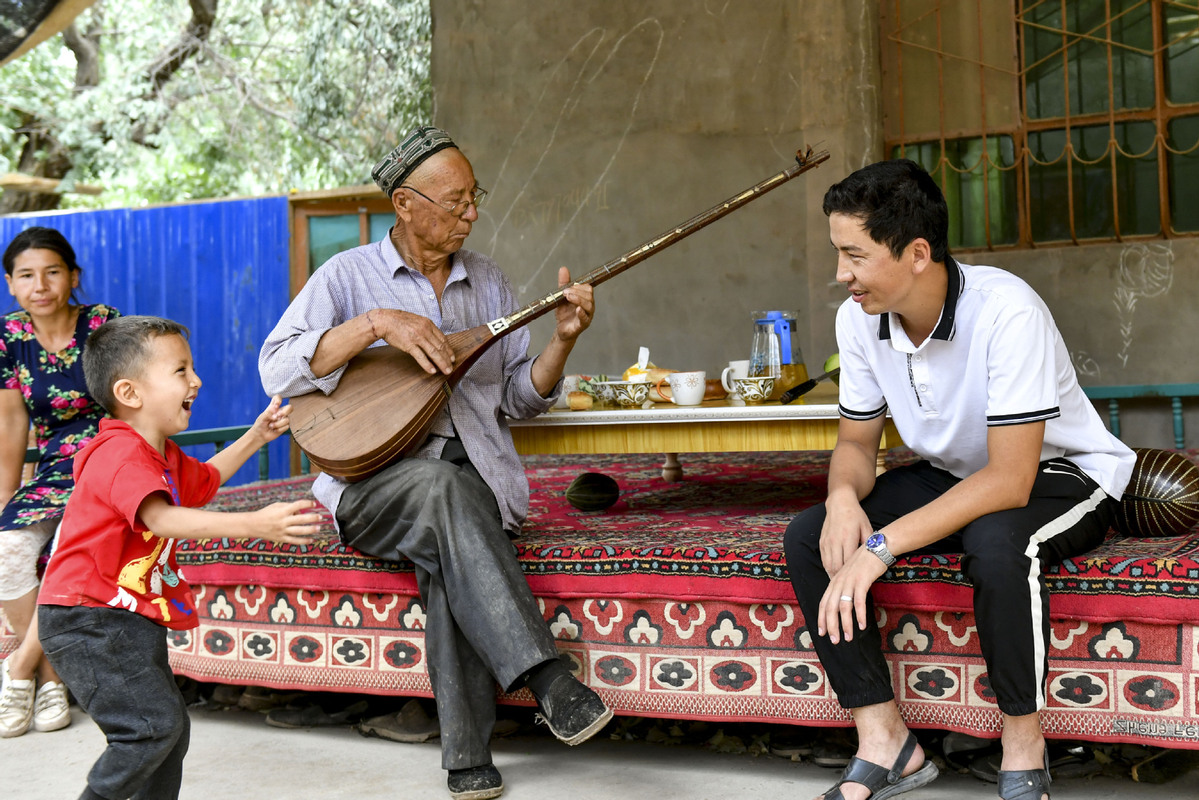
Growth of region's Uygur population has outpaced that of other groups, official says
The Uygur population in the Xinjiang Uygur autonomous region has increased under the law-based implementation of the family planning policy, with all rights of ethnic minorities protected, a Xinjiang official told a news conference over the weekend.
The remarks came after German scholar Adrian Zenz recently published a report that claimed Xinjiang was using forced sterilization and coercive family planning against Uygurs and other minorities in Xinjiang in an attempt to limit their populations.
Tursunay Abdurehim, an official from Xinjiang's Statistics Bureau, said the report was biased, used incorrect data and cited fake cases, and its findings went against academic research methodologies and the realities in Xinjiang.
Between 2010 and 2018, Xinjiang's total population, ethnic minorities population and Uygur population all rose, while its Han population registered just a meager increase, Tursunay told the news conference in Urumqi, Xinjiang's regional capital, on Saturday.
The Uygur population's growth rate-25.04 percent-during that period was not only higher than the 13.99 percent for Xinjiang as a whole, but also higher than that of other ethnic groups, she said. The region's Han population rose just 2 percent.
Tursunay said that from 2010 to 2018, the birthrate and natural growth rate of Xinjiang's population both declined slightly.
Before 2017, the birthrate in Xinjiang was around 15 newborns per 1,000 people.
In 2018, it was around 10.7 newborns per 1,000 people, almost the same as the national level, she said.
But the Uygur population's birthrate and natural growth rate were higher than the overall figures for Xinjiang and for the region's Han population, making allegations of "racial genocide" simply nonsense, Tursunay said.
She said the decline in Xinjiang's population growth in 2018 was the result of the stricter implementation of the family planning policy, and also reflected economic and social development and changing attitudes to reproduction.
Mutalif Roz, director of the region's health commission, said China's family planning policy for ethnic minorities was looser than that for Han, and the country had not formulated any such policy for a single ethnic group.
Implementing the family planning policy in Xinjiang was an objective need for sustainable development that coordinated population and economic, social and environmental resources, Mutalif said.
Xinjiang is an arid region with severe desertification problems. Its average water yield per square kilometer was 48,300 cubic meters in 2018, only 16.7 percent of the national level, according to official data.
In southern Xinjiang, farmland has become a scarce resource due to rapid population increase. In 2018, farmland per capita in the four prefectures in southern Xinjiang was 68 percent of the world average.
To resolve the problems of water and farmland allocation and improve everyday life, Xinjiang needed to implement the policy, Mutalif said.
In 2017, Xinjiang revised its population and family planning regulations, extending the same policy to all people: urban couples can have two children and rural couples can have three.
After implementing the policy in Xinjiang, pressure from a rapid rise in population was alleviated, and the health of people, particularly women and children, improved, Mutalif said.
Population development trends indicate that higher socioeconomic development levels are accompanied by greater self realization and better prenatal and postnatal care, with corresponding decreases in birthrate and population growth rate, he added.
Mutalif said Xinjiang's birthrate, mortality rate and the population's natural growth rate were all lower in 2018 than in 1978.
As for women mentioned in the report-including Zamira Dawut, Mihrigul Tursun and Tursunay Zinavdin, who allegedly suffered "unlawful detention" and were forced to undergo compulsory sterilization by the government-Ilijan Anayt, spokesman for the regional government, said Zenz played tricks by inviting "actresses" to beef up his claims.
"The 'actresses' gave their 'performances' in 80 percent of Xinjiang-related hype and obeyed the orders of the 'backstage directors', making up new 'lines' every time," Ilijan said.
"The reports related to those 'actresses' are all fake news."
Tursunay said: "Adrian Zenz is keen on making up lies on Xinjiang affairs and slandering China. His earlier reports and remarks have been proven to be false.
"This time he repeatedly ignored the truth and facts of Xinjiang's population development and deliberately made up lies by saying 'Xinjiang is suppressing ethnic minorities' population growth'."


- Geologists brave rugged terrain in Yunnan prospecting mission
- Senior enterprise official facing probe
- China's anti-graft authorities reveal extent of year's work
- Former Haikou Party chief gets death sentence with reprieve
- Purchase of US-made weapons to push Taiwan closer to the peril of war: spokesman
- WIC calls for submission of cultural heritage digitalization cases







