



Rural areas priority for virus control









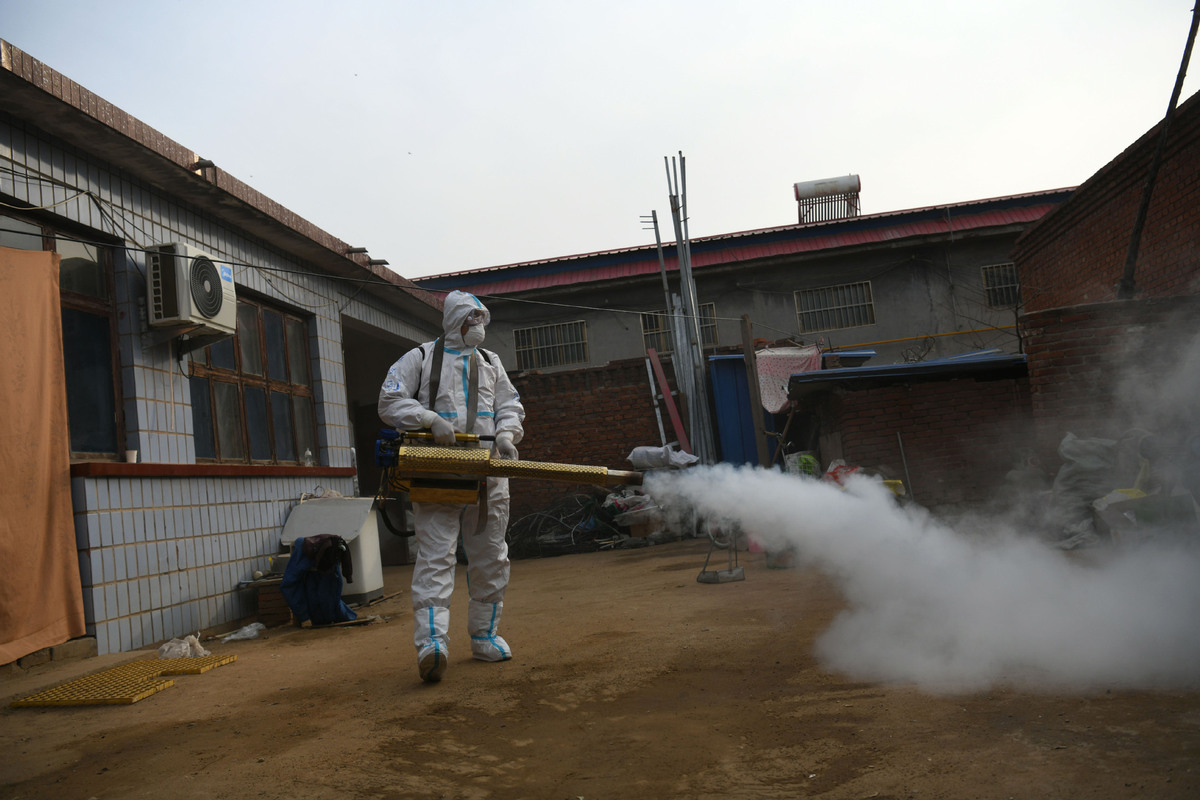
State Council guideline requires local authorities to step up prevention work
The central government has strengthened COVID-19 prevention work for next month's Spring Festival, with management of rural areas given more importance due to recent outbreaks in the countryside.
Since Jan 4, a novel coronavirus epidemic sweeping across villages in Hebei province has caused 830 confirmed cases. Rural areas in Northeast China's Heilongjiang and Jilin provinces have also reported clusters of cases, highlighting deficiencies in epidemic control in rural areas.
To improve prevention work in the countryside and relieve mounting pressure due to the large population flows anticipated over the holiday, the State Council released a guideline on Wednesday requiring local authorities to tighten coronavirus control and prevention work in such areas.
It highlights the strict management of people living around airports with higher risks of coming into contact with imported cases, and those returning to rural areas during the holiday. Workers involved in cold-chain industries in fringe areas between urban and rural areas are another key group required to take more frequent coronavirus tests over the break.
Wang Bin, an official from the National Health Commission's disease prevention and control bureau, told a news conference on Wednesday that rural areas had disadvantages when it came to controlling outbreaks.
"The countryside has a weaker healthcare system and fewer medical personnel," he said. "Doctors and nurses there have weaker awareness of preventing the coronavirus, as do the villagers.
"For rural areas, prevention is the priority. Encouraging villagers to stay at home and reduce gatherings is also vital."
According to the guideline, grassroots staff members of medical institutions and returning travelers should take regular tests for coronavirus.
Real names will need to be submitted at pharmacies whenever villagers pick up fever-reducing medicines and antibiotics.
Villagers with suspected symptoms of fever, cough or sore throat should be reported to town-level hospitals within two hours, and take coronavirus tests as soon as possible.
Gatherings celebrating Spring Festival, such as temple fairs, should also be strictly managed, as should indoor places such as wet markets and board game rooms.
To help rural areas conduct epidemic control measures, the National Health Commission released a notice on Wednesday saying that people planning to travel home to rural areas for Spring Festival from a different provincial-level region must be able to show negative novel coronavirus test results taken within seven days as proof of their health.
While the countryside is becoming the priority in the nation's COVID-19 prevention work, urban areas have also been given strict requirements to control the epidemic.
The guideline by the State Council stresses cities should improve their coronavirus testing capacity. Those with permanent populations under 5 million should finish testing residents within two days, while those with 5 million permanent residents or more should finish testing in three to five days.
People working in high-risk positions, such as cold-chain workers, should be tested at least once a week. Regular tests for workers in service industries are also required to spot any cases as soon as possible.
Treatment capacity was also emphasized. According to the guideline, cities should make the designated hospital for coronavirus cases an infectious diseases hospital, with no less than 10 percent of beds set aside for intensive care. Patients will be required to be transferred to the designated hospital within two hours of confirmation of infection.


- China introduces a standard framework for humanoid and embodied intelligence
- China's top political advisory body unveils agenda of the annual session
- Geologists brave rugged terrain in Yunnan prospecting mission
- Senior enterprise official facing probe
- China's anti-graft authorities reveal extent of year's work
- Former Haikou Party chief gets death sentence with reprieve







