Stronger cooperation promotes Vietnam's goals









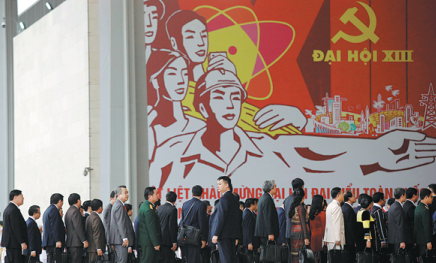
At the 13th National Congress of the Communist Party of Vietnam, which concluded on Feb 1, Vietnamese leaders set the country's future development goals, which include making Vietnam an upper-middle-income economy by 2030 and a developed, high-income economy by 2045.
Since Vietnam has set ambitious development goals amid rising global challenges, it can find common ground and should deepen cooperation with China to achieve those goals.
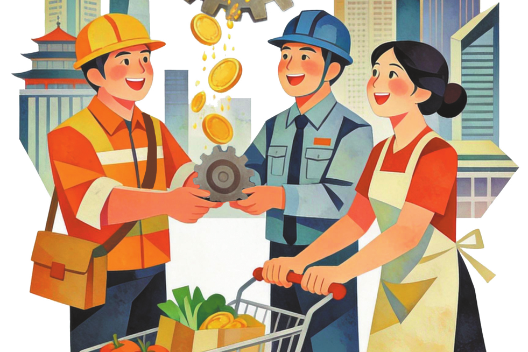
Thanks to the economic reform, known as doi moi in Vietnamese, and the resulting improvement in its investment environment, infrastructure construction and industrial output, Vietnam has achieved impressive economic growth over the past 35 years. Vietnam's economic performance has been robust because it has adopted an export-oriented development model and made good use of its land and labor resources, absorbed foreign investment and contributed to the global industrial chains.
The setting of the goal to make the country an upper-middle-income economy by 2030 marks a new beginning for Vietnam's economy. And since 2030 will also mark the 100th anniversary of the founding of the CPV, realizing the 2030 goal is vital and politically important for Vietnam as well as for achieving the 2045 goal.
But Vietnam needs to explore new ways to advance its development, as the world order is undergoing rapid changes, not least because of the pandemic-induced global economic recession. The emergence of digital economy has reduced the comparative advantages of labor and raw materials for developing countries. For Vietnam, the benefits of an export-oriented and labor-intensive development model seem to have peaked, and its domestic and external economic situations have become more uncertain.
Both China and Vietnam are socialist countries and part of the community with a shared future. The reform and opening-up measures China launched in 1978 inspired Vietnam to take similar measures-and the two countries' reform and development have provided fresh ideas for the modernization of socialist countries.
But now it's time for the two neighbors to seize the opportunities created by the transformation of the global value chains due to the devastating impact of the COVID-19 pandemic. Hence, the two countries should start negotiations on a bilateral free trade deal, which will institutionalize the trade and cross-border industrial exchanges between them.
Owing to the multilateral free trade deals it has signed, Vietnam has created a wide, higher-quality free trade network, and Vietnamese-made products enjoy some competitive edge in the region, including against those made in China, the world's largest manufacturer.
Thanks to the combined effect of the multiple free trade deals it has signed, the Sino-US trade frictions and the COVID-19 pandemic, Vietnam has grown into a hub for global trade and investment and a key manufacturing center in the Asia-Pacific region, which will help it to attract more foreign direct investment, including those that could have flowed into other ASEAN member states or China.
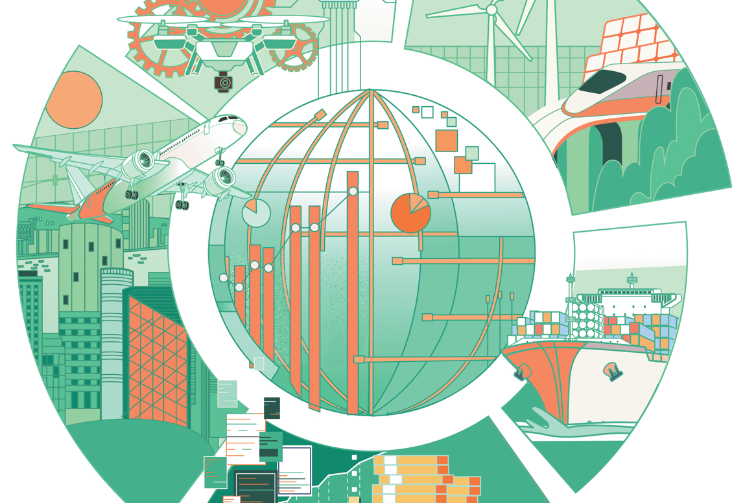
Yet when it comes to long-term benefits, China-Vietnam cooperation has greater potential. China has made remarkable development achievements, including promoting the Belt and Road Initiative, opening up its southwest region to investment, launching the New International Land-Sea Trade Corridor and China Railway Express with Europe, and wrapping up the negotiations on the Comprehensive Agreement on Investment with the European Union. These initiatives will help further integrate the East Asian industrial and supply chains with those of other regions.
That Hanoi has inked the EU-Vietnam Free Trade Agreement and the Comprehensive and Progressive Agreement for Trans-Pacific Partnership shows its preference for free trade rules. China should take special note of this, in order to work out bilateral deals in the future.
In fact, the Chinese and Vietnamese governments have already taken measures to facilitate cross-border e-commerce, including forming e-commerce working groups, launching the Silk Road e-commerce public-private dialogue and making customs clearance and cross-border payment easier and more efficient. Besides, China's e-commerce giants JD and Alibaba have cooperated with Vietnamese e-commerce leaders Tiki and eMonkey.
Also, despite its late takeoff, cross-border e-commerce has developed rapidly, with the two sides introducing a variety of trade channels such as email purchase and overseas warehouses.
They should now explore ways to deepen e-commerce cooperation in three areas. First, they should improve rulemaking under the framework of bilateral and multilateral mechanisms such as the China-ASEAN Strategic Partnership Vision 2030 and Asia-Pacific Economic Cooperation, including establishing partnerships on smart cities, technology innovation, cooperation and knowledge-sharing platforms.
Second, the two sides should boost e-commerce cooperation, and invite experts and establish think tanks to suggest news ways of deepening overall cooperation.
And third, China should closely study the features and trends of Vietnam's e-commerce market before proposing ways to strengthen cooperation.
Securing the supply chains was always a difficult task; the pandemic has made it even more difficult. Therefore, China and Vietnam should also strengthen cooperation on the new western land-sea corridor, which is part of the global transportation network linking western Chinese cities, in order to better protect cross-border supply chains.
The author is a research fellow at the School of International Relations, Beijing International Studies University. The views don't necessarily reflect those of China Daily.
If you have a specific expertise and would like to contribute to China Daily, please contact us at opinion@chinadaily.com.cn , and comment@chinadaily.com.cn.