Arresting the fall










US needs institutional reforms to strengthen its governance system if it is to prevent an absolute decline
In the past two decades, there has been much talk about the decline of the United States. There is substantial agreement that its relative decline is inevitable because of the rise of other major powers. For example, China's economy is expected to exceed that of the US around 2028. But an absolute decline goes to the root of US power base.
The fall of the Roman Empire helps shed light on the cause of a country's absolute decline. Rome suffered an absolute decline in its society, economy and institutions that left it unable to protect itself from invaders. Some scholars put the blame on imperial overreach which detrimentally weakened the economy of Rome.
Media outlets and politicians in the US are pushing an exaggerated narrative of a threat from China. But the attempt to weaken China will not benefit the US because it is based on the assumption that arresting the relative decline of the US in an imaginary zero-sum game can help it maintain its hegemony.
The Donald Trump and Joe Biden administrations have confused the disease with the cure. Introducing institutional reforms to strengthen the US governance system is the only effective way to arrest its absolute decline. Most importantly, the costs of kicking away the Chinese ladder may outweigh the benefits.
In his book The Great Degeneration: How Institutions Decay and Economies Die, Niall Ferguson, a senior fellow at the Hoover Institution, Stanford University, outlines how representative government in the US has broken the contract between the generations by heaping IOUs on its children and grandchildren; its free markets have been increasingly crippled by overly complex regulations and debilitating economic and political processes; the rule of law has become the rule of lawyers; and civil society has been gravely undermined by gradually ceding the protection of individuality and liberty to government control.
In the decade since Ferguson's book on the US' decline was written, the negative indicators he cites have only become worse.
Under the Trump administration, Congressmen walked a spider's web of vetocracy and partisan polarization. Polarization-induced congressional gridlock has made it more difficult for the government to pass effective laws to cope with the country's socioeconomic problems. The resurgence of partisanship has undermined the US public's faith in their institutions. Besides, Congress failed to challenge Trump's ineffective policies to combat the novel coronavirus, resulting in many deaths.
Trump also aggravated other internal problems that run deep in the US. These problems are: huge mountains of debt, lack of an effective post-election accountability system, plutocracy and cronyism, influence of the military-industrial complex, economic inequality, racism and loss of civility and a sense of direction. Some argue that the rise of Trump has signified the acceleration of the long-term decline in US power. Externally, Trump frustrated collective efforts to solve transnational problems by promoting unilateralism and adopting a hostile policy toward China.
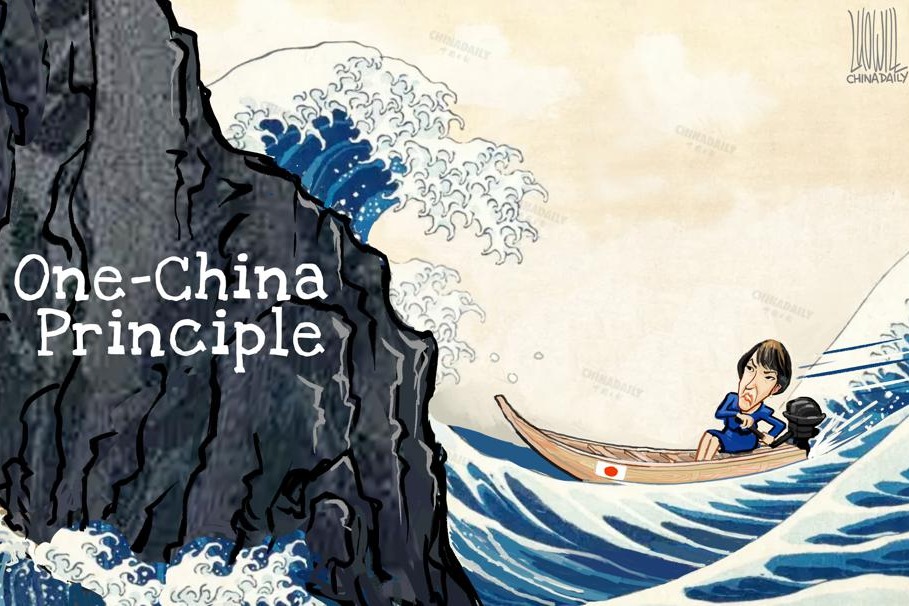
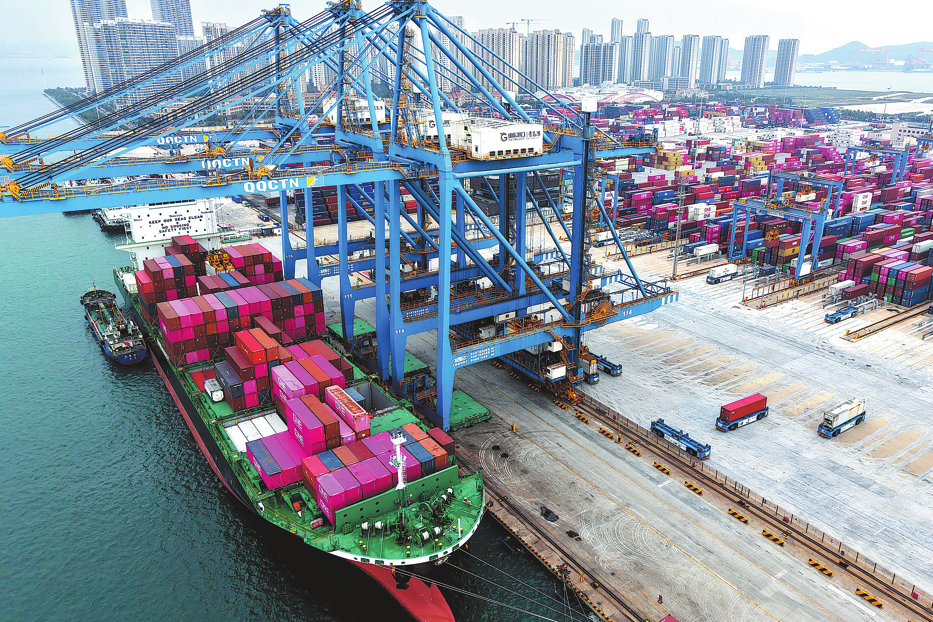
Instead of launching institutional reforms to arrest the decline of the US, the Biden administration has attempted to weaken China and persuade its allies to form a US-led coalition to contain China. Regardless of how the US and its allies have tried to define their collective interests in containing China, there are practical difficulties in uniting their diverse interests under an elusive containment banner. Different states often have different perceptions of external threat. Germany, for example, is China's biggest trading partner and technology exporter in Europe. China is Germany's largest trading partner. Recently, German Foreign Minister Heiko Maas has emphasized the need for continued cooperation with China.
Like Sino-German relations, Sino-Japanese economic relations are also firmly entrenched. Both Germany and Japan have a vested interest in preserving at least the status quo in their interdependent economic relations with China. Territorial and historical disputes between China and Japan have adversely affected the Japanese perceptions of the Chinese threat. Germany does not have these problems. Most Chinese neighbors want to strike a balance between US security guarantees and Chinese economic connectivity. Not to be neglected are the efforts made by Beijing to gain more goodwill in the large number of countries that are part of its Belt and Road Initiative. To sum up, it is very difficult for the US to form a durable alliance to contain China.
There is also strength in the argument that a hostile policy toward China will unnecessarily guarantee future enmity with Chinese people. An overwhelming 98 percent of Chinese citizens say they trust their national government, according to a recent survey by York University of Canada. It is not practicable to separate the Chinese government from its people.
The benefits of forming an anti-China alliance must also be weighed against the risk of the formation of a countervailing Sino-Russian alliance. Under some foreseeable circumstances, tense confrontation between the US and China arising from their disputes over Taiwan and the South China Sea may accidentally elevate their conflict to a combustible level. Both countries need to take preventive measures to avoid a military confrontation.
On complicated transnational issues, the US requires the cooperation of other big powers. As a major carbon emitter, China can play an important role in reducing carbon emissions and combating global climate change. The US also needs Chinese cooperation to deal with the pandemic, counter cross-border crime and terrorism, and improve cyber governance and the provision of global public goods.
Ineffective government has allowed public anger and frustration in the US to grow, fueling enough political support to send Trump to the White House in 2016.During his tenure, Trump aggravated the US' institutional problems by stoking the fires of popular anger and adopting a demagogic style of leadership. The political polarization and socioeconomic discontent will continue even after Trump's departure. Biden should therefore give priority to institutional reforms. It would take the utmost sophistry to advocate a containment policy against China on the assumption that it can prevent the US from declining.
Junius Ho Kwan-yiu is a legislative council member and a solicitor in the Hong Kong Special Administrative Region. Kacee Ting Wong is a barrister and co-founder of Hong Kong Coalition. The authors contributed this article to China Watch, a think tank powered by China Daily. The views do not necessarily reflect those of China Daily.