



What we know about the Omicron variant so far









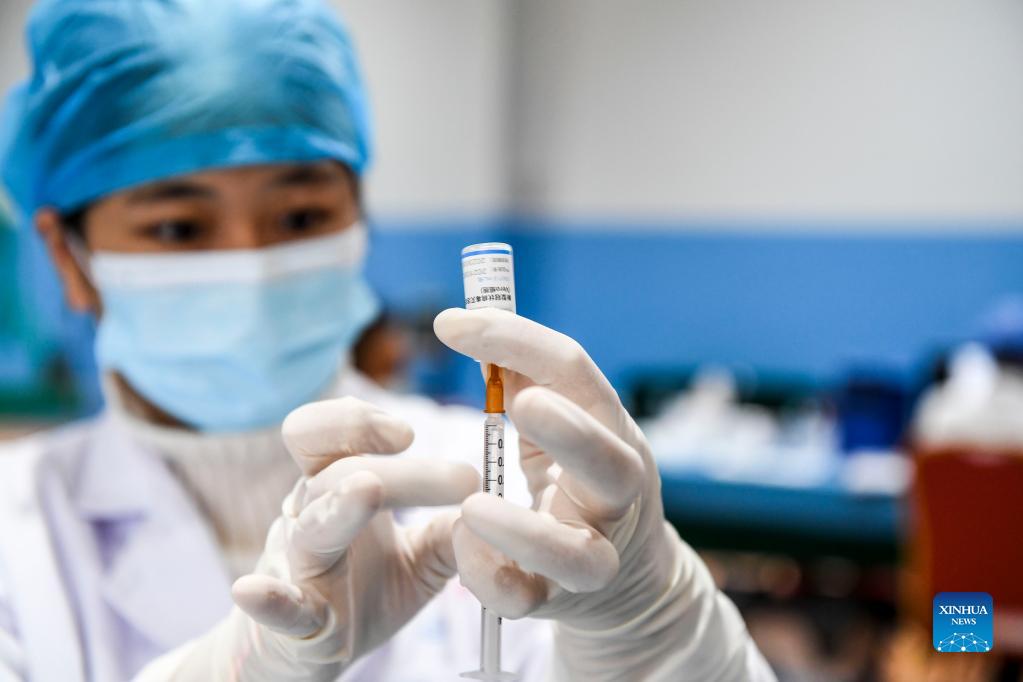
Answers to commonly-asked questions about the Omicron variant of COVID-19.
Q: Where and when was Omicron first detected, and how far has it spread?
The B.1.1.529 variant was first identified in South Africa on Nov 9 and became the dominant strain in circulation in the Gauteng province of South Africa within two weeks. On Nov 26, the World Health Organization designated it the fifth variant of concern (VOC) and named it Omicron after the Greek letter. The virus did not necessarily originate in South Africa.
As of Nov 28, countries and regions including South Africa, Israel, Belgium, Italy, the United Kingdom, Austria and the Hong Kong Special Administrative Region, have reported cases of the new strain. No cases have been reported elsewhere in China as yet.
Q: How has it evolved?
Genome sequencing of the new variant shows that the number of mutations it carries are significantly higher than known strains in the past two years. These mutations are concentrated on the virus's spike protein.
Three scenarios likely explain its emergence:
1. The virus accumulated a large number of mutations through a persistent infection in an immunocompromised patient and spread as a new strain through a chance event;
2. The virus infected an animal group and as a result, evolved at a faster mutation rate. It then spilled over into the human population;
3. The new strain had already been circulating in places without sufficient monitoring systems for a long time, and earlier generations of the strain have been missed.
Q: Is it more transmissible?
There is no systematic data on the new strain's transmissibility, pathogenicity or its ability to evade immunity. But it contains key mutations observed in four other variants of concern — Alpha, Beta, Gamma and Delta — as well as mutations associated with the enhanced ability to bind to human cells and multiply.
Epidemiological studies and monitoring data points to a spike in Omicron infections in South Africa that threatens to replace the dominant Delta strain. More research is needed to determine contagiousness.
Q: What is the new strain's impact on vaccines and antibody treatment?
Research shows that three mutations on the virus's spike protein — K417N, E484A and N501Y — are linked to a stronger ability to evade immunity. Omicron carries all three, as well as other mutations that will likely diminish protection provided by antibody drugs.
More research is needed to determine its effect on existing vaccines.
Q: How about its impact on nucleic acid testing kits?
Genome sequencing analysis shows that the mutations will not affect the sensitivity and specificity of mainstream nucleic acid tests in China. Some laboratories in South Africa reported that testing kits being used there likely cannot detect the new strain effectively.
Q: What measures have been taken?
A number of countries and regions, including the United States, the United Kingdom, the European Union, Russia, Israel, the Hong Kong Special Administrative Region and Taiwan have restricted travel from South Africa.
Q: How is China responding?
China's strategy of preventing imported cases and swiftly dealing with local resurgences remains effective against the Omicron strain. The Chinese Center for Disease Control and Prevention has established testing methods for the new strain and will continuously sequence genomes of imported cases to catch possible infections in a timely manner.
Q: What can the public do to protect themselves against the new strain?
Wearing masks remains the most effective way to stem the spread of the virus, including the Omicron variant. It is recommended that all people, including the fully vaccinated and those receiving a booster shot, wear masks in indoor spaces and on public transportation. Regular hand washing and good ventilation are also important.
Given the limited understanding so far of the new strain and risk of infections in China, the public is recommended to avoid traveling to high-risk areas overseas and to step up personal protection during trips.
Source: National Health Commission


- Senior enterprise official facing probe
- China's anti-graft authorities reveal extent of year's work
- Former Haikou Party chief gets death sentence with reprieve
- Purchase of US-made weapons to push Taiwan closer to the peril of war: spokesman
- WIC calls for submission of cultural heritage digitalization cases
- China calls for global opposition to Japanese neo-militarism










