



Stepping up inclusive innovation









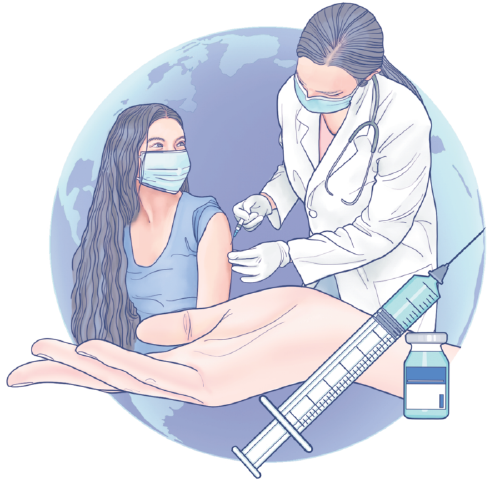
China is well-positioned to help drive this effort through global partnerships
COVID-19 vaccines were developed at an unprecedented speed. The whole process, from virus identification to vaccination of the public, was completed in just over a year. Despite this remarkable feat, the challenges of COVID-19 vaccine uptake, especially the huge distribution gap, have made it difficult to bring the pandemic to an end. By mid-January, 77 percent of people in high-income countries had been vaccinated with two or three shots, while only 9.5 percent of people in low-income countries had received at least one dose.
This is also the case with polio. Although the world's first polio vaccine was made available in the 1950s, the world is still unable to eradicate this paralyzing disease. HIV antiretroviral drugs have likewise been in use for almost 30 years, but only half of the world's HIV-infected children have access to the treatment. Having worked in public health for decades, I can't help but wonder: If such achievements are still not enough to eliminate these diseases, what do we need to address public health challenges in today's world?
Innovation is a primary force driving global progress, and it shapes the course of our lives. However, only when scientific and technological advances are geared toward maximizing people's wellbeing can we stimulate innovation for the good of all mankind.
What we need, therefore, is inclusive innovation that does not stop at research and development, or only serve people who can afford it. Inclusive innovation should benefit disadvantaged populations and give everyone the chance to live a healthy and productive life.
This is what motivated our co-chairs Bill Gates and Melinda French Gates to launch their foundation more than 20 years ago.
Since 2000, the foundation has made it a primary goal to bring lifesaving innovations to all who need them. Early on, we helped form the Global Fund, a coalition of governments, businesses, and philanthropic organizations working to accelerate the end of AIDS, tuberculosis, and malaria epidemics. So far, over 40 million lives have been saved through the Global Fund. We also helped launch Gavi, the Vaccine Alliance, which provides vaccines to the world's poorest children. Gavi has given nearly 900 million children the chance to receive basic immunizations, helping pull down the mortality rate for children under the age of 5 in developing countries by 40 percent.
China has become an important force and a key partner for the foundation in driving inclusive innovation globally.
Not only has China continued to enhance its R&D capabilities, it is also making efforts to transform its applicable experiences and proven tools into global public goods. Among the best examples is China's continued contributions to the world's fight against malaria, starting with Nobel Laureate Tu Youyou. She led a team to discover artemisinin, one of the most important tropical medicine breakthroughs of the 20th century. Artemisinin-based combination therapies have saved millions of lives and are now the standard treatment for malaria worldwide.
China remains committed to the global anti-malaria fight despite gaining the World Health Organization's malaria-free certification last year. One Chinese partner of the Bill & Melinda Gates Foundation is working on the biosynthesis of artemisinin. Should it be successful, the technology is expected to ensure the continued supply of this key ingredient and help reduce the cost of antimalarial drugs. Another Chinese partner is screening active ingredients in Chinese herbal medicine to produce new and efficient insecticides that can combat drug-resistant mosquitoes carrying the malaria parasite. Last month, in partnership with the National Natural Science Foundation of China, we launched a joint Grand Challenges program to call for international cooperation to develop innovative solutions to malaria vector control.
These efforts will prove instrumental in helping Africa, which shoulders more than 90 percent of the world's malaria burden, eliminate the disease.
Another good example is a China-made vaccine for Japanese encephalitis, or JE. Transmitted by mosquitoes, JE is the leading cause of viral encephalitis in Asia, which kills or disables thousands of children every year. Fifteen years ago, our foundation worked with several partners to explore ways to reduce this disease burden.
When we learned that a Chinese company had invented a safe, effective and highly affordable single-dose JE vaccine, we funded our partner PATH to provide technical support. The vaccine passed the WHO's pre-qualification in October 2013, paving the way for its global rollout. It has so far provided protection for 400 million children across 12 countries, reaching those who would otherwise have no access to JE vaccination. Moreover, it has also boosted momentum for more Chinese vaccines to follow in its path and tackle other life-threatening diseases that disproportionately affect the world's poor.
All these experiences have taught us that, to promote inclusive innovation, we must connect and align every link in the entire value chain, from R&D, market development and mass production to obtaining regulatory approval and applying innovations to urgent public health challenges. Establishing a broad, diverse range of global partnerships is essential to truly realizing the value of inclusive innovation.
China is well-positioned to help drive this effort through global partnerships, as demonstrated by the above examples, and by its ongoing commitment to help bridge the COVID-19 vaccine equity gap through its support for multilateral collaboration mechanisms such as COVAX and the Coalition for Epidemic Preparedness Innovations. By continuing to work together to boost inclusive innovation and ensure that no one is left behind, we can create a healthier and more equitable future for everyone.
The author is director of the Bill &Melinda Gates Foundation China Country Office. The author contributed this article to China Watch, a think tank powered by China Daily.The views do not necessarily reflect those of China Daily.





