


On long trip, flying friends well protected










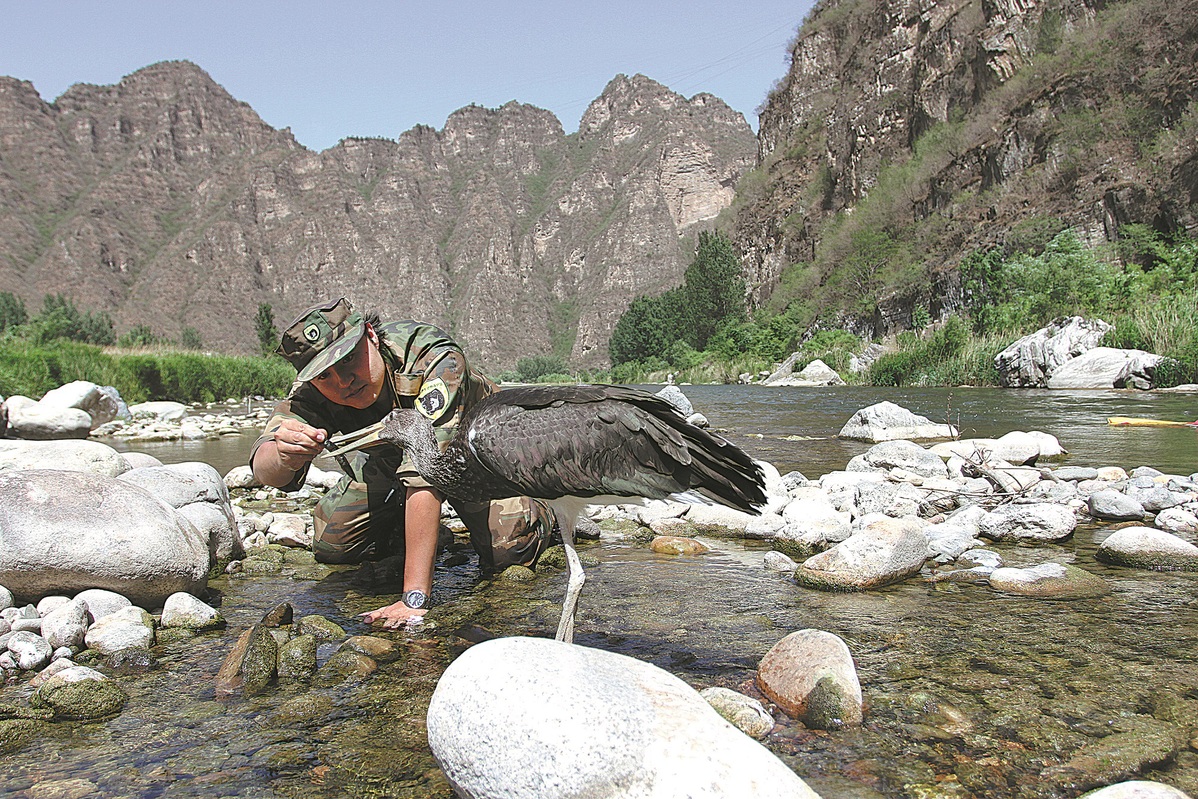
Brought up with birds and frogs, a man from Beijing goes extra mile for looking after wildlife
Every spring and autumn, migratory birds shuttling between Poyang Lake in East China's Jiangxi province and Siberia spend a short time in Beijing before continuing their trip southward or northward.
Guanting Reservoir on the border of Zhangjiakou, Hebei province, and west of the Yanqing district of Beijing, is one of their habitats, where they stay for six weeks or so regaining their stamina.
Those months are also among the busiest for Li Li, founder of the Black Leopard Wildlife Conservation Station, and his co-workers. They need to monitor the number of birds in the reservoir, identify species and do health checks, and ensure they are not disturbed or hurt.
"We can tell how good the habitat is for the birds as well as the local biodiversity through analyzing these data," Li said, adding that the workers record the data and report them to the China Wildlife Conservation Association, which is led by the National Forestry and Grassland Administration.
The team's work includes deterring potential poachers, transferring weak or injured birds to veterinarians for treatment and replenishing food for the birds during bad weather, such as heavy snowfall that lasts for days.
Li, who founded the wildlife conservation service in 2000, said his team has recorded more than 300 kinds of migratory birds, of which the most seen include the whooper swan, the whistling swan, the mute swan and various kinds of wild geese and ducks.
The Black Leopard workers usually record about 30,000 to 40,000 migratory birds stopping in the reservoir every spring, but the number this spring has exceeded 60,000, Li said.
That is because the birds, during their travel southward, left Beijing early last year, as they found it too cold. So they spent more time in the warmer south before heading north later, Li said.
"They have enjoyed a very good rest in the south. So this spring we saw them (in Beijing) with stronger physique, better vigor and brighter feather," Li added.
Migratory birds recording is a small part of Black Leopard's very busy workload. The civil organization's work covers the mountainous suburbs between Hebei and northwest and southwest Beijing, which are rich in wildlife.
It has set up about 110 infrared cameras there and dispatches its members and volunteers to patrol the regions to survey biodiversity, guard against poaching and maintain the cameras.
Such patrols can be dangerous because during their hikes, usually of between eight and 15 kilometers, the workers sometimes have to walk on riverbeds, exposed to the risks of floods to get to their destinations, Li said.
But their effort is well recompensed.
In addition to boars and roe deer drinking by the river, one can watch from the mountain top predator birds soaring, and "thousands of" migratory birds, such as common cranes, flying by during migratory seasons, a scene that is "very beautiful and spectacular", Li said.
Common cranes, as well as swans and black storks, are the birds that Black Leopard focuses its work on, Li said. The black stork is a wild species that enjoys first-class State protection.
The Beijing Municipal Forestry and Parks Bureau says there are only about 3,000 black storks worldwide, of which about 1,000 are in China.
Black storks inhabit the reaches of the Juma River in the Fangshan district of Southwest Beijing, as a result of the region's "superior natural conditions", the bureau said. In 2014 the China Wildlife Conservation Association conferred on the district the title "the hometown for black storks in China".
In the spring of 2020, the number of black storks in Beijing rose to about 100, and their habitats expanded from Fangshan to Haidian, Daxing, Shunyi and Pinggu districts, the bureau said.
Li, who established a program to protect black storks along the river in 2000, said he has witnessed the increase from just a few black storks to more than 70 in the region, and sees the black stork as a token of biodiversity in Beijing.
From April to June every year black storks lay eggs and hatch them by the river. Li said he and his co-workers have the task of watching out for the birds' nests and preventing tourists from scaring or hurting them, such as by lighting fireworks.





