40-year-high US inflation self-inflicted









The US Federal Reserve recently raised its benchmark interest rate by half a percentage point, shifting the target range to 0.75 percent to 1 percent, following a smaller increase in March. It was the Fed's biggest increase in 22 years.
Last fall, Fed Chairman Jerome Powell said rising prices were "transitionary" and would not leave "a permanent mark in the form of higher inflation". So, when inflation began to climb up after mid-2021, the Fed ignored it until it soared.
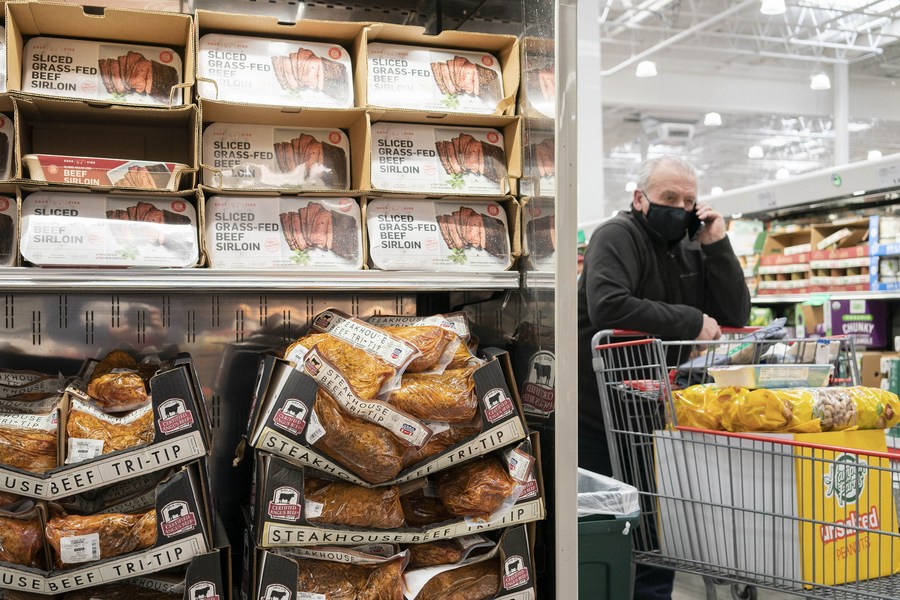
In March, the inflation rate in the United States accelerated to 8.5 percent, the highest since December 1981. It was partly fueled by rising energy and food prices, and the consumer price index, which shot to 6.5 percent, the most in four decades.
Typically, the rapidly increasing energy and food prices are being attributed to the Russia-Ukraine conflict. Effectively, they should be associated with economic sanctions which have turned a regional conflict with a limited, short-term trajectory into a global crisis with a broad, protracted horizon. That's the net effect of the hybrid proxy war in Ukraine.
Excluding volatile energy and food categories, the soaring inflation has been associated with pandemic-induced global supply disruptions and the recent COVID-19 outbreaks in China. New cases peaked in China in late April and are now coming down.
But disruptions in the global supply chains may penalize global economic prospects as long as the failed efforts to contain the virus in the West continue to give rise to new waves of variants.
Commodity prices peaked in early March, remain close to the peak level and have soared 39 percent since the beginning of the year. Food prices climbed to an all-time high in March, up nearly 20 percent year-on-year, and remain high in what UN Secretary-General Antonio Guterres has called the "hurricane of hunger and a meltdown of the global food system", while crude oil price reached a high of $125 per barrel in early March, increasing 43 percent since January.
In Europe, the most exposed region to Russian energy, natural gas price quintupled to a high of 230 euros ($239.04) per megawatt-hour and has dropped to 104 euros, as concerns over Russian supplies have dissipated somewhat, but only temporarily.
Russia is the world's 11th largest economy with GDP of $1.8 trillion. It is the world's largest gas exporter and the second-largest crude oil exporter, and given its key role in global energy supply, Goldman Sachs has warned that the global economy "could soon be faced with one of the largest energy supply shocks ever".
A benign scenario in the Ukraine crisis was possible, but it would have required rapid, proactive diplomacy. Unfortunately, that has not been the priority of the proxy war. As US Defense Secretary Lloyd Austin said in late April: "We want to see Russia weakened." It was a stunning admission.
The Biden administration is reviewing the excess tariffs imposed on Chinese products ahead of their expiration in July. In fact, some policymakers are calling for reductions in the tariffs in order to provide relief to American consumers struggling with rising prices. These calls are fueled by the fear of a potential Republican landslide win in the midterm elections.
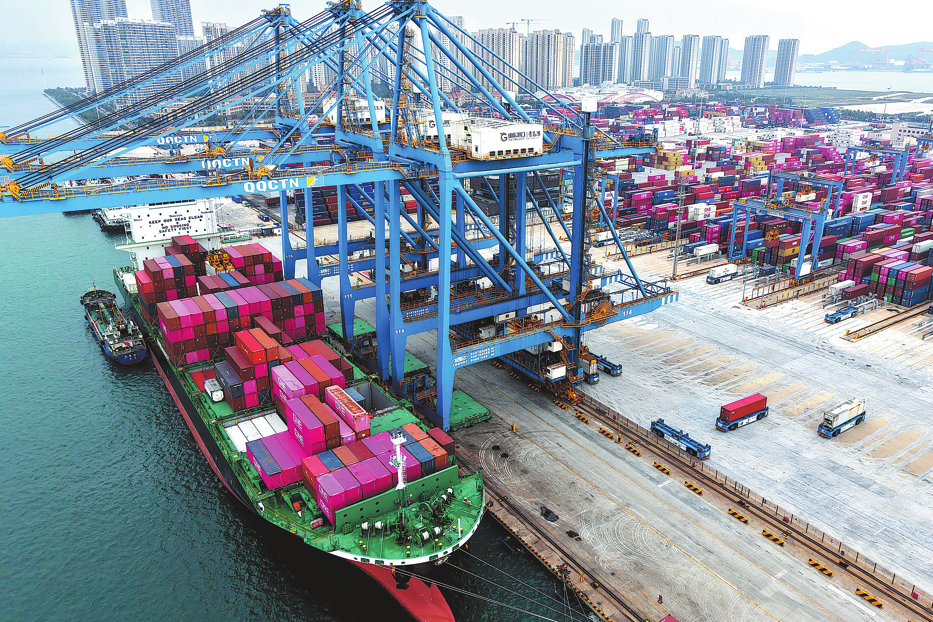
The US' misguided trade wars against China and other large economies have caused irreparable harm to the world economy, by undermining global recovery since 2017. Currently, average tariffs on Chinese imports are levied around 19.3 percent and cover more than two-thirds of all goods the US buys from China.
Yet the US trade deficit has not shrunk, as the Donald Trump and Joe Biden administrations expected. In March, it widened sharply to a record high of $110 billion, due to a broad-based rise in prices, especially as energy imports increased by 10.3 percent to a record high of $352 billion.
The lessons are unambiguous. Unilateral tariffs can resolve neither multilateral challenges nor distortions in the US domestic economy. In effect, recent research suggests that a trade liberalization policy equivalent to a 2-percentage-point reduction in tariffs could reduce US inflation by 1.3 percentage points from the current rate.
However, the Biden administration's priorities have been geopolitical rather than economic. That's precisely why it has continued with Trump's tariffs since January 2021. But, ironically, hoping to kill two birds with one stone, the Biden administration now blames "Trump's tariffs" for the record high inflation. In a disingenuous face-saving measure, the incumbent administration hopes to reframe its economic failures to derail Republican advances in the impending midterm elections.
"Has US inflation peaked?" The New York Times asked several weeks ago. "Has US inflation finally started to slow?" seconded the Financial Times more recently. Recent headlines reflect optimistic but premature hopes that inflation peaked in March.
Yet the Ukraine crisis is far from over, thanks to Biden's proxy war. Moreover, the bottlenecks in the global supply chains are yet to be cleared and could again clog supplies with the emergence of new novel coronavirus variants.
These pressures are likely to weigh on commodity prices longer, particularly if the Biden administration opts for new, ill-advised trade wars and continued misguided sanctions.
Meanwhile, the Fed's aggressive and belated rate hikes are escalating economic challenges in the US and elsewhere. And these could worsen in July, when the Fed plans to start quantitative tightening by culling assets from its $9 trillion balance sheet.
The author is the founder of Difference Group and has served at India, China and America Institute (US), the Shanghai Institutes for International Studies (China), and the EU Centre (Singapore). The views don't necessarily reflect those of China Daily.
If you have a specific expertise, or would like to share your thought about our stories, then send us your writings at opinion@chinadaily.com.cn, and comment@chinadaily.com.cn.
Mother of all sanctions http://www.aigou888.cn/a/202205/16/WS62818a83a310fd2b29e5cd0a.html
Lifting tariffs right choice for Biden http://www.aigou888.cn/a/202205/16/WS62818a7ea310fd2b29e5cd00.html