



Does the world have two camps?









Someone asked a question: Is the world now divided into two main camps? It's a profound question whose answer requires caution.
The Russia-Ukraine conflict has had an incalculable impact on geopolitics and global security, especially in terms of giving NATO a shot in the arm and allowing it to achieve previously unimaginable progress in several areas — troop expansion, forward deployment and foreign cooperation.
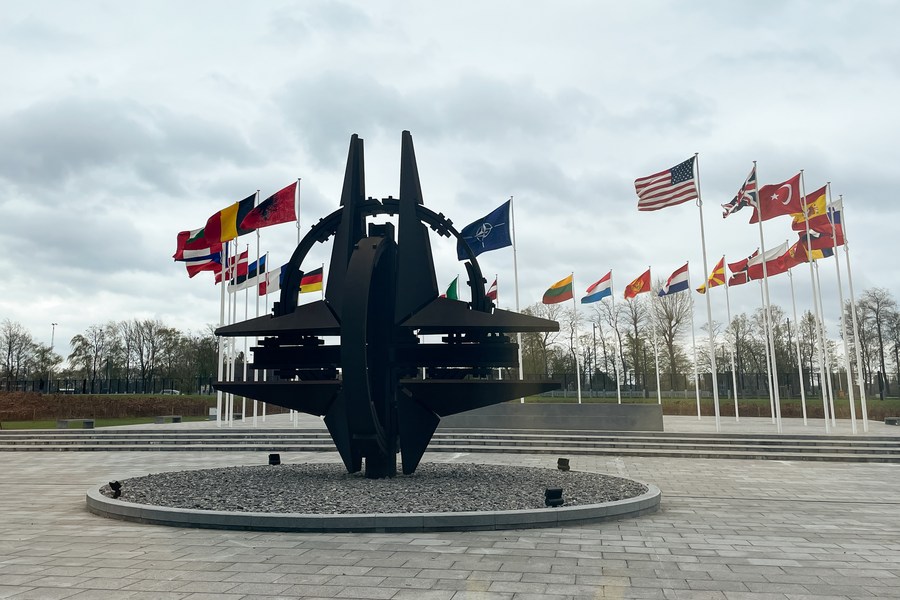
More important, a widespread wave of political correctness has washed over Europe, bringing hate for Russia and a desire to contain it. Transatlantic cooperation has returned in high profile, with even several allies of the United States in East Asia showing up at the NATO summit for the first time. The recent family photo of NATO leaders in Brussels sends a strong message that Western countries are forming alliances, and the world is thus facing a greater risk of division and increasing confrontation.
That said, the world has changed. But it will not return to the Cold War. One reason is that when the United Nations was founded in 1946, it had only 51 members, while today it has 193. The international community is no longer dominated by a few countries, and the developed, white world behind NATO represents only a small part of that. The rise of developing countries as a group is, in a significant sense, sufficient to offset the over-representation of the West in the world and become an important force for maintaining peace.
Another reason is that the globalization process of more than 30 years since the end of the Cold War has not only created a high level of awareness of the interdependence of production processes, international relations and even relations with natural resources and Earth's ecology, but also further defined the direction of the historical evolution toward peace and development.
Accordingly, hot wars, cold wars and even warm wars (as proposed by some) are out of line with the aspirations of the majority of countries, which frown on any form of division and confrontation. If the West insists on imposing war and turmoil on them, it is bound to fail under their stubborn resistance.
NATO's experience in Afghanistan is a lesson in front of us. Still another reason is that there are many problems in the world. The internal governance problems of the West are also challenging. Going beyond the strife arising from the Russia-Ukraine conflict will certainly be the common wish of the world's people, including those in the West. Any launch of a new Cold War on grounds of ideology and identity politics will only satisfy a few beneficiaries and will ultimately be unpopular.
One camp is revived, but is there another? This is the root of the problem. In the eyes of the West, China and Russia, as two major nuclear powers with different social systems, have formed a strategic partnership of "unlimited cooperation," and China has adopted a principled neutrality toward the Russia-Ukraine conflict. The West views all these as the existence of an opposing camp, but it is very wrong.
First, the Chinese government has repeatedly explained its position on China-Russia relations and the Ukraine conflict. In the final analysis, China's policy is determined by its own national interests and the merits of complex facts concerning external affairs. China has been clearly opposed to NATO and wary of it as an instrument of the Cold War. In addition, China is critical of the West's incitement of color revolutions in many parts of the world, including Ukraine, which are harming regional stability and people's well-being. Therefore, China and Russia are in the same or similar position on many major international security issues, and they cooperate and support each other in the United Nations and other multilateral diplomatic occasions. But this does not mean that China and Russia are aligned again.
Second, China and Russia were aligned historically, and both sides have a deep understanding of the painful lessons left by that relationship. The conclusions reached by the leaders of the two countries in this regard have determined what future bilateral relations will be like. China has the longest history of all major powers and has the most historical experience. The Chinese always state their commitment to remembering history and looking to the future — meaning that we should learn more from history — which is the basic starting point for China's policy toward Russia, It transcends alliances and steadily moves forward.
Third, China has grown into one of the most important multipolar forces in the world. China will not lose its strategic resolve because of aggressive anti-China forces, but it will be more conscious of the great responsibility it has to maintain world peace and development. At the moment, it is indeed a key in determining whether two camps will take shape. President Xi Jinping has often said that we should stand on the right side of history. He proposed a global development initiative and a global security initiative last year and this year, in effect injecting confidence and energy into a global industrial scheme that has lost momentum and an international order that has lost stability.
Since September last year, more than 100 countries and multilateral organizations, such as the United Nations, have supported the GDI, and nearly 60 countries have joined the Group of Friends of the GDI established by China on the UN platform. In this way, China will not step into a new Cold War. The US and its followers will be left all alone.
Wu Baiyi is a research fellow of the Chinese Academy of Social Sciences. The article was first published on chinausfocus on July 15, 2022. The views don't necessarily reflect those of China Daily.





