Architecture should 'cool down' amid heat waves










Unusually high temperatures and extreme weather events have become more frequent worldwide, which means climate change is intensifying. To avoid triggering the climate tipping points, the world needs to drastically reduce fossil fuel use and cut greenhouse gas (GHG) emissions.
For that, however, cities and buildings, too, will need to consume less energy and emit less GHGs by, for example, focusing more on the energy and thermal balance, and taking local features such as climate and terrain into consideration when building or improving infrastructure facilities.
Rising temperatures, combined with "urban heat island effect" which makes an urban area significantly warmer (or hotter) than surrounding rural areas due to anthropogenic activities, generates insufferable heat. Hence, it is necessary to lessen the heat island effect through smart city planning and building.
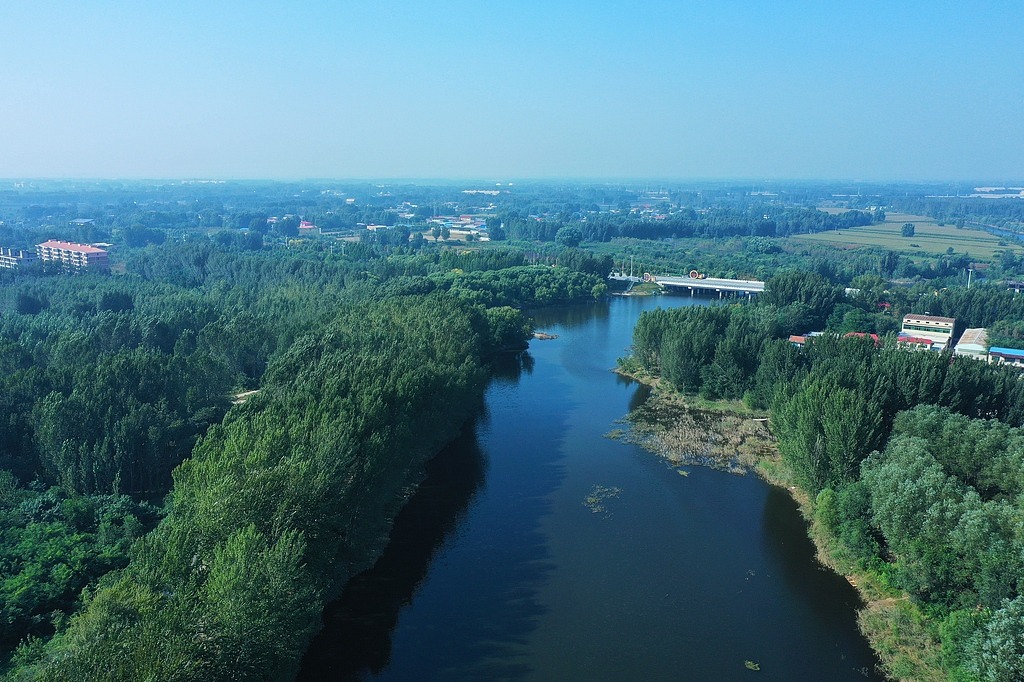
The first thing to do is to improve the thermal properties of the underlying surface of cities to reduce heat. For instance, terraces and roofs can be painted white to reflect the solar rays that otherwise would be absorbed by the surface, increasing the heat levels in the interiors of buildings. It is also necessary to increase the green cover and water bodies in cities, by growing trees, plants and grass on roofs, facades and hard-paved squares, so as to help evolve local microclimate.
Besides, existing big water bodies should be protected and new ones built, because they absorb not only huge amounts of heat but also carbon dioxide. Other than that, the authorities should also focus on building sponge cities, that is, cities designed to capture all run-off water and allow rainwater to filter through the soil to the urban aquifers. Sponge cities allow people to draw water from aquifers whenever needed as well as well dissipate surface heat by absorbing much of the solar rays.
In order to reduce heat in buildings and minimize the "urban heat island effect", it is necessary to improve ventilation. Aside from creating open, green spaces, architects and engineers should also design and build ventilation corridors in accordance with a city's wind flowing pattern, and scatter the buildings in their urban plans to reduce the accumulation of heat in buildings.
When it comes to reducing energy consumption, the authorities should construct more buildings that are resilient and adaptive to climate change. For instance, better shading, heat insulation and natural ventilation can be used to keep buildings' interiors cool without consuming more energy to run air-conditioners.
In terms of operation and maintenance, intelligent ventilation management methods such as "close by day and open at night" can be used to balance the day and night temperature. Since climate-adaptive buildings use less energy and fewer equipment, they will also emit a lot less GHGs than those structures that rely on air-conditioning and other mechanical and electrical means to keep the interiors cool.
True, air-conditioners are a must during the summer months in many cities. But the overuse of air-conditioners will lead to a vicious circle of rising energy consumption of energy and increasing GHG emissions. In fact, air-conditioners are harmful to the atmosphere, as they consume huge amounts of energy and belch out equally huge amounts GHGs, with centralized air-conditioners intensifying the urban heat island effect and air-conditioners as a whole increasing the greenhouse effect.
According to China Building Energy Conservation Association, heating and air-conditioning accounts for up to 65 percent of the energy consumption of a building. Thanks to the closed building pattern, heat accumulates inside buildings forcing people to use air-conditioners to lower the temperature. And as the use of more and more air-conditioners raises urban temperatures, the demand for air-conditioning increases further.
To reduce the demand for air-conditioners and ensure people use them rationally, we advocate behavioral energy-saving methods such as changes in the design and technical aspects of air-conditioners including lowering their energy requirement and making adjustments to buildings to reduce their dependence on air-conditioning.
In case air-conditioners have to be used to keep the interiors cool, air-cooling systems should be selected carefully. High-efficiency centralized cooling systems should be used to reduce energy consumption and improve energy efficiency. But despite large-scale centralized cooling systems being highly efficient, their transmission and distribution loss is relatively huge.
On the other hand, decentralized cooling systems are convenient for flexible control. As such, the two systems can be used flexibly, separately or simultaneously, depending on actual conditions, to save energy.
Since the cost of cooling is much higher than the cost of heating, measures should be taken to store the excess energy produced in the winter and use to run air-conditioners in the summer.
Thermal energy in the form of heat or cold can be stored and used later to meet the cooling/heating demand of houses and buildings using seasonal thermal energy storage. Seasonal thermal energy storage technologies are essentially used for storing thermal energy during one season (winter or summer) and discharging the stored energy in another, depending on demand.
Seasonal thermal energy storage makes use of large basins or the Earth's subsurface as the key facilitating source for energy storage to serve houses and buildings through the heating/cooling network of a district or neighborhood.
Whether it is balancing the day and night temperature or coping with seasonal changes in temperature, ancient wisdom such as "cold lanes" and "living near water bodies" have always been of great help, as they promote the sustainable development of human society. As such, modern technologies should be combined with ancient wisdom to achieve sustainable results and build a better future.
Xu Bin is a senior engineer at China Architecture Design and Research Group; and Li Dongzhe is director of Green Architecture Environment Institute of the same group.
The views don't necessarily represent those of China Daily.
If you have a specific expertise, or would like to share your thought about our stories, then send us your writings at opinion@chinadaily.com.cn, and comment@chinadaily.com.cn.