



Seeking UNESCO stamp for Central Axis









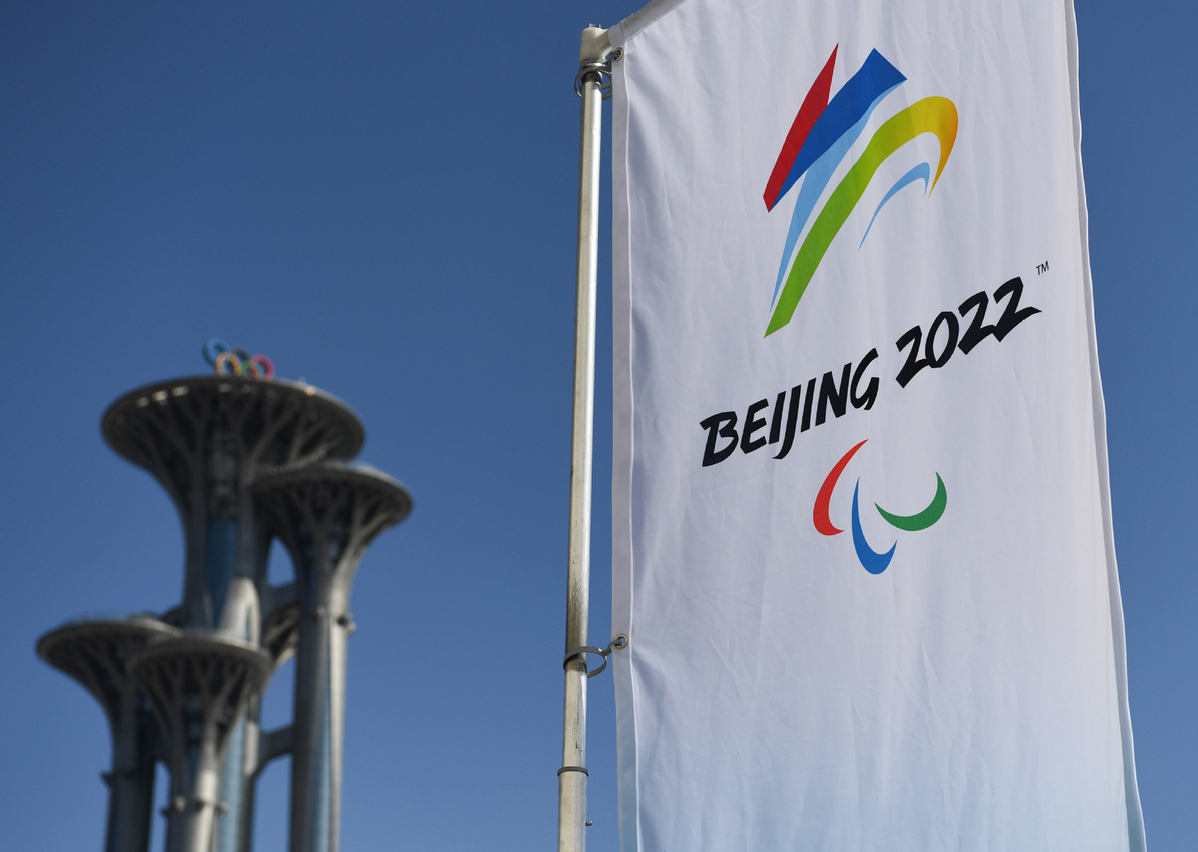
One year ago, the Beijing 2022 Winter Olympic Games wrote a new chapter in Olympic history and received international praise. Many of the Winter Games (as well as the 2008 Summer Games) venues are along the Central Axis of the capital city. And on Jan 28, Beijing released its protection management plan for the Central Axis from 2022 to 2035, marking a new stage in its conservation, sustainable development and application to be included in the UNESCO World Heritage Site list in 2024.
By successfully hosting the Winter Olympics, Beijing demonstrated the Chinese people's cultural confidence in the new era, injected new impetus into the ancient capital city, enhanced its international reputation and created the right conditions for applying to UNESCO to include the Central Axis in the World Heritage Site list.
In order to advance its transition into a national cultural center, Beijing has made good progress in conservation and made unprecedented efforts to protect and use its historical and cultural heritage.
The 7.8-kilometer-long Beijing Central Axis, which can be traced back to the Yuan Dynasty (1271-1368), stretches from the Yongding Gate in the south to the Bell Tower and Drum Tower in the north, resulting in a north-south undulating, left-right symmetrical architectural landscape.
The protection plan rationalizes the conservation area into a heritage zone and a buffer zone and specifies the boundaries for the first time. The heritage zone covers an area of 5.9 square kilometers and includes 15 elements, among them the Forbidden City, the Imperial Ancestral Temple and the Temple of Heaven. The buffer zone contains historical river courses, ancient streets and historical cultural blocks, which are related to the Central Axis and can show the traditional landscape of the city.
Through 700 years of development, the axis has become the backbone of Beijing. It captures the essence of ancient urban architecture and has witnessed the vicissitudes of time.
China is home to 56 World Heritage Sites, seven of which are in Beijing, making the capital home to the highest number of such sites in the world thanks to its 3,000-year history. The array of architectural delights and complexes along the axis represent the highest standard of royal palaces, and embody the essential architectural, cultural and aesthetic values and pursuit of the Chinese civilization.
The Central Axis is not only an important historical and cultural heritage, but also has a political dimension, as it has had a huge impact on the city's development plans and people's lives.
According to Beijing's medium- and long-term plan that runs from 2019 to 2035, the cultural values of its residents and their level of cultural awareness will be substantially improved and the city's demonstration and leading role in the creation of modern culture will become more prominent. Beijing's bid to seek UNESCO World Heritage status for the Central Axis will also help strengthen the conservation measures for the city and improve the lives and livelihoods of the people.
Chinese aesthetic design was amply reflected even during the 2022 Olympic Games. For example, the National Speed Skating Hall, also known as the "Ice Ribbon", creates a "ribbon" shape that symbolizes the high-speed sliding of speed skaters.
The official uniform designs of staff members, technical officials and volunteers — in traditional Chinese landscape painting technique — reflect the harmony between humankind and nature. The main colors of the uniforms, namely glowing red, Great Wall gray, sky blue and snow white, were widely used in ancient China.
Besides, the mascots of both the Winter Olympics and the Paralympics, Bing Dwen Dwen, a helmet-wearing panda, and Shuey Rhon Rhon, a personified traditional Chinese lantern, showcased Chinese cultural elements on the global stage.
Furthermore, the designs of the medals for the 2022 Winter Games were inspired by yu bi, a circular Chinese jade artifact dating back 5,000 years. And the 30 pictograms for the Olympics were inspired by Chinese calligraphy and seal carving.
The giant snowflake that started with the opening ceremony of the Winter Olympics and ended with the closing ceremony of the Winter Paralympics turned into a Chinese knot which symbolizes connectedness and togetherness.
So in more ways than one, the success of the Beijing Winter Olympics can be attributed to the integration of Chinese cultural and aesthetic elements with the Olympic spirit. Many new buildings with Chinese cultural elements are situated on the extended line of the Central Axis. They include the National Speed Skating Hall, the National Stadium, National Aquatics Center and the Olympic Park Observation Tower (which were built for the Beijing 2008 Summer Olympics), the Chinese Academy of History, China National Arts and Crafts Museum and the China Intangible Cultural Heritage Museum.
To some extent, these new landmarks have added modern aesthetic elements and value to the Central Axis, which has witnessed the city's rise and become an important cultural symbol.
The architecture and historical edifices along the axis reflect China's agricultural civilization and traditional political culture, while the new landmarks — achievements of the country's industrial civilization and modernization — demonstrate China's willingness to embrace the world and its confidence in creating a new model for human advancement.
Thanks to the timely and effective dissemination of information during the Winter Olympics last year, the world has a better understanding of the city. The Winter Games have left a great legacy and created the right architectural and aesthetic condition for Beijing to seek UNESCO World Heritage status for the Central Axis.
The author is a researcher at the China National Center for Cultural Studies, Chinese Academy of Social Sciences.
The views don't necessarily reflect those of China Daily.





