



Existence of massive first-generation stars with 260 solar masses confirmed









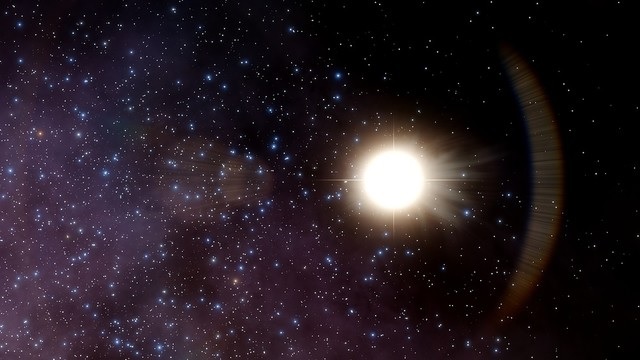
A new study led by Chinese scientists has confirmed the existence of first-generation stars with 260 solar masses for the first time by finding evidence of the existence of pair-instability supernovae (PISNe) which evolved from such massive first stars in the early universe.
Previously, studies had only confirmed the existence of first-generation stars of under 100 solar masses, and thus the latest results refresh the understanding of the mass distribution of the first generation of stars, according to the study published in the journal Nature on Wednesday.
The breakthrough was based on observations by China's Large Sky Area Multi-Object Fiber Spectroscopic Telescope (LAMOST) and will have a "profound impact" on the understanding of star formation and galactic chemical evolution in the early universe, according to Zhao Gang, whose team from the National Astronomical Observatories under the Chinese Academy of Sciences led the study.
The first stars illuminated the universe during the Cosmic Dawn, ending the cosmic "dark ages" that followed the Big Bang. However, the distribution of mass is one of the great unsolved mysteries of the cosmos.
Previous theoretical studies of first-generation stars predicted that their mass could be up to several hundred solar masses and that first-generation stars with masses between 140 and 260 solar masses would end up as PISNe.
PISNe are different from ordinary supernovae and would have left a unique chemical signature in the atmospheres of next-generation stars. However, no such signature had been found, and so the existence of these supernovae had never been observed.
However, this latest study led by Zhao identified a chemically unusual star in the galactic halo based on observations by the LAMOST and the Hawaii-based Subaru Telescope, which is run by Japan.
Furthermore, the star's chemical abundances are consistent with previous predictions about PISNe resulting from first-generation stars with 260 solar masses, which confirms the existence of PISNe from such massive first stars in the early universe, according to Xing Qianfan, primary author of the study and researcher at the CAS' National Astronomical Observatories.
The team also included researchers from CAS' Yunnan Observatories, the National Astronomical Observatory of Japan and Monash University, Australia.
Reviewers commented that the paper presents the first definitive association of a galactic halo star with an abundance pattern originating from a PISN.
They said that they hope to deepen the understanding of the evolutionary history of the galaxy by discovering more chemically peculiar stars with LAMOST and the Chinese Space Station Telescope, or the Xuntian Space Telescope.


- Foreign visitors taste the delicacies of Tianjin's ancient town
- China introduces a standard framework for humanoid and embodied intelligence
- CPPCC unveils agenda of the annual session
- Geologists brave rugged terrain in Yunnan prospecting mission
- Senior enterprise official facing probe
- China's anti-graft authorities reveal extent of year's work







