



Cities must not gamble on once in 1,000 years









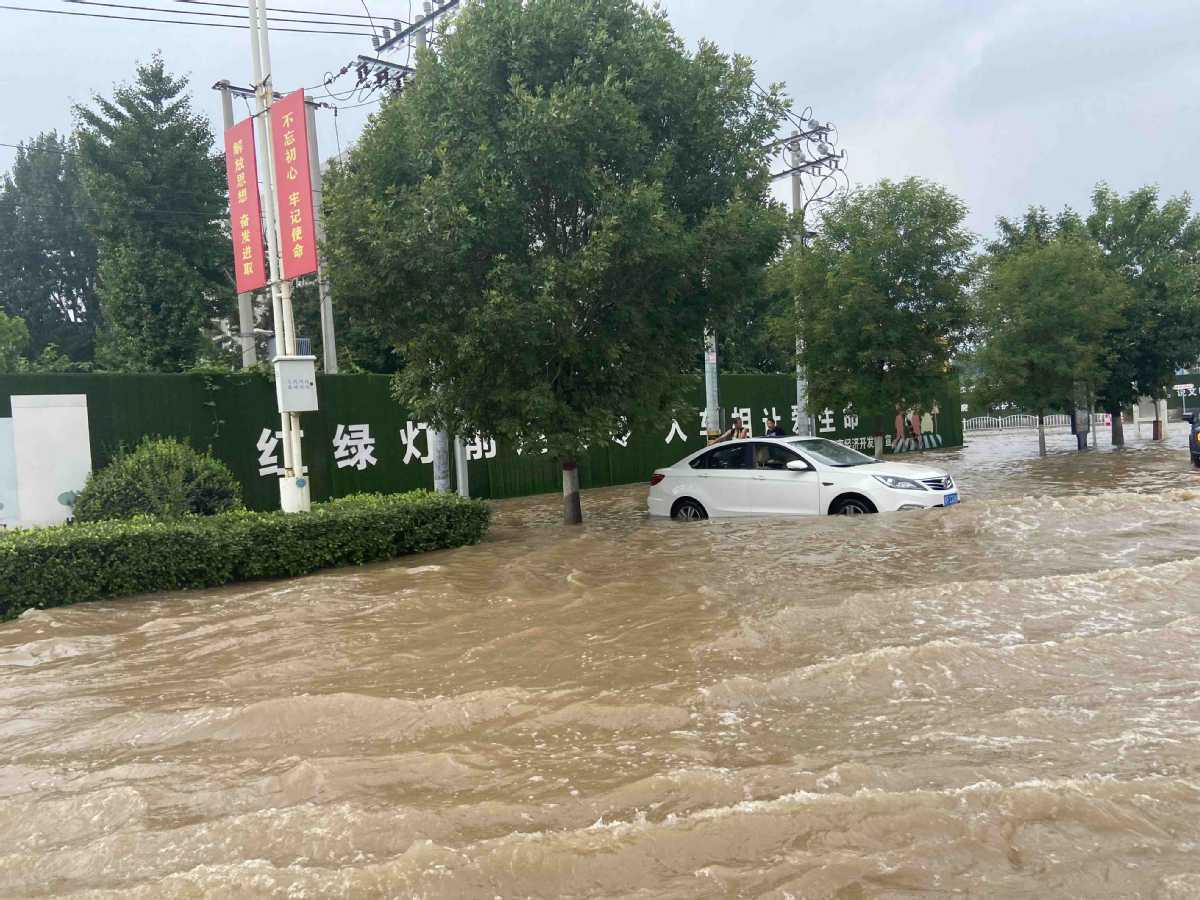
Typhoon Doksuri has brought heavy rainfall to a large swathe of China over the past two weeks, causing big floods in Baoding, Hebei province, and the suburban areas in the south of Beijing.
As extreme weather events become more frequent, how to prevent and mitigate disasters, and how to improve the resilience of cities to extreme weather are becoming challenges for governments around the world.
Human history is a record of the fight against natural disasters, and to some extent the formation of cities was to provide a sheltered space against the risks of natural disasters.
China pays special attention to strengthening urban infrastructure and building livable, resilient and smart cities. Resilient cities are able to withstand potential disasters, whether they are due to extreme weather, a national or international economic meltdown, grid power blackouts or disruptions in food supply.
More people are living in cities today than any other time in history, and cities are becoming much larger and more complex than before, making them easy prey to extreme weather events and secondary disasters.
Therefore, city governments should always bear in mind that the disaster-resistance capacity of a city must be improved along with its infrastructure development and upgrading, and the city should be able to protect its residents from certain natural disasters. The people are not content with the explanation that the rainfall has exceeded the design limits of their cities' drainage system whenever cities are waterlogged. They are fed up with such excuses that the rain that has just soaked their homes is the heaviest over the past century or even 1,000 years.
The government should divert more input from expanding urban areas of a city to the enhancement and maintenance of its natural disaster pre-warning system, emergency rescue ability, urban sewage system and underground pipeline networks, especially the natural gas pipes, which are like a time bomb if they lack professional maintenance.
The population of many Chinese cities has swelled several times over the past decade, but the level and capacity of their underground pipeline networks and sewage systems remain largely unchanged compared with decades ago.
Plus, there should also be more education and training of the people on self-rescue in the face of emergencies, particularly in the event of a flood, fire or earthquake. People don't take emergency drills seriously at all in many cities. China can learn from Japan in this regard to raise both the awareness and the ability of the population about what to do in an emergency.





