Real estate sector needs root-cause reforms









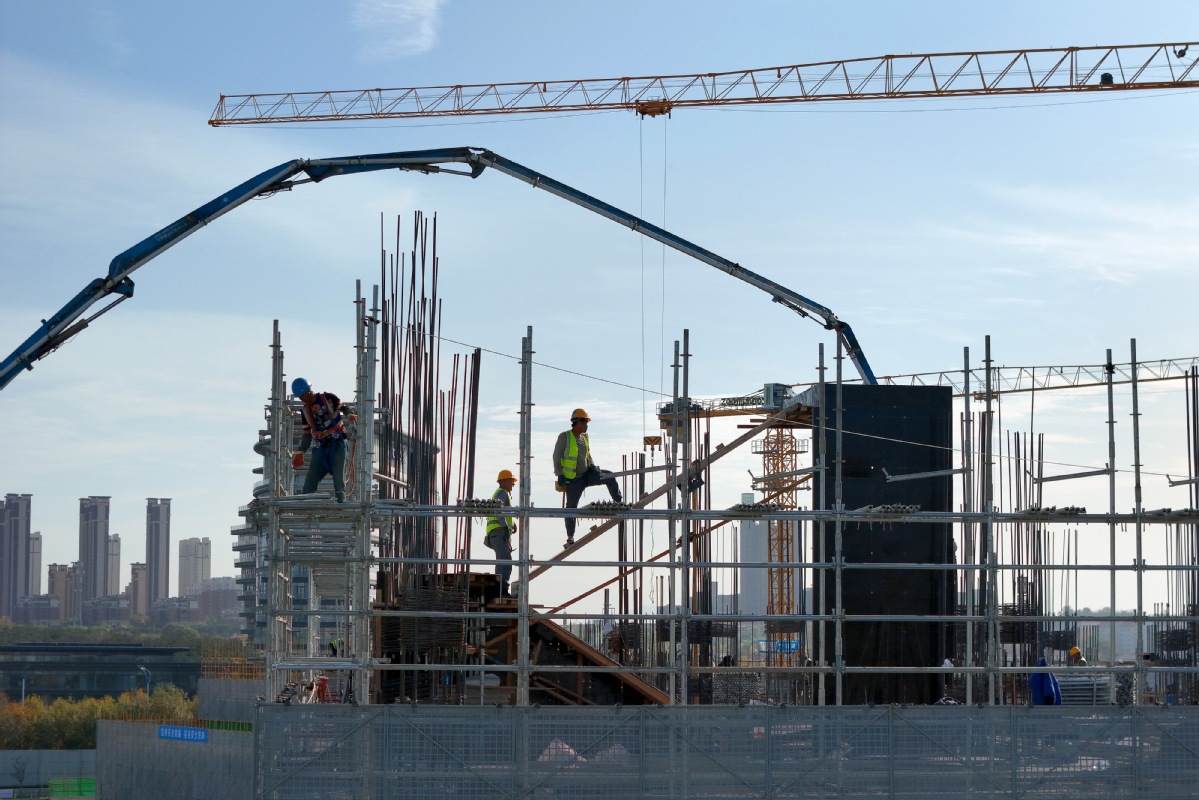
The real estate industry, a pillar of China's economy, has become a focus of attention because it is facing difficulties as the country transitions to innovation-driven high-quality development.
After the China Evergrande Group, one of the biggest names in China's property market, began facing severe financial problems, triggering fears of having a domino effect on the property market, the central authorities introduced an array of policy incentives to help property developers meet the sector's different demands.
But to address the apparent risks to the real estate market and accelerate economic recovery, the government should adopt more tailor-made policies including reducing the percentage of down payment for apartments, lowering the mortgage interest rate and adjusting the eligibility criteria for first-time homebuyers.
In fact, the favorable policies have helped stabilize, to a certain extent, the property market despite some cases of breach of contract. The national transaction volume of both new and secondhand residential properties achieved positive growth from January to September this year, while the completion volume of housing increased by 19.8 percent, which is indicative of improved confidence and expectations.
The central authorities have made it clear that the relationship between demand and supply in the real estate sector has undergone fundamental changes. New mortgage lending-related policies and measures to identify first-home buyers have been adopted in some first-tier cities with the aim of lifting administrative restrictions, while some other big cities have withdrawn property-purchasing and property-loaning limitations.
While these moves will stimulate the real estate market's recovery in more third- and fourth-tier cities, measures such as urban village renovation projects, construction of government-subsidized and affordable housing, and optimized supply-demand mechanisms would further improve the housing sector's structure and ensure low- and middle-income individuals have access to affordable housing. China's risk-control measures in the property sector are therefore likely to be successful.
The real estate sector's recovery, however, will be a wave-like and tortuous process, with different cities and regions facing different problems. Hence, it is necessary to reform more mechanisms by treating the root causes, not just the symptoms, of the socioeconomic diseases, so as to ensure the healthy development of the industry.
For example, it is essential to deepen reform to address the root cause, which includes the land-use rights and land revenue system, the dual housing program, the cooperative system between business finance and policy finance, and the property tax system.
One reason for the real estate sector to go through ups and downs was local governments' focus on the competitive trading mechanism for land-use rights against the backdrop of an imperfect regional tax system. It was very easy for the local governments, as the holders of the land, to "conspire" with real estate developers and sell plots at high prices to the developers. The developers in turn sold the houses at even higher prices to homebuyers to cover the cost of the land. This kind of "land finance" came into being.
The key to addressing the problems caused by the local governments' "land finance" is reforming the related mechanisms by, for instance, levying property tax, which will ensure local governments earn stable and relatively sufficient income annually. This can also boost intensive land use and curb the twists and turns of the real estate sector.
The property tax system could help stabilize the market and provide a steady source of revenue to local governments, which can use the income to optimize public services and improve the investment environment. To levy real estate tax, however, local governments have to provide higher-quality public goods and calculate, between intervals, the tax base, which means the local governments have to improve public services. Besides, levying real estate tax would also help redistribute resources, which in turn will promote common prosperity.
Although the collection of real estate tax has been piloted in Chongqing and Shanghai, the central government needs to gradually expand the pilot areas. It should also make efforts to establish long-term mechanisms to minimize risks to the property market and free local governments of their dependency on land revenue. In other words, the establishment of a modern property tax system would facilitate modern governance and high-quality development.
The author is chief economist of the China Academy of New Supply Side Economics.
The views don't necessarily reflect those of China Daily.