Construction materials to Ren'ai Reef shows the Philippines' treachery









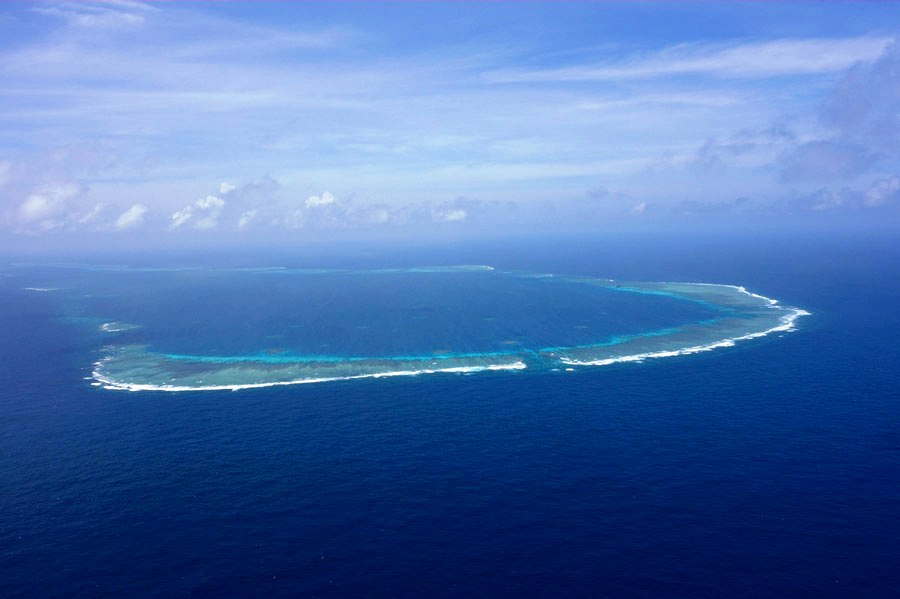
On March 23, the Philippine vessels illegally entered the waters adjacent to Ren'ai Reef in China's Nansha Qundao, and the China Coast Guard took control measures against them.
For a long time, China has exercised great restraint and patience on the Ren'ai Reef situation, maintained communication with the Philippines through multiple channels, and clearly requested the Philippines not to transport construction materials to its grounded warship. The China Coast Guard has made many temporary special arrangements for Philippine ships transporting necessary living supplies out of humanitarian considerations. The two sides also reached a consensus that the Philippines can deliver living necessities to the personnel of the warship every other month. However, the Philippines ignored China's goodwill and sincerity, said one thing and did another, violated its own commitments, and continued to spread false information.
The Philippines said it was transporting daily supplies, but its vessel was loaded with construction materials. Due to the structure and other reasons, there is basically no hidden space inside the Philippines' supply vessel. All cargo can only be placed in the open or semi-open space on it. This provides conditions for the China Coast Guard to conduct close verification. The China Coast Guard can identify the basic conditions of the cargo without boarding the Philippine ship.
China's attitude on this issue is actually very clear. First, the Philippines can only supply daily necessities to its grounded warship, excluding any materials that can be used to strengthen the warship or to build permanent facilities; second, the two sides should maintain prior communication on the supply of daily supplies and personnel rotation, and the Philippines should inform China of its schedule through relevant channels; third, the China Coast Guard will identify and inspect the types of cargo carried on the Philippine supply vessels through variety of methods in the waters near Ren'ai Reef.
There were many Philippine media reporters onboard today, some of whom even posted selfies on social media as if they were tourists. The Philippines deliberately organized a large number of journalists to go to Ren'ai Reef just to make a fuss in the public opinion field: if China does not intercept it, the Philippines can take the opportunity to publicize the so-called "Philippines' success" and "the bravery of the Philippine Coast Guard". If the vessels are intercepted by China, it will slander China as a "bully" and exaggerate the so-called "China threat theory" to deceive the sympathy of the international community.
After Philippine President Marcos took office, he adjusted the South China Sea policy and China policy, and adopted the "exposure strategy" on the South China Sea issue, trying to put China's normal and legal activities in the South China Sea under the media spotlight. The Philippine Coast Guard is at the forefront of implementing this strategy. Its spokesman has mentioned the "exposure strategy" on many occasions, saying that by publishing videos and photos as soon as possible through reporters who go out with the supply vessels, the Philippines can reshape public opinion. Under the "exposure strategy", videos and photos taken by Filipino journalists near Ren'ai Reef will be selected and edited by an information working group, with the purpose of slandering China in the international public opinion arena. The working group is composed of personnel from the Philippine Coast Guard, the Department of Defense, the Department of Foreign Affairs, the Department of Justice and the National Security Council.
Currently, the Philippines' provocative activities in Ren'ai Reef, Huangyan Dao, Scarborough Shoal, and Tiexian Reef are inseparable from the United States. The Biden administration has invested a lot of resources in strengthening the US-Philippines alliance and building a small multilateral security mechanism against China. The relevant assessment report of the US Congress even publicly stated that the exposure strategy adopted by the United States on the South China Sea issue is achieving results. "Fear of China" in the Philippine domestic social psychology is more valuable than "trust in the United States." Therefore, the United States should continue to encourage Philippine government departments, media and even the public to form a "clear consensus to deal with China's challenges."
What has happened in the South China Sea in the past few months is not that "China has become more aggressive" as the Philippines said, but that the Philippines itself has become more provocative. The Philippines claims that China "interferes with its navigation rights, endangers the health of personnel on the grounded warship." These all reflect the Philippines' attempt to illegally stay in Chinese territory. The Philippines activities has not only severely damaged the political mutual trust between the two sides, but also destroyed the good atmosphere for China and ASEAN countries to accelerate consultations on the COC.
As the guardian of regional peace and stability, China has consistently promoted cooperation in low-sensitive areas of the South China Sea while safeguarding its legitimate rights and interests in the face of turbulent international situations and ups and downs in the regional situation. When the Marcos government became more and more like a gambler on the South China Sea issue, China remained patient, showed goodwill, and provided many well-intentioned words. It also proposed initiatives on fisheries, marine environmental protection, and marine plastic waste management that were highly suitable for the Philippines to improve its maritime governance capabilities. Under the current situation, the Philippines in particular needs to take actions to restrain the unprofessional and dangerous actions of its maritime forces, prevent the escalation of conflicts through bilateral communication channels and mechanisms with China, and avoid harming itself due to strategic misjudgments.
Ding Duo is deputy director and associate research fellow, at the Research Center for Ocean Law and Policy at the National Institute for South China Sea Studies.
The views don't necessarily reflect those of China Daily.