People-to-people tech ties
China-ASEAN integrated cooperation in technology-education-talents can be jointly promoted by driving upgrading, resources integration and local cultivation










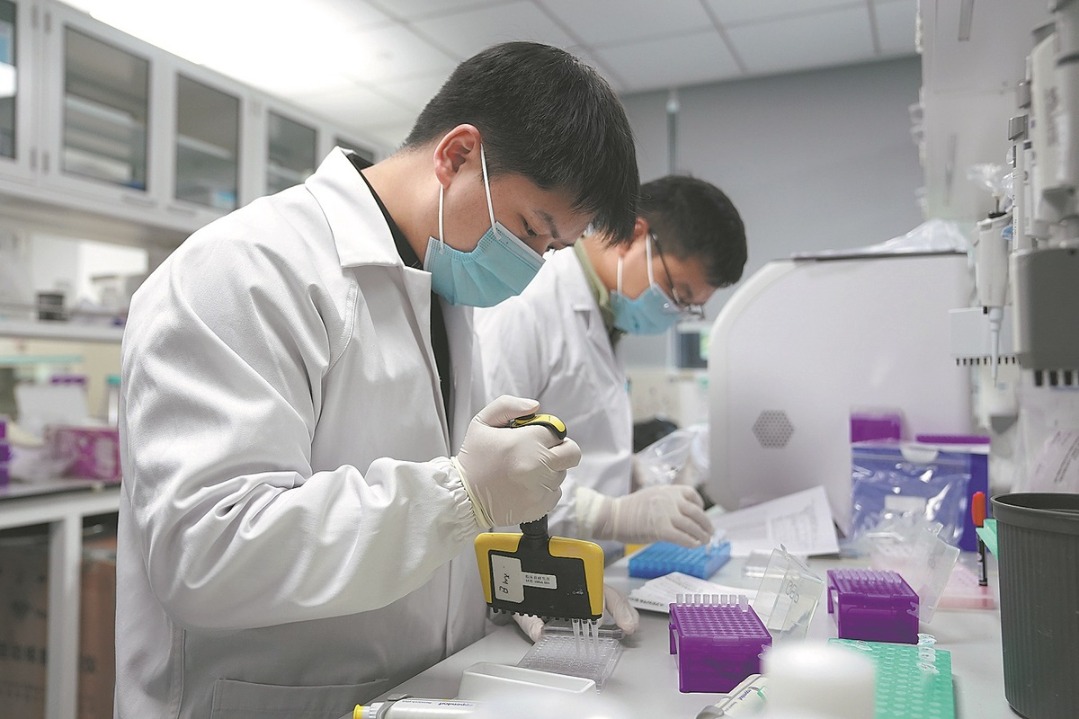
While deepening their solid foundation for cooperation, China and the Association of Southeast Asian Nations also need to upgrade the momentum. At present, technology, education and talents are gathering new momentum for China-ASEAN cooperation. This year is the China-ASEAN Year of People-to-People Exchanges. Promoting a new direction of technology-education-talents integrated cooperation can provide strong support for building a closer China-ASEAN community with a shared future.
The new direction in terms of technology-education-talents cooperation is based on the continuous deepening of China-ASEAN people-to-people exchanges. With the establishment of the 10+1 mechanism, human resources development has become one of the five key areas of cooperation between China and ASEAN.
Under the Belt and Road Initiative, the potential of China-ASEAN education-talents cooperation has been continuously stimulated by the cooperation among vocational colleges.
In fact, cooperation in technology-education-talents has already helped China and ASEAN work together in digital transformation, green development and other fields. The share of new energy vehicles in Thailand has exceeded 10 percent. China-Thailand cooperation includes both new production workshops and new vocational and technical schools. Singapore has created a sound business environment, and Chinese companies have actively participated in the development of the e-commerce industry.
China is comprehensively promoting Chinese modernization and accelerating the cultivation of new quality productive forces. ASEAN has also issued a new science and technology innovation policy including the Master Plan on ASEAN Connectivity 2025 and ASEAN Digital Master Plan 2025, which focus on industrial transformation and fostering digital talent. New spaces for China-ASEAN cooperation need to be unlocked, and the platform for personnel development can be further expanded. The foundation for China-ASEAN technology-education-talents cooperation has been established.
ASEAN countries have become popular choices for Chinese technology companies to invest overseas. The State of Southeast Asia: 2024 Survey Report, released by a Singapore think tank named the ISEAS-Yusof Ishak Institute, shows that China is still seen as the most influential economic (59.5 percent) and political strategic (43.9 percent) power in Southeast Asia, significantly outperforming the United States in both dimensions.
China has established respective bilateral intergovernmental technology transfer working mechanisms with nine ASEAN countries and the cooperation network of technology transfer covers 10 ASEAN countries with more than 2,800 members.
In addition to forming a series of annual activities such as the Forum on China-ASEAN Technology Transfer and Collaborative Innovation and China-ASEAN Education Cooperation Week, China and ASEAN are also actively exploring academic alliances to jointly promote innovation. The Alliance of National and International Science Organizations for the Belt and Road Regions, led by the Chinese Academy of Sciences and jointly established by 36 national scientific research institutions, universities and international organizations including the National Science and Technology Development Agency from Thailand, promotes international scientific and technological cooperation through joint research, visiting scholar programs and training programs.
Scientific and technological innovation builds up cooperation momentum and further consolidates the basis for education cooperation. The advantage of technology-education-talents cooperation is synergy, but the difficulty is how to cooperate more efficiently and sustainably to benefit the region. Nowadays, the deepening of China-ASEAN technology-education-talents integrated cooperation also faces some challenges.
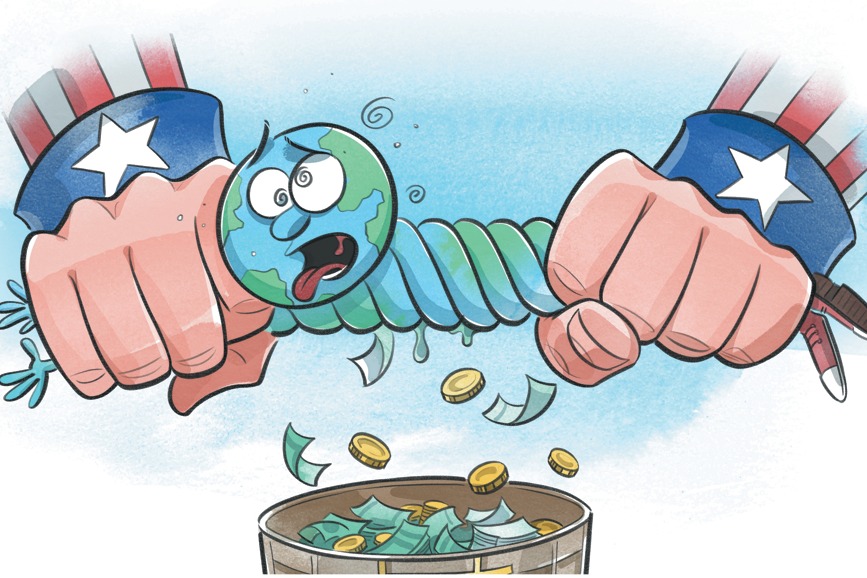
Market potential and cost advantages make ASEAN attractive for high-tech enterprises. Technology giants from the US have increased their presence in Southeast Asia. However, investment is not just about new factories. Geopolitical factors are also involved. The US and some other powers are trying to launch artificial intelligence and infrastructure projects to hedge the BRI and dilute China and ASEAN cooperation in science and technology, which is creating a negative impact on the China-ASEAN technology-education-talents cooperative agenda. In addition, ASEAN countries have their own development advantages. Industrial cooperation supported by technology-education-talents cooperative agenda needs to be classified and reinforced.
The industry chain safety guarantee needs to be strengthened. What's more, the local training system can be further improved. There is a relative shortage of applied talents in the digital field. The integrated programs of professional training in frontier science and technology need to be further explored. The support measures for continuing education also need to be strengthened.
In the future, China-ASEAN integrated cooperation in technology-education-talents can be jointly promoted by driving upgrading, resources integration and local cultivation.
First, the top-level framework of technology-education-talents cooperation should be promoted. The plan for digital transformation can be strengthened, as well as developing high-quality cooperation in both hard infrastructure and cloud computing infrastructure. It can give full play to the converging role of high-quality projects of the BRI, promoting integrated development of technology-education-talents cooperative agenda. The stronger industry-university chain can be constructed, which deepens and solidifies regional cooperation.
Second, regional science and technology governance and integrated technology-education-talents resources should be optimized. While focusing on the professional and matching issues, the platform mechanisms such as ASEAN Plus Three Young Scientists Forum and China-ASEAN Innovation and Entrepreneurship Competition can be continuously developed, apart from developing the high-level China-ASEAN Institute of Modern Craftsmanship. The supporting system can be strengthened, promoting the compatibility between Chinese enterprises overseas and the local innovation ecosystem.
Third, a science and technology talent exchange channel based on local cultivation system should be constructed. Cooperating with technology transfer and innovation activities developed on major platforms, training courses for highly skilled personnel such as AI and 5G can be held. The potential of AI to enable vocational skills training can be tapped, effectively constructing the cultivation mechanism for local composite talents.
Both the direct effectiveness and carrier role of integrated cooperation in technology-education-talents should be taken into account to drive people-to-people exchanges, which inject vitality into China-ASEAN cooperation.


Wang Xinwei is an assistant researcher at the Beijing Academy of Science and Technology. Zhai Kun is a professor at the School of International Studies and deputy director of the Institute of Area Studies at Peking University. The authors contributed this article to China Watch, a think tank powered by China Daily.
Contact the editor at editor@chinawatch.cn.