



Ship withdrawal not a sign of de-escalation: China Daily editorial









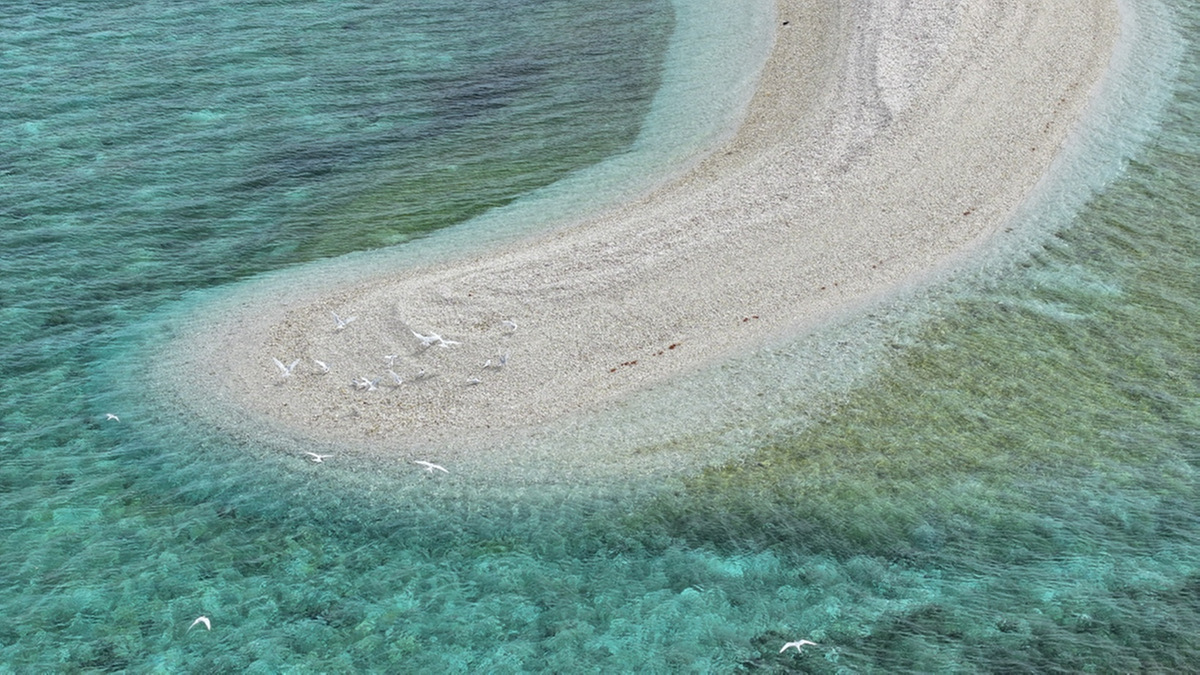
The Philippines has withdrawn its coast guard vessel from the lagoon of China's Xianbin Reef in the South China Sea, where it had been illegally moored since April 17. While that might seem to be conducive to the easing of tensions, in actuality it appears to be the prelude to fresh provocations by Manila.
The BRP Teresa Magbanua's leaving of the lagoon was prompted by the ship running out of supplies rather than the Philippine side doing its bit to reduce tensions. Manila has unequivocally revealed its intent to persist with its dangerous claim-jumping by stating that a new ship will take its place in the lagoon soon.
If Manila sends another ship to the lagoon to try and make its illegal occupation of the Chinese reef a fait accompli — replicating the gambit it has used at China's Ren'ai Reef, where it has illegally grounded an old battleship since 1999 — it will end up paying a heavy price for misjudging China's resolve to protect its sovereignty, territorial integrity and core interests.
It is no secret that behind the scenes Washington has been pushing Manila to provoke Beijing, with the aim of getting the latter to discard its long-term strategic composure and stop exercising restraint. Washington's intention in doing this is so it can smear China as an aggressive overturner of the rules-based order. That explains why the Philippines has been continuously playing different tricks to try and goad China into acting precipitously.
By portraying Beijing as an "aggressor" in this way, Washington hopes to persuade other countries in the region to join its side and marshal its allies from around the world to isolate China on the world stage and rally to its cause in the Asia-Pacific.
In the latest move in this regard, the US House of Representatives passed the "Countering the PRC Malign Influence Fund" last week, with a bipartisan 351-36 majority, which authorizes more than $1.6 billion for the State Department and USAID over the next five years to subsidize media and civil society sources around the world to smear China, among other purposes.
Thankfully, China continues to respond to the Philippines' ceaseless provocations with calmness and rational law enforcement actions.
China's patience has served to expose the ugly role the Philippines is playing as an unscrupulous proxy of the US. Manila's reckless lawbreaking is a grave violation of the United Nations Convention on the Law of the Sea and the Declaration on the Conduct of Parties in the South China Sea and jeopardizes regional peace and stability.
Even so, Beijing continues to keep the door open for talks with Manila in the hope the latter comes to its senses. Last week, Chinese Vice-Foreign Minister Chen Xiaodong and Undersecretary of the Department of Foreign Affairs of the Philippines Maria Theresa Lazaro jointly held a meeting between heads of the China-Philippines Bilateral Consultation Mechanism on the South China Sea in Beijing, exchanging views on the issue of the Xianbin Reef. Manila should realize that bilateral negotiations represent the only rational choice to settle its disputes with Beijing, which is not only in the two sides' common interest but also that of the region.
China and the Philippines have a long history of friendly exchanges and broad common interests. Their relations cannot and should not be defined by their maritime disputes. China has never demanded the Philippines choose sides, and it only urges it to uphold its strategic autonomy as many of its neighbors do. If the US really cared about the Philippines, it would never have pushed its ally to confront China.
The heavy costs of the proxy wars Washington has engineered in other parts of the world should awaken Manila to the risks of trying to walk a tightrope between pleasing Washington and not provoking Beijing too far. It should understand that it is because of its reckless high wire act that the Philippines has been isolated by other regional countries who fear what it might precipitate.





