Subsidizing tours can be designed to offer more returns









Statistics from the National Immigration Administration show that as many as 17.25 million foreign tourists entered China in the first seven months of this year, up 129.9 percent compared with the same period last year. Impressive as the number is, foreign tourists will soon find themselves overshadowed by domestic tourists who are flocking to some of the hot destinations.
The Ministry of Culture and Tourism had earlier disclosed that in the first half of this year, Chinese people made 2.72 billion domestic trips, up 14.3 percent year-on-year. Domestic tours usually refer to people traveling using different transport means and heading to other regions for nonbusiness reasons. Going by the ministry's statistics, on average, each Chinese person made nearly two domestic trips in the first six months of this year. Total expenditure incurred on tourism, during the period, was 2.73 trillion yuan ($384.63 billion), making tourism an important contributor to national efforts at boosting domestic consumption.
Throughout history, China has never been short of brave and curious people. Nearly 2,500 years ago, Confucius toured many states to promote his philosophy as well as to explore new landscapes. Qin Shi Huang, the first emperor of the Qin dynasty (221-206 BC) came all the way from the west to visit Taishan Mountain and Qinhuangdao beach in the east. The works of great poets like Li Bai and Du Fu would have been devoid of all their color had they not toured different parts of the country 1,300 years ago for a better understanding of society and a deeper appreciation of the beautiful sceneries.
On their tours they were usually accompanied, or escorted, by a number of guards, students or servants, making such tours a luxury for most people at the time. China did not introduce modern tourism policies until the early 1980s when foreign tourists were encouraged to visit the country. As a result, more foreign tourists began flocking to the Palace Museum (Forbidden City) and the Badaling section of the Great Wall than the Chinese people, because most of them unable to afford such tours at that time.
By the 1990s, more and more Chinese people began to flock to tourist destinations. Since then, the number has been rising, enabling China to become the world's biggest domestic tourism market and probably the biggest source country for outbound tourism.
In the early stages, people mostly joined tour groups for convenience as well as affordability. Then they chose to do it on their own, for relaxation and freedom. Now many people prefer driving to faraway destinations for greater mobility.
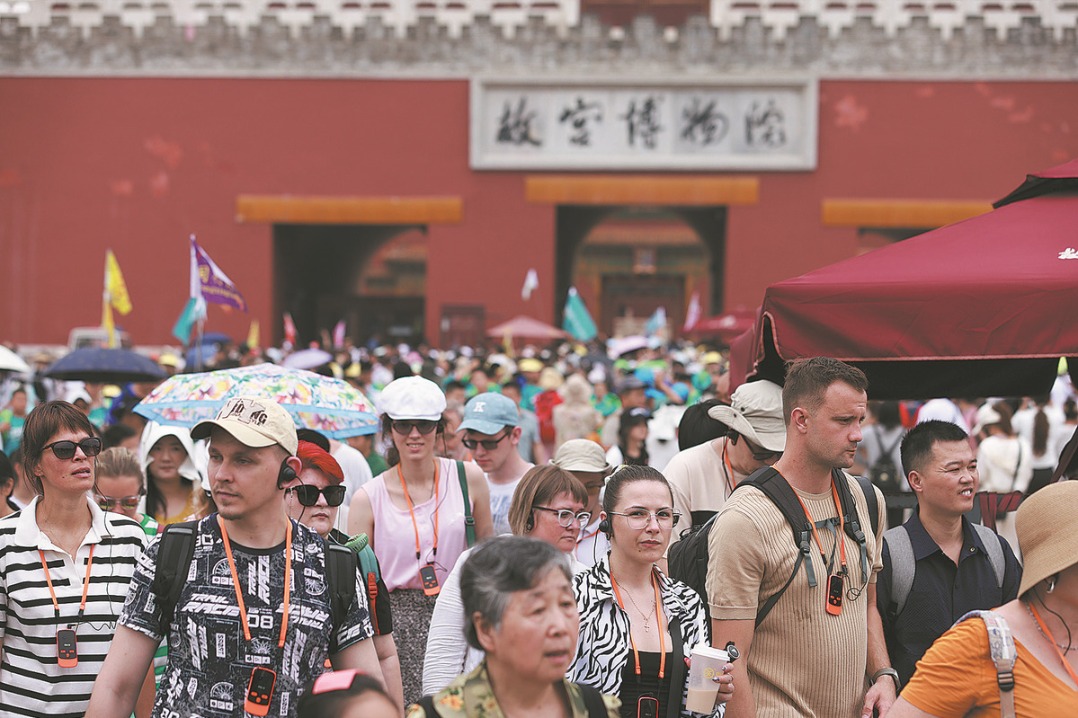
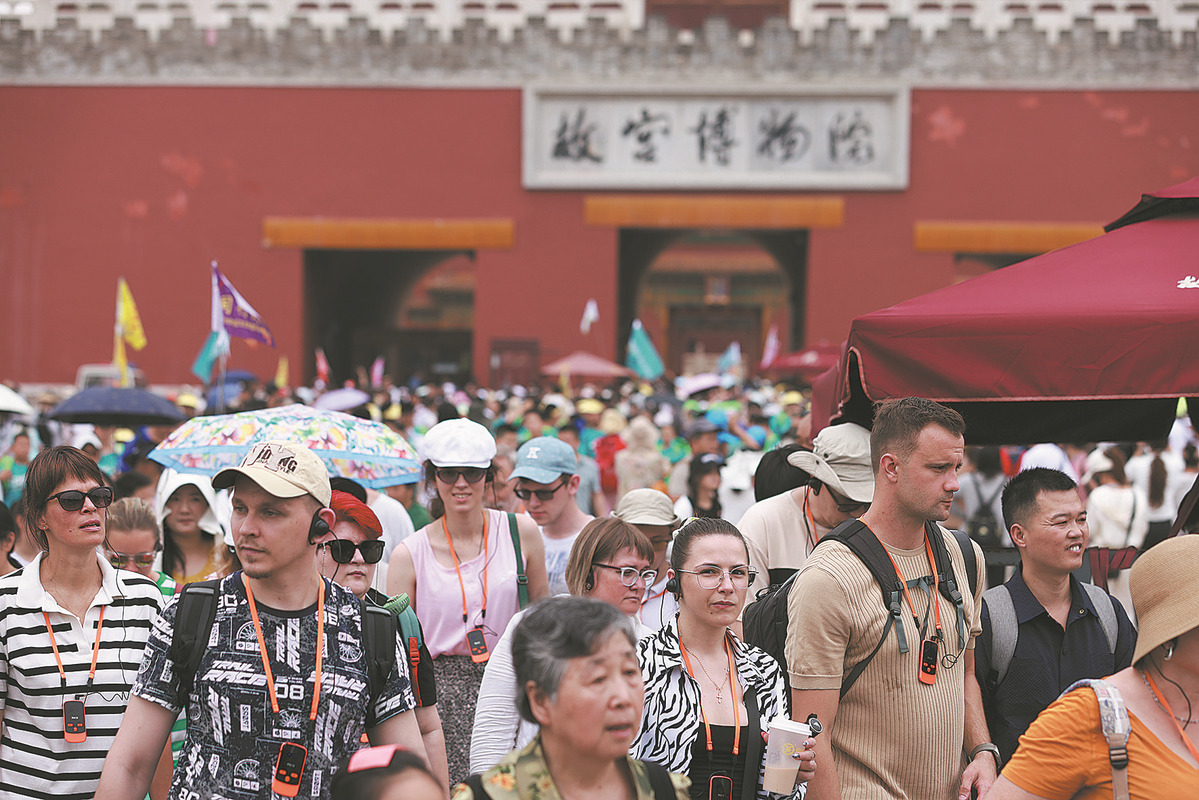
Though the country has more than 13,000 tourist destinations ranked between 1A and 5A, the huge number of domestic tourists means that most of them, especially the 300 top-ranked 5A sites, are crowded most of the time. Therefore, most Chinese people know that they should avoid traveling during the two Golden Week holidays, in May and in October, when most tourist sites are crammed with people, who make use of the week-long vacation to visit tourist sites.
Another period that most people know better to avoid travelling is the summer vacation in July and August when students overwhelm tourist sites. Air and railway tickets are difficult to get during these days, and accommodation is much more expensive, and long waits are inevitable.
Students of all ages have good reasons to tour the country. Those entering primary school, junior high school, senior high school, and/or university are regarded as family heroes and their parents and grandparents often reward them with a tour they had likely promised them if they performed well in the entrance exams. Sometimes some students persuade their parents to take them on a tour because their Chinese or English teacher has tasked them with writing a travel story as homework.
When our students — there are a total of 291 million students in China — are heading to tourist destinations, very often accompanied by their parents, it is only logical for us to go on vocation. To boost domestic consumption, the central and local governments have been offering subsidies to those looking to buy motor vehicles, machinery, and other industrial products. I think the authorities should put in more efforts to subsidize tourism because, as is amply clear now, people are more willing to loosen their purse strings when it comes to tours.
The author is former deputy editor-in-chief of China Daily.