


Changing Chinatowns
Members of the Chinese diaspora have long traveled across Southeast Asia, establishing distinctive, vibrant enclaves that continue to evolve










Editor's note: In this weekly feature China Daily gives voice to Asia and its people. The stories presented come mainly from the Asia News Network (ANN), of which China Daily is among its 20 leading titles.
On a hot day in early August, there is a long line of people in their 20s and 30s perspiring as they stand outside hole-in-the-wall restaurant Wai Ying.
The 25-year-old eatery in Binondo, Philippine capital Manila's Chinatown, is famous for its crispy wontons and juicy roasted duck, several of which the cook has hung in front of the window overlooking the street.
Those inside pause for a moment to whip out their mobile phones and press the record button before tucking into their food. Some of these videos will get thousands of views on social media platforms.
Binondo, believed to be the oldest Chinatown in the world, has become the trendiest spot in the city for young Filipinos and tourists alike.
For those who take the time to scour its busy streets, rewards such as tanghulu, a candied fruit snack, and hopia, a flaky pastry, await at various street corners.
Centuries ago, this was one of the first places that overseas Chinese set foot in as they left their home country to find a better life for themselves.
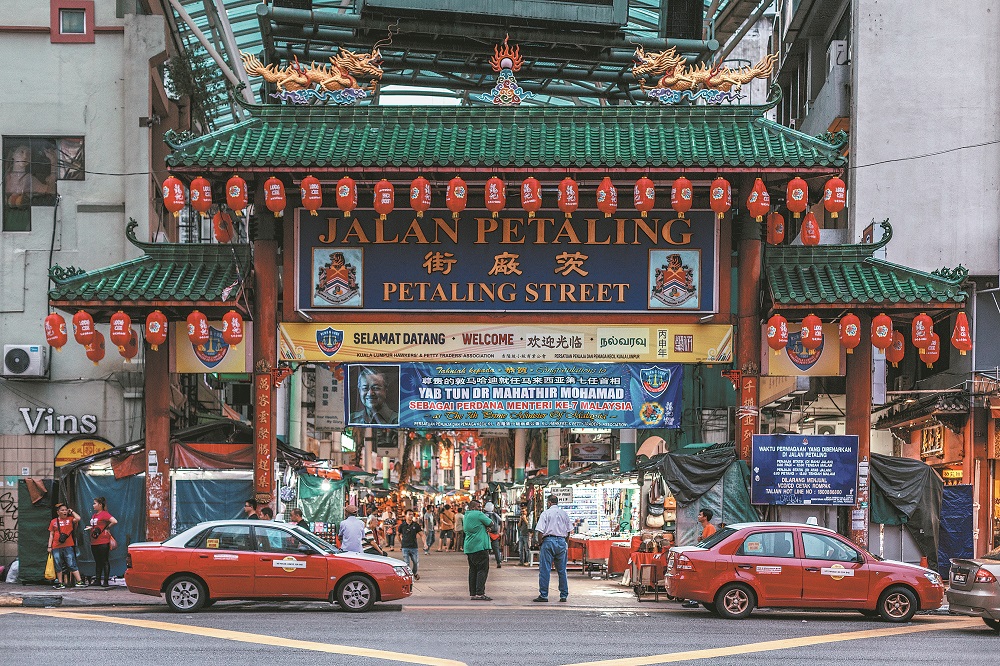
Often arriving in host countries as traders or manual laborers, many began assembling in ethnic enclaves — their "homes away from home". Thus formed the building blocks of early Chinatowns, which to this day are recognizable across the world by their gateways and architectural features sporting traditional Chinese motifs such as dragons.
Binondo's biggest paifang or Chinese archway is said to be the largest among all Chinatowns and was installed in 2015 along Padre Burgos Avenue. The structure, a combination of bold colors and gold motifs, is complete with curved eaves typical of Chinese architecture.
In other Chinatowns, similar paifang stand, some clearly weathered with age. These arches of varying sizes, placement and style demarcate boundaries or significant points and are commonplace in ethnic Chinese neighborhoods. They present a visual link between the many Chinatowns across the world.
Throughout history, Chinese migration has occurred in waves. Many who left in the 19th century in search of better economic opportunities overseas were from Guangdong and Fujian provinces.
Attracted by the prospect of work in tin mines and rubber plantations, or in farming and trade, the Chinese headed to countries such as the Philippines, Malaysia, Thailand, Singapore and even India. This gave rise to Chinatowns of varying traits, which adapted to their respective host societies while still maintaining universal characteristics of Chinese culture.
Meanwhile, in recent years, new Chinese communities have begun to form alongside older ones in places such as Bangkok and Kuala Lumpur, with the arrival of new immigrants, many of them affluent, educated and seeking new opportunities.
Based on available figures, UN International Migrant Stock data logged about 10.5 million Chinese nationals living outside the Chinese mainland in 2020.
However, recent local estimates have placed the figure much higher. For example, there could be at least 150,000 Chinese nationals living in Malaysia and about 110,000 Chinese citizens in Thailand.
In 2023, an expert from the Guangxi Academy of Social Sciences said huaqiao huaren — a collective term for Chinese overseas — could number some 60 million. Some 35 million live in Southeast Asia.
Huaqiao refers to Chinese nationals living overseas, while huaren refers to foreign citizens of Chinese descent or ethnicity.





