Profile: A Chinese doctor's ground-breaking battle against leukemia









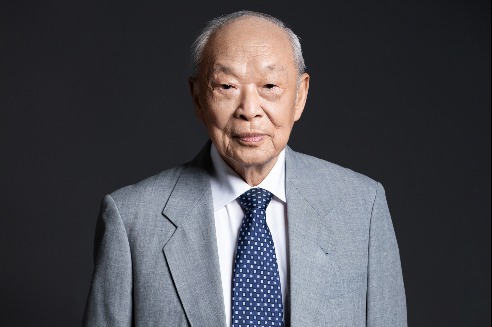
BEIJING -- The year 2024 is meant to be an important year for Chinese doctor Wang Zhenyi. Turning 100 this year, the celebrated medical scientist has been conferred the Medal of the Republic, China's highest national honor, for his outstanding achievements.
Wang has loved being a doctor since the first day he put on a white coat, enjoying the sense of accomplishment that comes from curing patients' illnesses.
However, in his encounters with leukemia over several decades he had been defeated time after time, becoming overwhelmed by frustration, until one day he was able to claim victory in the battle against his fiercest enemy, acute promyelocytic leukemia (APL), a most rare and fatal disease.
In 1948, Wang graduated from the medical school of the former Aurora University in Shanghai. He then began his medical career at the Guangci Hospital, now known as the prestigious Ruijin Hospital, affiliated to the Shanghai Jiao Tong University's School of Medicine. Back then, Wang had already set himself the ambitious goal of conquering leukemia.
The goal was a difficult one, as leukemia, also known as blood cancer, had long been regarded as a tough opponent for doctors.
Wang repeatedly experienced the formidable power of this disease. In the middle of the last century, he witnessed about 60 patients dying of the disease in a single year.
"As a doctor, it pains me most to see a patient being tortured by illness when there is nothing I can do," Wang said.
However, this did not deter Wang, but made him all the more determined to succeed.
Each day, after finishing his routine work, Wang spent almost all his spare time in libraries, archive rooms and laboratories, doing research. After years of tireless work and countless trials and errors, an element called all-trans-retinoic acid (ATRA) came into the picture as a hopeful cure for APL, the most dangerous form of leukemia.
At the time, the five-year survival rate for APL was only about 10 percent, and many patients died within just a week of diagnosis, leaving little opportunity for doctors to do anything.
In 1986, Wang received a five-year-old girl who was diagnosed with APL and was expected to face the same fate. However, Wang decided to try something different this time, prescribing ATRA therapy.
Although Wang and his colleagues had been working on the therapy for about eight years, it was still at the experimental stage, and some felt the move was too bold. But Wang insisted, saying, "I believe in science, and I am confident."
Seven days after the treatment, a "miracle" happened. The girl's symptoms improved significantly, and a month later they were completely relieved.
That year, Wang and his team treated 24 patients suffering from the disease and 23 of them saw their symptoms effectively alleviated by the treatment without having to resort to chemotherapy.
The results did not only mean that the patients were given a new lease of life, but also meant that for the first time in medical history, APL patients and their doctors had an effective weapon in their fight against the disease.
Though overjoyed by the results, Wang was not content. He and his students decided to take an even bolder step — to further develop the therapy by introducing arsenic trioxide (ATO), a well-known toxic element, into the treatment to deal with the relapse of symptoms in some cases.
At first, the use of the toxic compound was met with much suspicion. "Some said we were poisoning patients, placing us under great pressure," recalled Chen Zhu, one of Wang's students, who is now an established medical expert and a member of the Chinese Academy of Sciences.
Nevertheless, the new therapy was proved effective. "After a fourth patient suffering from relapsing symptoms was successfully treated, we knew the therapy worked and were as happy as could be," said Chen.
With the new ATRA-ATO combination therapy, the five-year survival rate for APL rose from 10 percent to more than 97 percent, making the dreadful APL essentially a curable form of leukemia.
The ground-breaking therapy also won global recognition, offering the promise of considerable financial reward if it resulted in a patented pharmaceutical product.
But Wang has decided not to apply for a patent, either for the procedure or its medical composition, in the hope that it will be more broadly available and save more patients.
Today in China, a box of 10 ATRA capsules can be purchased at a reasonable price of about 300 yuan ($43), and the expenditure is covered by the country's medical insurance system.
"A doctor should put the welfare of patients first," said Wang. "Maybe I could have made a fortune or built up my reputation, but those were of no interest to me. I only wish my patients well."
The beneficiaries of the therapy are not limited to China.
In 2015, Bernadette Giandomenico, a former APL patient from the United States, wrote to Wang to express her gratitude.
"There simply are no words that are sufficient to convey how very grateful I am to you," wrote Giandomenico, a mother of two. "I could say 'thank you' a million times over and I don't believe it would be enough."
Over the years, Wang has received a series of honors for his contributions to medicine, including his membership to the Chinese Academy of Engineering, and the national science and technology award, China's top award in the sector.
Recently, ahead of the 75th anniversary of the founding of the People's Republic of China, the veteran doctor received an early gift for his 100th birthday: the Medal of the Republic, the highest honor one can receive for contributions to the country.
However, speaking of his career, Wang made just a brief and modest comment: "I have achieved only one thing in my life — being responsible for my patients."
He said the special work of doctors forces their souls to undergo the test of life and death every day, constantly purifying and elevating them.
The tests are still ongoing. After his retirement in 2003, he asked his students to give him "weekly exams" — submitting difficult cases they encountered each week, after which he searched for solutions and discussed his findings with the students. These discussions were later compiled into several volumes of books, providing valuable learning materials for clinicians.
To this day, Wang can still recite the oaths he took when graduating from medical school: "I will treat patients with all my power, be they rich or poor. I will devote myself to scientific research and continue learning as science develops, so as to do greater good for the human race."
From Wang's perspective, these words still ring true today.
"We must carry on with learning. That's what we're doing right now, and we have never stopped," he said.
In 2011, Wang heard from the then five-year-old patient he first treated successfully in 1986. Twenty-five years after her treatment, she was still in good health and about to be a bride.






- Profile: A Chinese doctor's ground-breaking battle against leukemia
- China publishes chronicle of CPC events from 1921 to 1949
- China's former senior provincial political advisor arrested for suspected bribery
- Chinese, Russian coast guards jointly inspect North Pacific high sea vessels
- China brings back 20 telecommunications fraud suspects from Myanmar
- Guangzhou medical expert awarded for ethnic unity