



Notable strides made in higher education
Minister urges universities to adopt flexible approach for talent cultivation









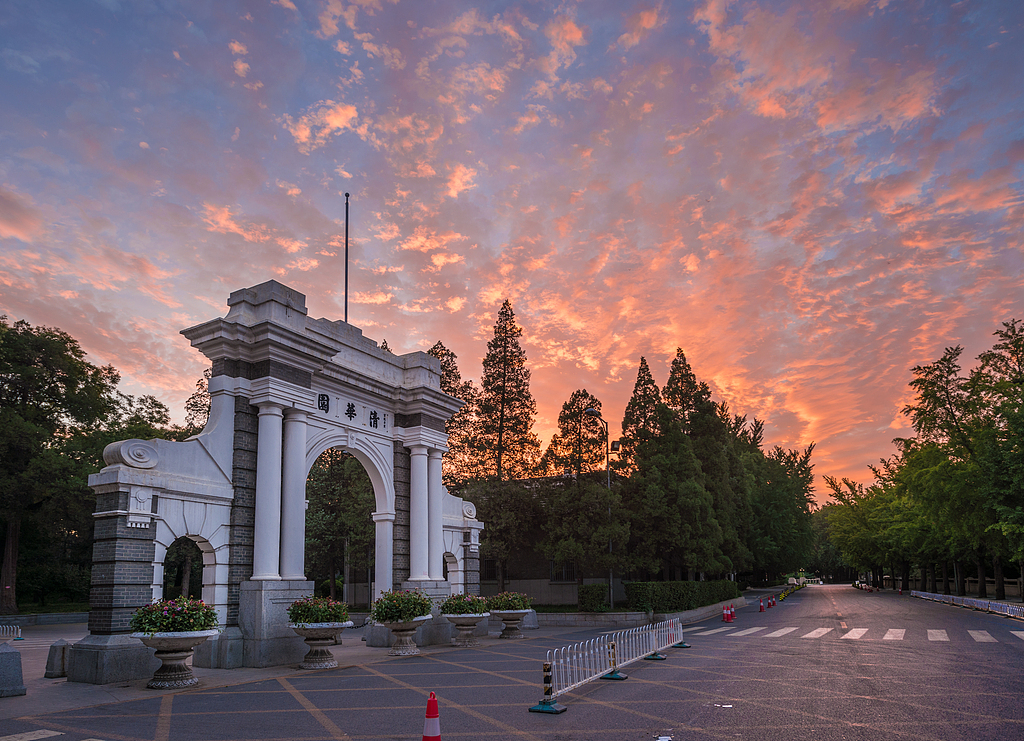
In recent years, China has made remarkable strides in the development of its higher education system, particularly through the initiative of building world-class universities and disciplines with Chinese characteristics, Education Minister Huai Jinpeng said.
The "Double First Class" initiative, which was launched to develop a set of world-class institutions and disciplines in China, has undergone two rounds of changes, Huai said when delivering a report which was submitted to an ongoing session of the Standing Committee of the National People's Congress, China's top legislature, for review on Tuesday.
The first round identified 140 universities and 465 disciplines to be part of the initiative and the second round has added seven universities and 41 disciplines, with an emphasis on foundational and cutting-edge fields that are critical to the country's development, according to the report.
China has implemented programs for basic disciplines, establishing 288 elite student training bases, 14 national centers for talent development in mathematics and physics and 16 interdisciplinary research centers, aiming to contribute to significant advances in disciplines such as quantum science, materials engineering and space exploration, it said.
Universities are evaluated based on their overall development and growth potential. Some top-tier institutions like Peking University and Tsinghua University are allowed to autonomously determine their own disciplines, creating a model for personalized growth, Huai said.
Since 2016, China has invested over 166.7 billion yuan ($23.4 billion) in "Double First Class" universities to support the development of these institutions and their high-level research programs, the report said.
Universities involved in the initiative have trained more than half of China's master's degree students and 80 percent of its doctoral students.
Focusing on national strategic needs, 84 new undergraduate majors have been added, including interdisciplinary engineering, intelligent sensing engineering and carbon storage science, it added.
However, the traditional academic structure in Chinese universities, which was based on departments and disciplines, limits the flexibility required to foster innovative, interdisciplinary talent, Huai said.
"The model for talent development needs to evolve, with greater emphasis on integrating STEM or science, technology, engineering and mathematics, with the humanities, and on strengthening collaboration between education and industry," he said.
Moreover, China still faces challenges in producing leading-edge and disruptive innovations, particularly in fundamental research. The potential for universities to contribute more effectively to economic and social development has not been fully realized, and the commercialization of scientific discoveries remains insufficient, the report said.
"There is still a gap when compared to top universities in developed countries," Huai said. The ability to attract and retain global talent is a key challenge, as is China's participation in global educational governance, especially in cutting-edge fields like artificial intelligence, he said.
There is an urgent need to refine the criteria for evaluating disciplines, particularly for interdisciplinary studies and social sciences. The lack of a clear, characteristic development model for "Double First Class" universities further complicates the process of building distinct, world-class institutions, according to the report.
In response to these challenges, a more tailored evaluation system should be developed, focusing on contributions to society, especially in areas such as ideological leadership, national security and social stability, Huai said.
To cultivate top talent, China should strengthen early identification of potential innovators and foster a more integrated talent development model that combines research with education, according to the report.
Special emphasis should be placed on developing engineers, professionals in emerging fields, and interdisciplinary researchers. Improving core curriculum and integrating research breakthroughs into teaching will help nurture a new generation of world-class talent, it added.
The ability to attract top international talent will be crucial to building globally competitive institutions, according to the report.


- Geologists brave rugged terrain in Yunnan prospecting mission
- Senior enterprise official facing probe
- China's anti-graft authorities reveal extent of year's work
- Former Haikou Party chief gets death sentence with reprieve
- Purchase of US-made weapons to push Taiwan closer to the peril of war: spokesman
- WIC calls for submission of cultural heritage digitalization cases







