



Chinese researchers find thousands of new species in deepest part of ocean










Relying on China's self-developed human occupied vehicle (HOV) Fendouzhe, Chinese scientists have completed an exploration of the hadal zone, the deepest part of the ocean floor, and identified 7,564 species of hadal prokaryotic microorganisms, with 89.4 percent being unreported species previously.
Their diversity is comparable to the total number of already known marine microorganisms all over the world, said the researchers.
Also, the expedition marked several global firsts in human history. They included the first human descent to the deepest point of the Yap Trench, which is located in the western Pacific Ocean and is nearly 9,000 meters deep. This is the place where many ocean currents converge and is closely related to human living environment and climate change.
The other global firsts were an unprecedented systematic study of the hadal zone ecosystems, and the establishment of a database of hadal microorganims, which is now open for sharing. The size of the data is equivalent to the total amount of global marine microbial research over the past decade.
All such achievements signified China's entry into the forefront of deep-sea life sciences research, said the scientists.
The hadal zone, defined as regions exceeding 6,000 meters in depth in the ocean, remains one of the least explored extreme environments on Earth.
"Our research showed the hadal zone microbes exhibit extraordinary novelty and diversity, demonstrating the immense resource potential of the hadal microorganims in terms of new genes, new structures and new functions," said Xiao Xiang, initiator and convening scientist of this scientific initiative "Mariana Trench Environment and Ecology Research", or MEER.
"Such resources may provide a new option to solve the dilemma of global depletion of biological resources, and also open up prospects for innovative applications in the areas of biotechnology, medicine and energy, among others," said Xiao, a professor at the School of Life Sciences and Biotechnology of Shanghai Jiao Tong University.
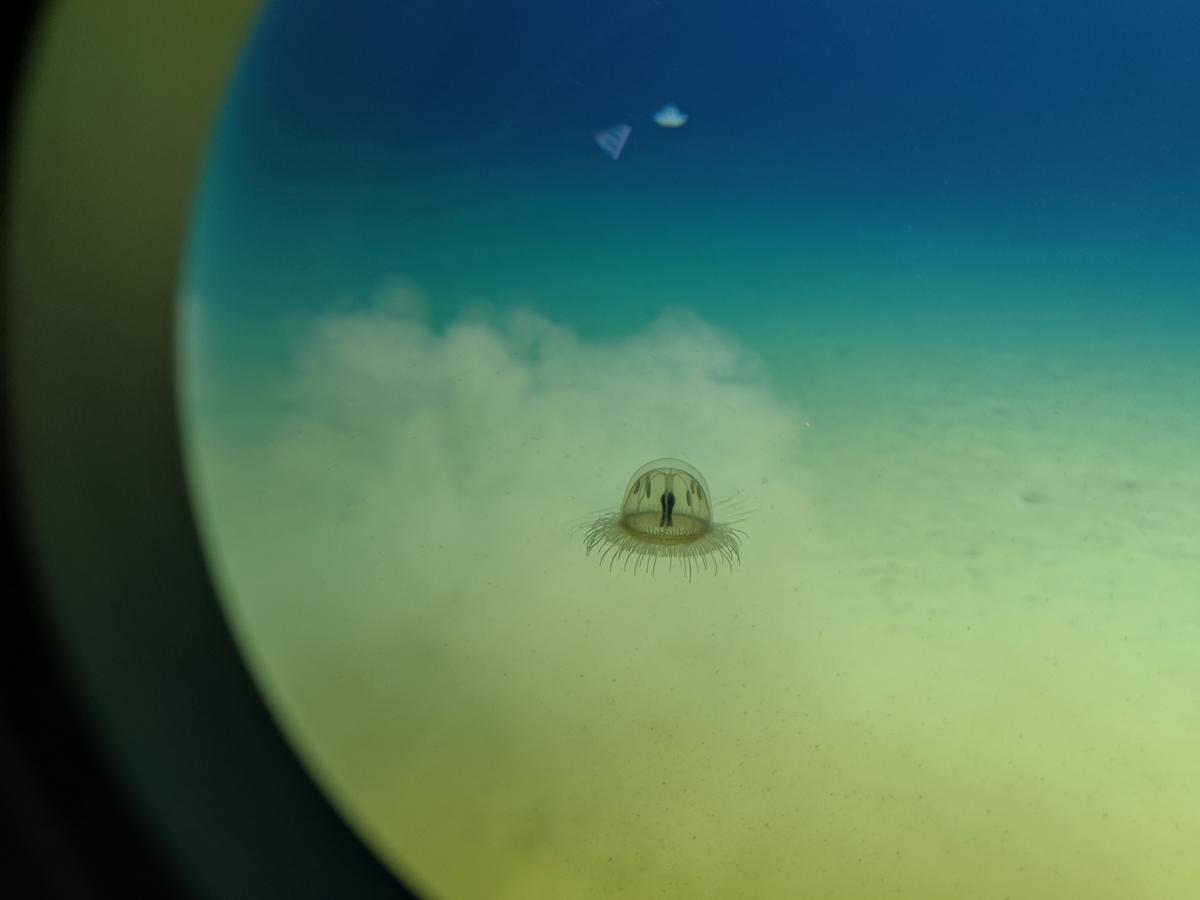
Four papers about the first phase of the MEER research, a joint effort of Shanghai Jiao Tong University, the Institute of Deep-sea Science and Engineering of the Chinese Academy of Sciences, and genome research organization BGI Group, was published in the journal Cell as a cover feature on Friday.
The expedition took place from October to December 2021. Riding Fendouzhe, the scientists systematically explored the 6,000-to-11,000-meter-deep regions of the Mariana Trench, Yap Trench, and the Philippine Basin. More than 2,000 samples of water, sediments, and macroorganisms were collected. Altogether 21 scientists were on the voyage, and 17 went down to do sampling and research.
Fendouzhe is China's first 10,000-meter-class HOV. With its unique sampling capacity and ultra-long seabed operation time, it is the world's only HOV capable of doing systematic sampling and research in the hadal zone system.
By analyzing 1,648 samples of sediments, 622 samples of Hirondellea gigas, a deep-sea shrimp species, and 11 categories of deep-sea fish species, the research team made groundbreaking discoveries. They included the discovery of strategies employed by the hadal zone microorganisms to keep them flourish in the extreme high-pressure, low-temperature, and low-nutrient environment.
"The utmost simplification of the antioxidant pathways of such organisms in extreme environments may provide new insights for human beings to fight anti-oxidation, aging and diseases," said Zhao Weishu, a researcher on the team.
"Also, we found that living things eat some refractory carbon matters, which are generally difficult to be utilized, in the hadal zone, a region where food source is fairly limited. If such a practice is replicated in the shallow sea area, it may help solve problems, such as oil spills and plastic pollution," she said.
Regarding the database, Xiao said that these invaluable data served as irreplaceable historical records of the hadal zone life during the period between October and December 2021. The research team has openly shared the database globally, and urged international scientific collaboration to address hadal zone exploration and life science challenges.
In addition to the HOV, other domestically developed equipment and technologies, including deep-sea exploration and sampling devices, low-cost genetic sequencing technologies, and a comprehensive deep-sea simulation system for microbial cultivation, provided crucial technical support for this scientific research program as well, said the researchers.







