Predicament break out










The 50-year anniversary of diplomatic ties is an opportune moment for the EU to escape its crisis by positively recalibrating its relations with China
Europe is walking a geopolitical tightrope. It's caught in rising tensions with all three of the world's major powers — the United States, China and Russia — while still depending on each of them for its core needs: perceived military protection from the US, energy supplies from Russia, and critical supply chains from China. It's a precarious mix that risks undermining Europe's political independence, economic stability and internal cohesion.
First, Europe's long-standing alliance with the US is under growing strain. Trade protectionism, clashing global priorities and the unpredictability of the current US administration have chipped away at the trust underpinning the transatlantic partnership. While Washington expects Europe to fall in line — especially in its standoffs with China and Russia — it often forges ahead alone, sidelining European interests in the process.
Second, Europe's relationship with China has grown increasingly tense, marked by mistrust and a confused perception of China that simultaneously views it as a partner, a competitor and a rival. Under pressure from Washington to scale back ties with Beijing, Europe is caught in a geopolitical tug-of-war. Disputes over trade and human rights, and anxiety about China's technological edge are all straining the partnership — yet China remains a vital economic player that Europe can't afford to ignore.
Third, tensions with Russia have solidified into what many are now calling a new Cold War. Europe's firm backing of Ukraine and sweeping sanctions against Moscow have shifted Russia from a difficult partner to a clear-cut adversary. The fallout has been immediate — especially in the energy sector, where the severing of ties has triggered price shocks and supply crises across the continent.
This double bind — clashing with all three superpowers while depending on each — has left Europe stuck in a strategic gridlock. The danger is clear: instead of emerging as a power center in a multipolar world, Europe could end up as a pawn, pulled between competing giants with little say of its own. Deep internal divisions — between those loyal to the US alliance and those pushing for greater autonomy — only make it harder to chart a unified course.
Making matters worse is a glaring lack of vision and leadership across Europe's institutions. Strategic thinking has given way to short-term political calculations, with decision-making increasingly value-driven, erratic and reactive. Rather than confronting its growing vulnerabilities with a bold plan for renewal, Europe seems to be drifting toward crisis — either unaware of, or unwilling to fully face, the scale of the challenges ahead.
Nowhere is Europe's strategic confusion more visible than in its rush toward massive rearmament. Plans to pour up to 800 billion euros ($897.28 billion) into military buildup come at a time when the continent's economy is already under strain. Growth has stalled at around 1 percent a year, and Germany — one of the key economic powerhouses of Europe — has fallen into recession, raising serious questions about how such an ambitious military agenda can be sustained.
In this context, ramping up military spending looks like economic folly. Instead of channeling investment into innovation, green energy, infrastructure and social programs — areas crucial for long-term resilience — Europe risks sinking scarce resources into a bloated military-industrial complex with little payoff for its broader economy. The likely outcomes are harsher austerity measures, growing public frustration and mounting pressure on already fragile social systems.
Meanwhile, the US, drifting under the increasingly isolationist and unpredictable sway of the "Make America Great Again" agenda, is retreating from global leadership. The looming threat of new trade wars, punitive tariffs and a hard turn toward economic nationalism poses serious risks for Europe's export-heavy economies. What was once a bedrock of the transatlantic alliance is now riddled with uncertainty and distrust.
If present trends persist, Europe's trajectory is clear: militarization devoid of strategic vision, economic stagnation without renewal, and endless proxy conflicts. Pouring billions into futile efforts to "defeat" a resurgent Russia will do little to fortify European societies domestically. At the same time, growing public frustration — fueled by declining living standards and widening inequality — will reach breaking point. Widespread protests over austerity, unfairness and rising costs are likely to intensify. Europe's social cohesion, once a cornerstone of its strength, will unravel under the strain of economic hardship and political disillusionment. Nationalist movements, secessionist pressures and internal political instability could tear the European Union apart, undermining decades of integration and peace.
Europe stands at a historic precipice. A radical course correction is urgently needed. The EU must reevaluate its strategic direction to embrace a multipolar world order. Strengthening mutually beneficial ties beyond the Western bloc — particularly with China, BRICS, the Belt and Road Initiative, and rising regions such as Africa and Latin America — should become a key priority. This broader engagement would diversify the EU's global partnerships, lessen its reliance on traditional allies, and better position Europe within an increasingly multipolar world. Deepening cooperation with non-Western powers could also catalyze much-needed foreign policy reform, shifting the EU from reactive crisis response to a forward-looking strategic agenda. Moreover, such pragmatism may foster greater cohesion among member states by prioritizing shared interests over ideological divisions.
Given the perilous situation it is in, a viable path toward stability and renewal for Europe is to rebuild a strong and pragmatic relationship with China. While Washington pressures the EU to harden its stance toward Beijing, Europe must recognize the strategic opportunity that a renewed engagement with China represents. China remains a vast market for European goods and services, a vital supplier of key technologies, and a potential partner in areas where US policies are increasingly inward-looking or adversarial. Pivoting eastward aligns the EU with global trends rather than clinging to outdated Cold War alignments.
A recalibrated partnership with China would enable Europe to diversify its economic future, ensuring access to critical materials, investment flows and manufacturing capabilities; strengthen its strategic autonomy, reduce its overreliance on the US for global policy direction; promote a multipolar global order, where Europe can act as an independent center of influence rather than as a subordinate player in a new Cold War; and accelerate its green transition, given China's leadership in renewable energy technologies and the global supply chains that support them. Climate change, pandemic preparedness and global development all require coordination with China. Strengthening diplomatic ties can improve collaboration in multilateral forums including the United Nations, the World Trade Organization and the G20.
However, a significant barrier remains: the lack of trust, particularly due to the EU's perception of China's ambiguity regarding the Ukraine crisis. While China asserts its commitment to peace and national sovereignty, the EU views China's neutrality as veiled support for Russia. From China's perspective, the EU is increasingly seen as a junior partner in the US-led strategy to contain China's rise using issues such as technology restrictions, the Taiwan question and strategic narratives of a "China threat". This mutual distrust has hindered deeper strategic and economic engagement. To make meaningful progress, both sides must confront this trust deficit through candid dialogue on security issues, clearer stances on sovereignty and transparent collaboration in conflict resolution.
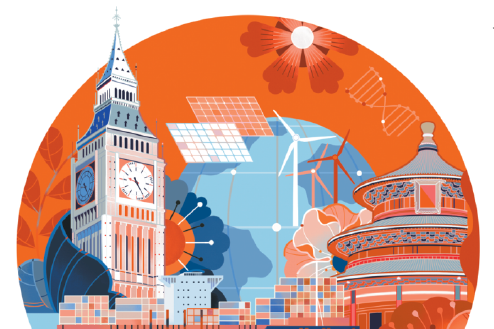
The 50th anniversary of EU-China diplomatic relations in 2025 presents a timely opportunity for the EU to reorient its strategic focus eastward. The anniversary offers a valuable platform to reassess and renew the partnership through new initiatives, agreements and policy dialogue. Rebuilding trust is essential if the EU is to fully leverage this anniversary moment for a constructive pivot toward China. At this historic crossroads, the EU must choose pragmatism over ideology, engagement over confrontation, and independence over submission. Rebuilding a strong, well-managed relationship with China is not merely an option — it is Europe's best hope for navigating an increasingly challenging global landscape.
Li Xing is a Yunshan leading scholar and director of the European Research Center at Guangdong University of Foreign Studies and an adjunct professor of international relations at Aalborg University, Denmark. Jan Oberg is a former professor and co-founder and director of the independent Transnational Foundation for Peace and Future Research, Sweden. The authors contributed this article to China Watch, a think tank powered by China Daily. The views do not necessarily reflect those of China Daily.
Contact the editor at editor@chinawatch.cn.