



A red line that ensures development while protecting biological diversity









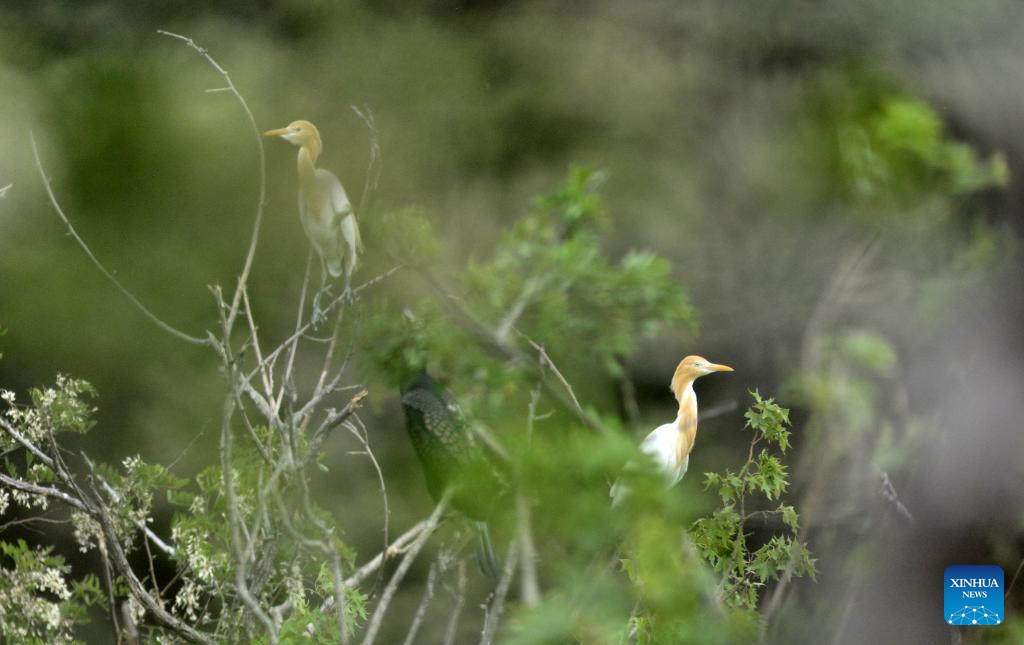
Although we mark May 22 as the International Day for Biological Diversity, as established by the United Nations, it seems the objectives behind marking the day have not been fully realized.
Deforestation, habitat loss and species extinction are continuing at alarming rates.
The WWF's Living Planet Report 2024 revealed a catastrophic 73 percent decline in the average size of monitored wildlife populations from 1970 to 2020.
According to the UN's 2020 Global Biodiversity Outlook 5 report, none of the 2020 UN global biodiversity targets set in Aichi, Japan, in 2010 have been achieved at a global level.
China is not immune. Rising temperatures, retreating glaciers and permafrost degradation, for example, have taken a toll on the number of snow leopards roaming in the Qinghai-Tibet Plateau.
Just like many other countries in the Global South, China faces significant challenges in harmonizing economic development with conservation efforts.
While more than meeting three of the Aichi targets — establishing terrestrial nature reserves, restoring and ensuring important ecosystem services, and increasing ecosystem resilience and carbon storage — China has made progress in 13 others, such as mainstreaming biodiversity and sustainable management of agriculture, forestry and fishery.
According to the Ministry of Ecology and Environment, more than 300 rare and endangered wildlife species have been well restored in China.
The crested ibis serves as an example. The species that has existed for over 60 million years and was once abundant in Northeast Asia was believed to have become extinct in the 1960s because of habitat destruction caused by the excessive use of pesticides and fertilizers.
When researchers discovered seven crested ibises in Yangxian county, Shaanxi province, in 1981, they were believed to be the last survivors of the species. Today, there are at least 5,000 crested ibises in China.
Several factors are behind this resurgence. As China builds an ecological civilization guided by Xi Jinping Thought on Ecological Civilization, a slate of measures have been rolled out for ecological conservation.
China has had various environmental inspections, including one targeting only protected areas, to rule out violations that may jeopardize species habitat. But a key element of the crested ibis' recovery has been the implementation of a red line system, a conservation mechanism that China began exploring around the year 2000.
The initiative encircles areas for critical ecosystems such as biodiversity hotspots and fragile regions. Traditional nature reserves, typically small and species-specific, often exist as isolated pockets. The red line framework bridges these disconnected areas and incorporates regions unsuitable for traditional reserves.
As climate change threatens existing habitats, the red line system strengthens ecological resilience by facilitating migration.
In the red line areas, the authorities permit limited economic activity, compensating residents affected by the restrictions.
Last year, the central authorities rolled out guidelines to essentially establish, by the end of this year, a zone-specific environmental management system.
The initiative features a customized blacklist for project introduction in three categories: those earmarked for priority protection, key control and general control. This ensures that some key areas that are not covered by the red line mechanism are not sacrificed on the altar of economic development.
China's experience in exploring the red line mechanism offers developing nations an alternative path to modernization, resonating well with the theme of this year's International Day for Biological Diversity: "Harmony with nature and sustainable development".
Let's embark on a new journey for biodiversity conservation, drawing inspiration from China's experiences, to protect the planet we call home and endangered species that are our invaluable companions.





