The '1+1+1>3' effect
From 'ASEAN+' to 'China-ASEAN+': a new paradigm for cross-regional cooperation










The first Association of Southeast Asian Nations-China-Gulf Cooperation Council Summit was held in Malaysia in May 2025. The joint statement signaled the emergence of a broader cooperation model — evolving from the traditional "ASEAN+" framework toward the potential for a "China-ASEAN+"model, reflecting a growing trend in cross-regional collaboration anchored in inclusivity, connectivity and shared development.
Since ASEAN expanded to 10 member states in 1999, the "ASEAN+" mechanism has linked the bloc with China, Japan and the Republic of Korea through frameworks such as "10+1" and "10+3", establishing an ASEAN-led regional cooperation paradigm. The "China-ASEAN+" model has emerged at a time of global turbulence, anchoring on ASEAN centrality and reorienting China-ASEAN cooperation as the hub to connect with other regions and organizations. This shift not only reinforces "ASEAN+"but also fosters the "five connectivities" through triangular cooperation frameworks.
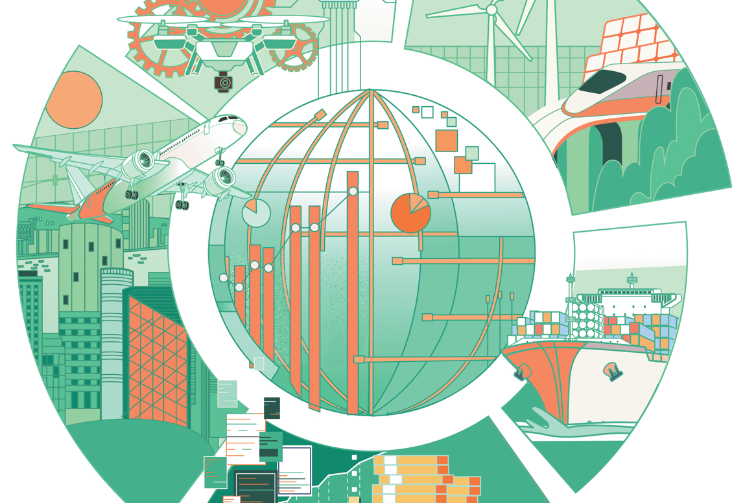
In the ASEAN-China-GCC triad, ASEAN's natural resources, China's industrial capacity and vast market, and the GCC's capital form a synergistic ecosystem that exemplifies the "1+1+1>3" effect. This model aims to inject new vitality into existing mechanisms and scale up the demonstration effect of China-ASEAN cooperation to shape a stable global framework.
The underlying logic of this new cross-regional cooperation model lies in the natural expansion of the sound China-ASEAN interaction into broader triangular relationships. The factors supporting this model's innovation form an organic whole, making "China-ASEAN+"model a valuable exploration of global cross-regional cooperation.
First, the mature practices of China and ASEAN in open multilateralism offer a logically consistent framework for building the "China-ASEAN+" network. The Belt and Road Initiative's principle of "consultation, co-building and shared benefits" has fostered a global network of hard and soft connectivity. Meanwhile, guided by "open regionalism", ASEAN has established inclusive mechanisms, such as the East Asia Summit, advocating collaboration with other regions. The 2019 ASEAN Outlook on the "Indo-Pacific" explicitly supports engaging with other regional mechanisms in areas of shared interest.
Second, countering unilateralism drives real-world demand for global governance reform. The US' "transactional diplomacy" and "America First" policies have fragmented multilateral systems, worsening global governance deficits. While Global South nations face structural constraints, Northern states confront rule vacuums — both seek alternatives to answer the question of "where the world is heading".Against this backdrop, "China-ASEAN+" model promotes non-confrontational cooperation based on equality and inclusivity, upgrading multilateralism to foster interregional connectivity. This gradual model facilitates natural reforms to the world order, addressing the shared challenge of unilateralism.
Third, embracing "inter-block connectivity" aligns with the historical trend from regionalization to global integration. In the era of deglobalization, regional blocs such as the European Union and ASEAN thrived, but the next phase requires connecting these blocs. "China-ASEAN+" pioneers a decentralized model of "interblock connectivity", for example, a potential China-ASEAN-EU climate dialogue embedding the "common but differentiated responsibilities" principle. This model transforms traditional North-South dialogue into multitrack regional consultation, forming a hybrid framework of South-South cooperation and North-South dialogue. Its non-exclusive, development-first features also offer a pathway for the Global South to break free from the "center-periphery" dependency system.
Fourth, deepening China-ASEAN synergy forms a strategic pivot for multipolar governance. As the world craves stability, ASEAN seeks to diversify global engagement, while China steadfastly assumes its role as a responsible power. In this context, the "China-ASEAN+" model breaks free from hegemonic logic, embodying the multipolar trend where equal cooperation replaces unilateral dominance.
Cross-regional cooperation under the "China-ASEAN+" model embodies a profound realignment of national and regional interests, transcending economic pragmatism to reshape global governance by forging a decentralized, multipolar network that drives an equitable world order and inclusive globalization.
To start with, sustaining this model requires robust institutional flexibility to address inherent challenges, starting with reconciling diverging priorities within regional blocs such as ASEAN's 10 nations, the GCC's six states, or the Pacific Islands Forum's 18 members — each harboring distinct development agendas that create complex coordination hurdles. Overcoming such collective action dilemmas necessitates strengthening rule compatibility and identifying shared priorities through regular head-of-state dialogues that reinforce cross-regional consensus.
While internal coherence remains critical, external geopolitical pressures pose equally daunting tests, particularly the US' "Indo-Pacific" strategy anchored in the Quadrilateral Security Dialogue and bilateral alliances, aiming at undercutting China's influence. This highlights the need for the "China-ASEAN+" model to maintain unwavering strategic resolve amid such divisive tactics.
To navigate these intertwined challenges, the model must adopt a multi-dimensional expansion strategy: solidifying political consensus, deepening the interconnections of the industrial, supply and value chains, and prioritizing non-traditional security domains such as digital economies and climate action. These non-sensitive arenas serve as trust-building laboratories, fostering governance ethics that can later extend to traditional security spheres.
As global governance teeters between fragmentation and reinvention, the "China-ASEAN+" model offers more than a regional framework — it presents a blueprint for resilient, multipolar collaboration in the 21st century. By balancing internal coordination with external adaptability, this model may well define the next era of inclusive global order.
Zhai Kun is a professor at the School of International Studies and deputy dean of the Institute of Regional Studies at Peking University. He Jiabei is a PhD candidate at the Institute of Regional Studies at Peking University. The authors contributed this article to China Watch, a think tank powered by China Daily.
Contact the editor at editor@chinawatch.cn.