Sentiment in Canada reflects uneasy US ties









Canadians see the United States as both their country's biggest threat and their most important ally, according to recent data released by the Pew Research Center.
"There is a long history of tension in the relationship," said Richard Johnston, professor emeritus of political science at the University of British Columbia. "Both things are true."
Johnston said the contradictory sentiment is rooted in the structural imbalance between the countries. "The difference in scale has always been there, and that is the basis of threat perceptions," he told China Daily.
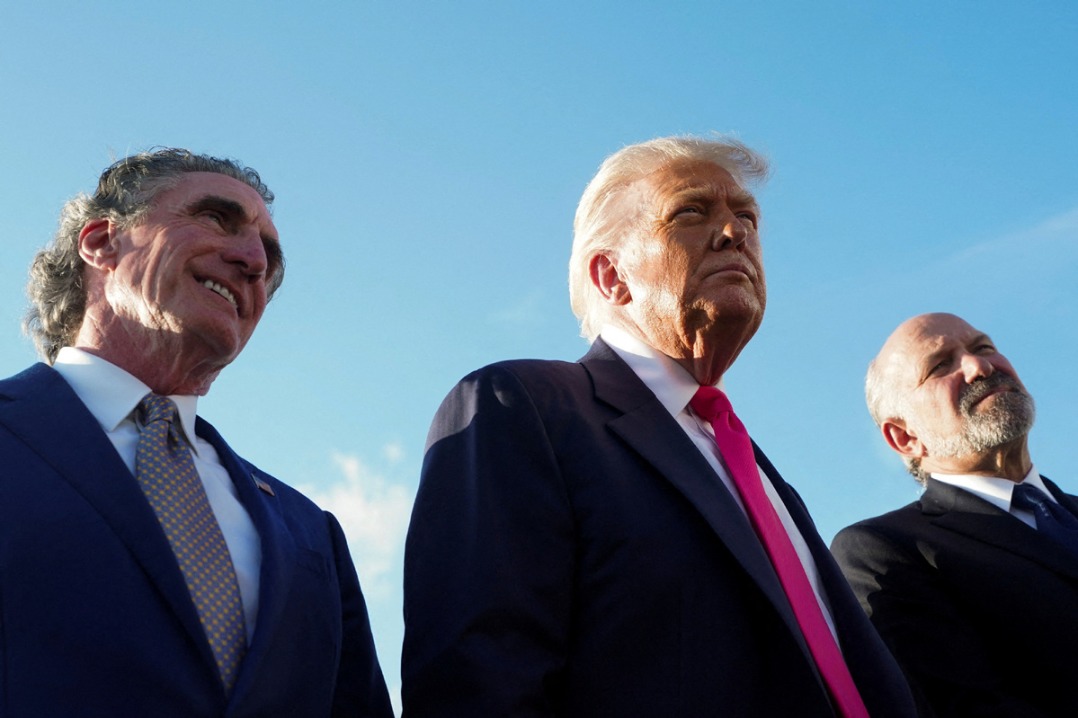
That ambivalence, Johnston said, reached a peak in recent years, especially during the Trump era.
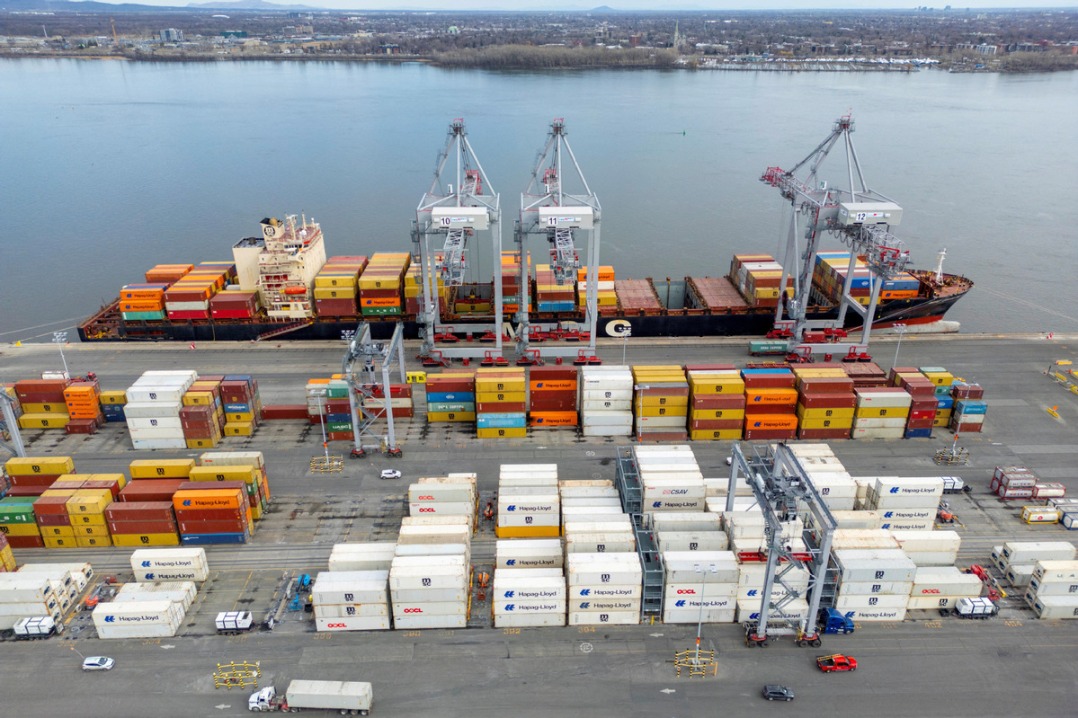
"Trump is using tariff threats with potentially dire implications," he said. "Some of the tariffs are actually in force, and Trump is using them to force concessions," he said.
The survey, which was conducted in the first four months of this year, was released on July 8.
It asked residents in 25 countries to name the nation they see as the greatest threat, and the one they view as their most important ally.
Only in Canada did a majority put the US at the top of both lists: 55 percent said the US was the most important ally, and 59 percent said the US was the biggest threat.
Beyond trade, Johnston said concerns over border security and the breakdown of traditional alliances have heightened unease.
"The border has become a nightmare, at least occasionally, as ICE and the Border Service have become testy," Johnston said.
Tom Miller, a 42-year-old Toronto resident, told China Daily, "We've always been pretty tight with the United States, but lately, it feels like they're not treating us like partners anymore."
"Tariffs on our goods, acting like we're just part of them, and that's not exactly friendly. I hope things get better between us in the future, and maybe this is just a rough patch," he said.
Johnston added that the Trump administration's rhetoric and policies have had a clear impact on Canadian behavior.
"Canadian visits to the US have dropped massively," he said. "Canadian purchasing has been redirected away from US sources. US wines have been removed from the shelves of government liquor stores."
Military dependence also feeds the anxiety, Johnston noted. "Trump's attacks on NATO seem like a betrayal."
"There has even been fear that critical operating codes for the F-35 will be withheld," he said, pointing to discussions around Canada potentially joining a European defense procurement scheme.
Nelson Wiseman, professor emeritus of political science at the University of Toronto, said the dual sentiment is not contradictory but rather a reflection of how people interpret current versus historical realities.
"Right now, the United States is treating Canada aggressively and poorly — not like an ally," Wiseman told China Daily.
"However, if you look at what is actually happening on the ground … Canadians and Americans are cooperating militarily, diplomatically and otherwise."
He noted that perceptions of the US as a threat often spike in response to trade disputes. "It's 100 percent about trade and tariffs," he said. "That's what it's all about."
"If some sort of trade arrangement is arranged between Canada and the United States in the next little while ... all of a sudden, the idea of the US being an enemy will really fade," he said.
Asked whether Canada's reliance on the US fuels this ambivalence, Wiseman said, "Yes, Canada is overly reliant on trade and military issues, and we live right next door to each other."
While he had expected a trade arrangement to be finalized by now, he acknowledged that negotiations remain difficult.
"Sure, Canada's the much smaller economy. The United States can hurt Canada a lot more than Canada can hurt the United States," he said. "But the United States is dependent on Canada for certain things."
Tariffs on key Canadian exports like aluminum and oil have remained relatively low, Wiseman said, pointing to strategic considerations.
Despite frictions, he said, a lot of the bilateral trade continues under the terms of the US-Mexico-Canada Agreement signed five years ago.
gaoyang@chinadailyusa.com