



Talent needed to tell world China's story
Cultivating professionals who have language, cultural competence is key









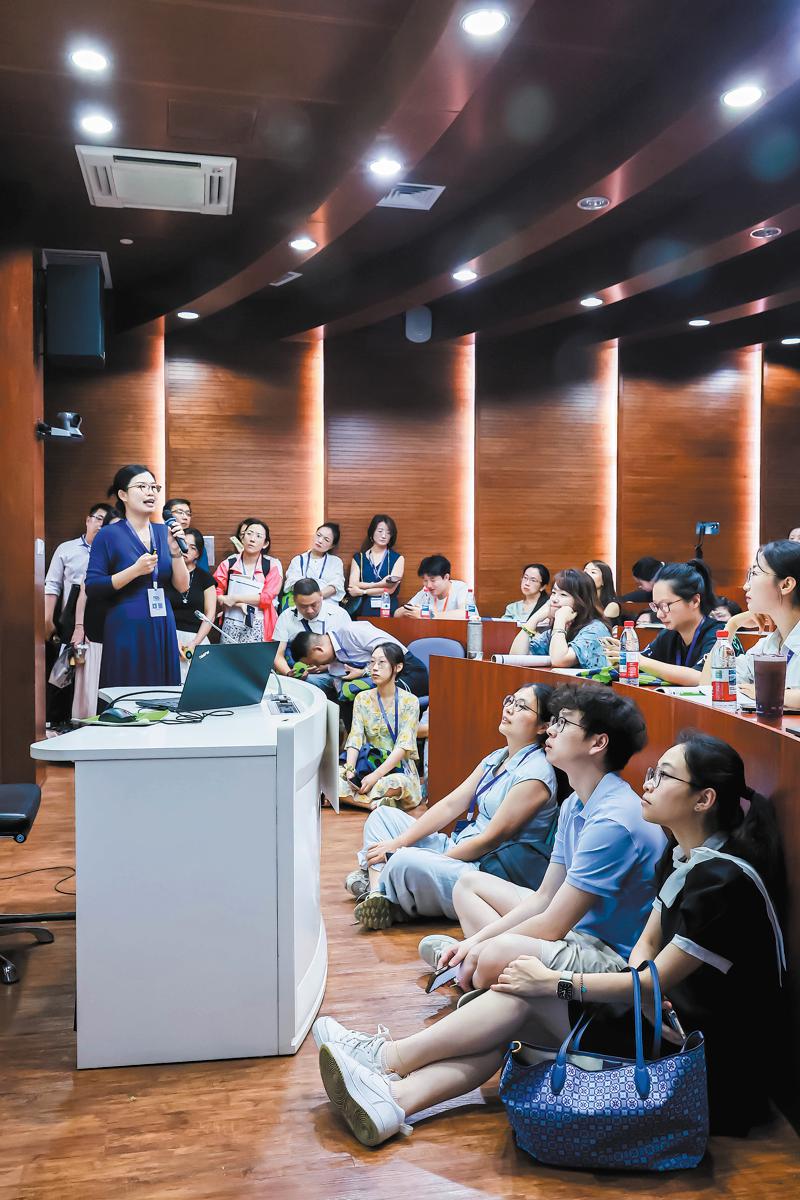
As China deepens its global engagement through the Belt and Road Initiative, scholars are calling for the cultivation of talent equipped not only with language proficiency, but also with strong intercultural communication skills that will enable them to effectively tell China's story to the world.
At the Global English Education China Assembly, which was jointly hosted by China Daily, Beijing Normal University and Shanghai International Studies University from Thursday to Sunday in Beijing, educators emphasized the urgent need to train professionals with a blend of language ability, cultural understanding and global communication competence.
Cheng Aimin, a professor at Nanjing University, emphasized that language alone is not enough.
"Even though many Chinese students learn English, it doesn't guarantee effective cultural outreach, especially in non-English-speaking countries," he said at the Understanding China Forum on the Global Communication of Chinese Culture, a concurrent event of the assembly.
Cheng stressed the need to develop a new generation of international Chinese language professionals who can operate fluently in both linguistic and cultural contexts.
"We need talent who can think across cultures and interpret meaning — not just words," he said, adding that cultural translation cannot rely solely on artificial intelligence.
Multilingual and intercultural competent talent is essential to the high-quality development of the BRI, Cheng said, given that participating countries and regions have diverse educational systems, labor markets and cultural expectations.
"We need to adjust our talent training models in line with global trends," he said.
The professor said strong disciplinary foundations, openness, practical engagement and targeted training are needed to develop international Chinese language talent.
"Programs should foster global vision and essential skills such as communication, organizational ability and AI literacy," he said.
According to the Ministry of Education, China supports Chinese language learning in more than 190 countries and regions, with 86 of them having integrated Chinese into their national education systems.
"The number of Chinese learners worldwide now exceeds 30 million," said Du Jiangfeng, vice-minister of education.
Zhang Xinsheng, a professor at Richmond American University London, highlighted the need for practical, engaging and culturally rooted Chinese language education abroad.
"About 90 percent of Chinese learners are outside of China," he said. "Many of them only study for two hours a week during a 12-week term."
Based on his years of experience teaching Chinese in the United Kingdom, Zhang emphasized the importance of making language learning efficient and relevant.
"We should treat language as a window into culture, sparking curiosity that drives learning in a short amount of time," he said.
Cultural values are deeply embedded in language use, Zhang added. For instance, understanding why Chinese people build personal relationships before doing business reveals deep cultural contexts, Zhang said.
Meanwhile, foreign language professionals in China are also playing a vital role in fostering intercultural dialogue and helping international audiences better understand China.
China has established a comprehensive foreign language education system spanning primary, secondary and higher education. In the latest catalog of undergraduate majors, the foreign languages and literature category includes 104 programs covering more than 105 languages, according to the Ministry of Education.
Zhang Hongling, a professor at Shanghai International Studies University, said that the humanistic goals of foreign language education in China are increasingly reflected in curriculum standards and guidelines.
"We learn a language not just for translation or daily communication," she said. "More importantly, language helps us position ourselves and interact with others."
Zhang introduced a three-step model for promoting intercultural dialogue in English language education: comparing and contrasting cultures, engaging in dialogue to enhance mutual understanding and reflecting to encourage collaboration.
These activities, she said, aim to deepen learners' understanding of Chinese culture, strengthen their intercultural competence and develop their ability to share China's stories with the world.
"Intercultural foreign language education focuses on building cultural competence by teaching both language knowledge and communicative skills," Zhang said.
zhaoyimeng@chinadaily.com.cn







