Japan must fulfill its postwar responsibilities









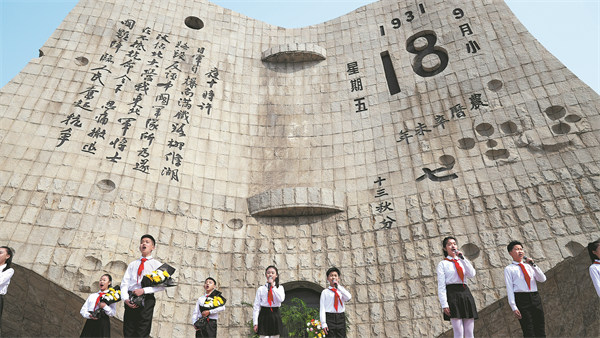
The Japanese invaders caused untold suffering to the Chinese people before and during World War II. Yet after the end of the war, unlike Germany, Japan did not atone for the atrocities its imperial army committed in the eight years preceding World War II and during the course of the war.
The Chinese People's War of Resistance Against Japanese Aggression (1931-45) was central to the World Anti-Fascist War (World War II). However, after World War II, the narrative that the World Anti-Fascist War in Asia was primarily between Japan and the United States became widespread, distorting history and obscuring the truth about the main Eastern theater of the war.
The atomic bombings of Hiroshima and Nagasaki are often portrayed as the decisive factor behind Japan's surrender in World War II. This one-sided emphasis, which reinforces the US-centric narrative, is a complete misinterpretation of history.
Japan was defeated because of a prolonged war of attrition in China that drained its national and military strength, leading to its collapse. Therefore, I believe the primary contributor to the victory of anti-fascist forces in Asia was the Chinese People's War of Resistance Against Japanese Aggression.
Since our secondary school years, we have been taught about the "Pacific war", a result of politically-driven memory shaping promoted by Washington, which defines the war in the Asia-Pacific as a war between the US and Japan, diminishing its true significance and severely distorting history.
The colonial war launched by Tokyo was aimed at seizing Chinese territories and transforming China into a resource base and market, resulting in the loss of tens of millions of lives and systematically seeking to plunder strategic resources such as coal, soybean and petroleum.
Unfortunately, the US occupation of Japan deprived the country of the opportunity to develop strategic autonomy. As seen in the recent House of Councillors election in Japan, which highlighted deep social divisions in the country, Tokyo lacks the historical foundation to reflect on its past. This absence, in turn, has fueled the right-wing drift in Japan.
Only by fully acknowledging that the Imperial Japanese Army was defeated by the Chinese people in the war of resistance can Japan truly atone for the atrocities its fascist forces committed in China and other Asian countries and reaffirm the core principles of its pacifist Constitution — that it would never again wage a war or invade another country.
Japan surrendered to the US-led Allied forces only after facing defeat in China. Yet the prevailing postwar narrative that "Japan did not lose to China" reflects the misunderstanding of both Japan and its neighboring countries. Many scholars superficially attribute Japan's defeat to the US, ignoring deeper analysis.
The number of Japanese troops in China at the time proves that Japan's strategic focus remained on China. In 1941, there were about 1.38 million Japanese troops in China, or about 65 percent of Japan's total ground forces. By 1945, this number had increased to 1.98 million troops, exceeding the number of Japanese military personnel across the Pacific. It was in China that Japan's war machinery was tied down and steadily eroded. The relentless war of attrition led by the Chinese people drained the Japanese military's strength, ultimately leading to its defeat.
In the early stages of its aggression, Japan gravely miscalculated both the national strength of China and the Chinese people's resolve to resist Japanese aggression, despite Emperor Hirohito, Japan's wartime supreme commander, repeatedly emphasizing since 1941 that "China must not be underestimated".
While Japan relied on the emperor's authority to force soldiers and civilians into its war machine, the Chinese people's resistance was fundamentally voluntary — a conscious collective choice, not coerced sacrifice. It is imperative therefore that Japan learn from history and, in doing so, foster a more constructive China-Japan relationship.
Beyond US influence, Japan's use of the neutral term "end of the war" is an attempt to avoid acknowledging the real reason for its defeat in World War II. By designating Aug 15 as the "memorial day for the end of the war", and referring to the belligerent Japanese army personnel who died in the war as "war dead", rather than "dead warmongers", Japan is trying to obscure its brutal wartime past. And the visits to Yasukuni Shrine, which honors 14 class A war criminals, by high-ranking Japanese officials are part of Tokyo's systematic attempt to deny history.
Even more troubling is Japan's "sacred decision" narrative, which credits the emperor for ending the war. This narrative enabled the continuation of Japan's power structure in the postwar era, preventing a genuine sense of responsibility for Japanese atrocities from taking root in the country. Also, the Tokyo Trial convicted only a handful of individuals, leaving many others unaccountable.
Postwar Japan has failed to atone for the atrocities the Japanese army committed before and during World War II. On the 80th anniversary of the victory in the World Anti-Fascist War, Japan appears to be sliding back into the prewar period. This dangerous trend is fueled by US support and constraints, which have made Tokyo dependent on Washington. But Japan must understand the global significance of the Chinese people's war of resistance and atone for its past atrocities.
The author is a professor emeritus, Yamaguchi University, Japan.
The views don't necessarily represent those of China Daily.
If you have a specific expertise, or would like to share your thought about our stories, then send us your writings at opinion@chinadaily.com.cn, and comment@chinadaily.com.cn.