Global Governance Initiative a timely call










President Xi Jinping has proposed the Global Governance Initiative at a critical moment in history — at a time when the international system is unable to manage global challenges, from climate change and pandemics to economic instability and geopolitical tensions.
Given the grave challenges the world faces today, the GGI is not just a diplomatic gesture, but the best way to ease the strain the global system is under, and build a more just, inclusive and effective framework for international cooperation.
The GGI is built on five core principles. The first is sovereign equality, under which every country, regardless of size, strength and wealth, should have an equal voice in global decision-making and get a fair share of the benefits of global cooperation.
The second is international rule of law, which is needed to ensure global governance is guided by universally recognized norms and laws, not selective interpretations or double standards.
The third is multilateralism, which would promote dialogue and cooperation among countries, and oppose unilateralism and bloc-based confrontation.
It is followed by a people-centric approach, under which people's well-being and sustainable development takes precedence over geopolitical competition.
And the last is a focus on real actions, which would make sure governance delivers tangible outcomes, instead of being mired in rhetoric or symbolic gestures.
Unlike these principles, the West-led global governance mechanisms often fall short on fairness, accountability and inclusivity, because they have been shaped by a hierarchy that privileges powerful countries, and oftentimes sidelines smaller or less-influential states.
This imbalance is further exacerbated by the punitive measures — sanctions, economic coercion and political isolation — taken by powerful countries against those that do not align with Western interests. Although the West often justifies such measures under the guise of "rules" or "values", the application of these rules is inconsistent. Allies of the West are shielded from scrutiny, while non-aligned countries face disproportionate consequences.
This system is rooted in the West's control over key international institutions. Veto powers, financial dominance, and structural advantages allow Western powers to bend global rules to serve their selfish interests. In fact, the impunity with which Western powers militarily intervene in other countries' internal affairs, cause financial crises, and violate human rights undermines the legitimacy of global governance.
It's time for the world to correct these distortions by reaffirming the principle that all countries, big or small, rich or poor, should be equal participants in shaping global outcomes. Only through genuine inclusivity can the international system act fairly, maintain global stability, and promote shared development.
Instead of being an isolated proposal, the GGI is part of a broader effort by China to promote global cooperation and reform. Beijing recognizes that the current world order, dominated by a narrow circle of wealthy states, no longer reflects the realities of a multipolar world and thus should be reformed to ensure emerging economies and developing countries play their due roles in shaping international norms and institutions.
The Global South, represented to an extent by BRICS and the Shanghai Cooperation Organization, is advocating for a global governance system that treats all countries equally, and seeking to help build a system rooted in sovereign equality, mutual respect and inclusive decision-making. The Global South's goal is not to replace one bloc with another, but to improve global governance to reflect the realities of a multipolar world.
Through initiatives like the Belt and Road Initiative, the Global Development Initiative, the Global Civilization Initiative, and the Global Security Initiative, China has emphasized the importance of shared benefits, sovereign equality and respect for different development paths. The GGI upholds this principle, positioning China as a champion of inclusive multilateralism.
The GGI is both a critique of the existing system and a constructive alternative. It challenges the selective and often coercive practices of Western-led governance, while proposing a model grounded in cooperation, international law and sovereign equality. By advocating reforms that align global governance with fairness and inclusivity, China aims to reform the international order to better serve the collective interests of the Global South and the broader global community.
The GGI is a call to move beyond the Cold War mentality and protectionism so as to reform the global governance system, so that it reflects the interconnected realities of the 21st century.
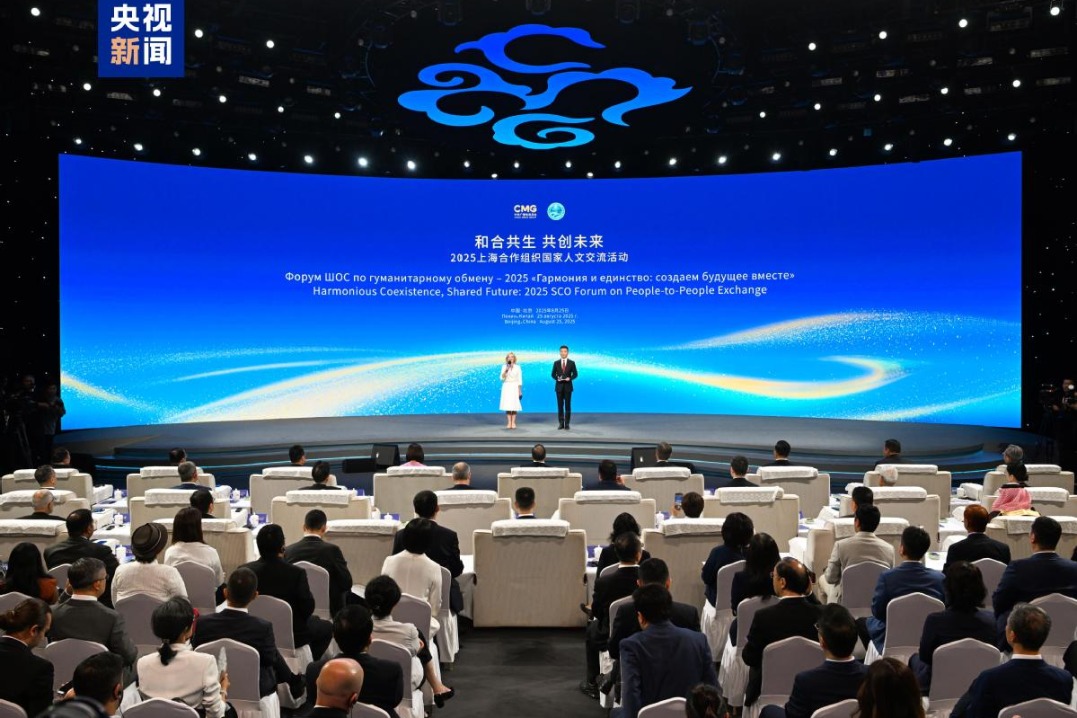
President Xi's proposal has drawn global attention, with many recognizing the urgent need to reform the global governance system. The recent SCO Summit in Tianjin, where the GGI was proposed, underscores the growing importance of multilateral cooperation in addressing global challenges.
We have reached a historical inflection point. Problems like climate change, pandemics, inequality and conflicts that we face today are too complex and interconnected for any one country to solve. By upholding and updating the rules of cooperation, in order to meet today's realities, the GGI is a timely proposal to update the rules of cooperation instead of an attempt to create a "new world governance mechanism" — and thus should be welcomed and implemented.
The author serves as a director of BRISL, an independent and pioneering Sri Lankan-led organization. The views don't necessarily reflect those of China Daily.
If you have a specific expertise, or would like to share your thought about our stories, then send us your writings at opinion@chinadaily.com.cn, and comment@chinadaily.com.cn.