



In Pakistan, Chinese seeds give farmers 'a lifeline'









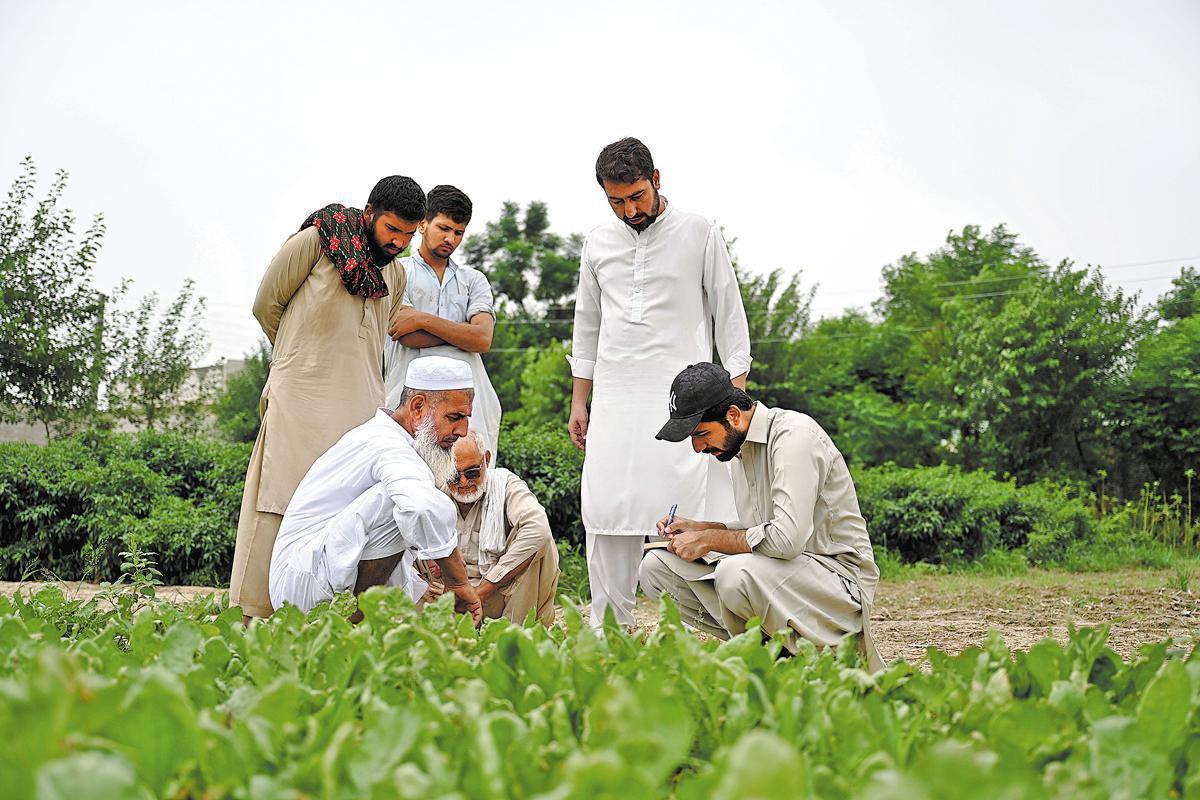
ISLAMABAD/TIANJIN — Muhammad Safdar still remembers starting work in the fields when he was just 12 years old. Now 62, the veteran farmer from Attock district of Pakistan's eastern Punjab province has spent five decades battling pests, erratic weather and fluctuating market prices.
In recent years, Safdar said, sudden climatic changes had made farming more difficult, until he decided to experiment with Chinese vegetable seed varieties, which he had heard were more resilient, higher-yielding and better suited to withstand extreme weather conditions.
"Over the past five decades, I have seen farming change with the seasons, but in recent years, sudden climatic shifts have made weather patterns unpredictable, and local varieties no longer produce the same yield. Chinese seeds, however, are real fighters, they know how to survive against all odds and protect the farmer's livelihood," Safdar told Xinhua as he walked through rows of green fields, inspecting the thick, healthy saplings of his cauliflower crop.
He noted that Chinese varieties also fetch a higher price in the market. While local cauliflower sells for around 100 Pakistani rupees ($0.36) per kilogram, the Chinese variety commands about 150 Pakistani rupees because of its larger size, pure white florets and superior taste — qualities that customers are happy to pay extra for.
For Safdar, the impact is tangible. "Chinese vegetables pay for our food, medicine, clothes and other expenses. They take care of all our financial needs, giving us a sense of financial independence and enabling us to live a more comfortable and prosperous life," he said.
During his field visit, Safdar was accompanied by Sajjad Ahmad, managing director of Al Manahil Seeds, a distributor of vegetable seeds in Pakistan, and Muhammad Abrar, a research and development officer in the agricultural sector. Both have long worked to introduce Chinese varieties to Pakistani farmers.
Ahmad has collaborated with Chinese agricultural institutions for a decade, including a three-year stint with the Tianjin Academy of Agricultural Sciences, to bring high-quality seeds to Pakistan. In recent years, Tianjin's cauliflower seed exports to Pakistan have accounted for over 70 percent of Pakistan's annual planting, helping to address bottlenecks in the local cauliflower industry.
"Chinese seed varieties are excellent, and farmers are extremely satisfied with the yield," Ahmad said. "Even poor farmers with small farming lands can almost double their harvest on the same land compared to local varieties, giving them both more produce to sell and a better price in the market."
The progress Safdar and his fellow farmers have made in Pakistan has its roots in Tianjin, a northern Chinese port city that has emerged as a hub of agricultural innovation.
According to Sun Deling, chief scientist of China's national cauliflower breeding and a researcher at the Vegetable Research Institute of Tianjin Academy of Agricultural Sciences, his team began exploring international markets after meeting domestic demand. Since 2010, they have traveled repeatedly to Pakistan, India, Vietnam and other countries, tailoring new varieties to local climatic conditions.
"Up to now, we have established demonstration bases in more than 10 countries, including Pakistan, Vietnam and France, testing over 800 varieties," Sun said. "Because of their superior quality and reasonable price, our seeds are well-received by farmers and distributors in the countries involved in the Belt and Road Initiative."
By the first half of 2025, annual cauliflower seed exports, which were cultivated by Sun's team, had reached 11 metric tons, marking a shift from past reliance on imports to becoming a major exporter. Cauliflower has since grown into one of China's largest vegetable seed export crops, boosting the global competitiveness of Chinese seed companies.
In Pakistan, the results have been transformative. Chinese seeds now cover large areas of farmland, improving yields and raising incomes. Farmers like Safdar not only produce more, but also gain resilience against unpredictable weather patterns that once threatened their livelihoods.
Back in Tianjin, officials also emphasize the broader vision behind these successes. Guan Anrong, deputy director of the foreign cooperation department at the Tianjin Municipal Agriculture and Rural Affairs Commission, noted that Tianjin's cauliflower varieties have been promoted on about 67,000 hectares across Shanghai Cooperation Organization countries.
Beyond cauliflower, Guan said Tianjin has also exported water-saving irrigation equipment to Kazakhstan, Uzbekistan and Pakistan, helping to build modern water-efficient agricultural bases. He added that in animal husbandry, Tianjin-based Aoqun Animal Husbandry has provided technical services that helped Saudi partners reduce lamb mortality rates from more than 20 percent to under 10 percent.
"Looking forward, Tianjin will leverage its strengths in agricultural science and equipment manufacturing to deepen cooperation with SCO countries," Guan said. "We will promote high-quality seed varieties, advanced agricultural technologies, and modern facilities to help partner countries improve production capacity and ensure food security."
For experts like Muhammad Abrar, this vision is vital. "Farmers here expect local production of hybrid seeds so that costs decrease and seeds become more affordable," he said. "Expanding SCO joint research laboratories to member countries like Pakistan would further adapt seeds to local climates and bring benefits to small farmers."
The story of cauliflower is only one example, but it illustrates how science-driven cooperation is changing lives on the ground. What began in the greenhouses of Tianjin has taken root in the fields of Punjab, offering farmers new tools to fight climate change, secure livelihoods, and build a better future.
For Safdar, these seeds are not just crops. They are, as he puts it, "a lifeline", a symbol of how China-Pakistan agricultural cooperation, under the framework of the SCO, is cultivating resilience and prosperity across communities.
XINHUA


- Senior enterprise official facing probe
- China's anti-graft authorities reveal extent of year's work
- Former Haikou Party chief gets death sentence with reprieve
- Purchase of US-made weapons to push Taiwan closer to the peril of war: spokesman
- WIC calls for submission of cultural heritage digitalization cases
- China calls for global opposition to Japanese neo-militarism










