Time to end the Philippine fishing supply farce









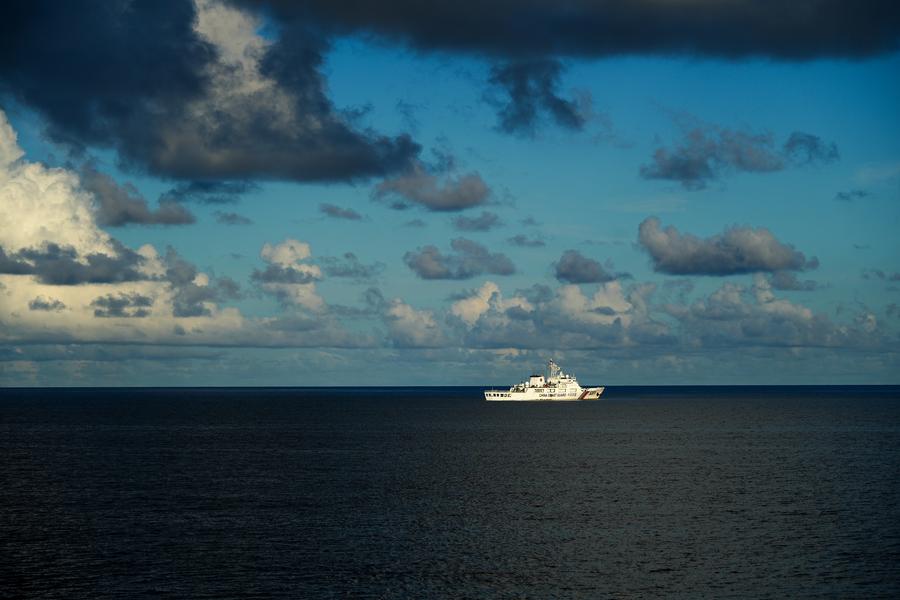
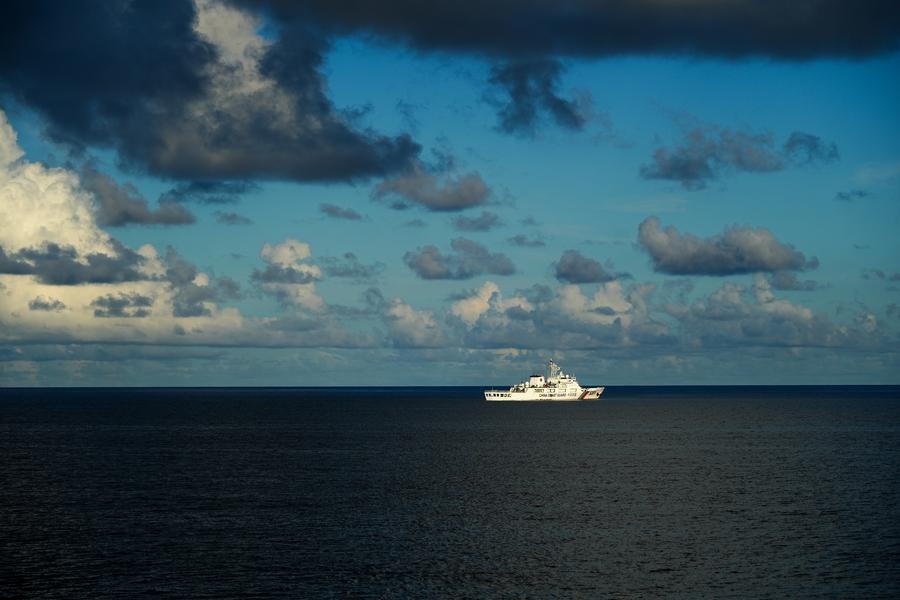
The recent self-orchestrated "fishing supply show" by the Philippines in the South China Sea, located dozens of nautical miles from China's Huangyan Dao (Scarborough Shoal), ended abruptly due to effective countermeasures from Chinese maritime forces. Manila's so-called "fishery activities" and "fishing vessel resupply operations" were nothing more than a pretext for maritime infringement and provocation. This political manipulation amplified by media hype, represents an absurd and laughable maritime farce.
Closer examination of the details reveals the Philippines' ulterior motives. Operationally, Manila organized a large-scale fleet of official vessels under the guise of "fishery resupply", using it as a cover for actual infringement and provocation. Tactically, it concealed vessel signals to evade monitoring and tracking. On the publicity front, it coordinated media campaigns to portray itself as the "victim". Almost simultaneously, high-level Philippine officials baselessly labeled China's establishment of a national nature reserve at Huangyan Dao as a "gray zone threat". Such inverted rhetoric only adds to Manila's track record of obfuscating and misleading international opinion on South China Sea issues.
From an international law perspective, a country's implementation of environmental protection policies within its sovereign territory is both a common practice and a legitimate right worldwide. Whether it involves establishing national parks, nature reserves, or designating no-fishing zones and closed seasons, these are universally recognized environmental protection measures. China's designation of a nature reserve at Huangyan Dao aims to safeguard the fragile coral reef ecosystem and marine biodiversity, aligning with international treaties such as the United Nations Convention on the Law of the Sea (UNCLOS) and the Convention on Biological Diversity (CBD). The Philippines' framing of China's legitimate environmental measures as a "gray zone threat" is not due to ignorance of international law, but rather a deliberate distortion driven by self-interest, even at the cost of openly disrupting and undermining regional marine environmental governance.
Of particular concern is the emerging trend in the Philippines' attempt to whitewash its illegal claims through new narrative strategies. Indications suggest that Philippine think tanks, in collaboration with European human rights research institutions, are trying to link the erroneous 2016 South China Sea arbitration ruling — regarding alleged "traditional fishing rights" for Filipino fishermen at Huangyan Dao — with provisions in the International Covenant on Economic, Social and Cultural Rights (ICESCR) on "access to food" and "freedom from hunger". This effort seeks to reframe illegal maritime claims as so-called "livelihood issues" and "human rights concerns". Such tactics not only abuse international human rights conventions but also profane the spirit of international rule of law, and they are doomed to fail.
A closer look at the Philippines' purported "fishing resupply" operations uncover a glaring paradox: A government truly concerned with fishermen's welfare should guide them to operate in legal waters, rather than pushing them to the forefront of territorial seas and maritime confrontations. A government genuinely focused on sustainable fishery development should support, not oppose, measures aimed at protecting marine ecosystems. Yet, the current Philippine administration's actions are the exact opposite. Manila has never genuinely prioritized the interests of Filipino fishermen in recent years; instead, it treats them as pawns. In fact, these large-scale, organized "supply shows" reflect a clear dependency in the Philippines' behavior on South China Sea issues: First manufacture incidents, then play the victim to garner international sympathy, and through sustained provocations, create pretexts and conditions for external powers to intervene.
The so-called "concerns" and "worries" expressed by some Western countries, including the United States, regarding China's national nature reserve at Huangyan Dao exemplify a typical double standard in the application of international law. When these nations establish marine protected areas in their own waters, they hail it as fulfilling international responsibilities; but when China does the same, it is vilified as "destabilizing". Under the banner of "upholding international law", these countries are in reality stirring up trouble in the South China Sea, which only encourages the Philippines to exploit extra-regional forces for opportunistic behavior.
Alarmingly, while staging its maritime provocations, the Philippines continues to accelerate military and security cooperation with extra-regional countries, seeking external backing for its illegal claims. Recently, Manila has frequently conducted joint military exercises with the United States, Japan, and others, with defense collaborations evolving beyond traditional joint drills toward deeper institutionalized integration. A prominent example is the implementation of troop access agreements, which streamline procedures for military personnel exchanges, equipment deployments and logistical support, paving the way for more convenient and frequent military presence of extra-regional forces in the Philippines. The US continues to provide substantial maritime security aid to enhance the Philippines' maritime law enforcement and military capabilities. Following the entry into force of the Japan-Philippines Reciprocal Access Agreement, the two sides promptly launched joint exercises, ostensibly under low-sensitivity labels like "humanitarian assistance" and "disaster response", but in essence quietly building joint operational capabilities targeted at specific objectives. The Philippines' strategy of "outsourcing" its national security to extra-regional powers may appear as a shortcut to elevate its status, but it is in fact a risky gamble that undermines strategic autonomy and regional stability.
As a steadfast guardian of regional peace and stability, China has maintained strategic composure and a highly responsible approach on South China Sea issues. On one hand, in response to deliberate provocations by Philippine vessels, China firmly safeguards its national sovereignty while exercising restraint, upholding order through professional and standardized law enforcement actions. On the other hand, the door to dialogue remains open; initiatives for low-sensitivity functional cooperation proposed years ago are still on the table for the Philippines, demonstrating China's sincerity and patience. China's actions embody the responsibility expected of a major power and contribute to creating favorable conditions for maintaining peace and stability in the South China Sea. The facts of recent years clearly show that every provocation by the Philippines in the South China Sea inevitably faces intensified countermeasures from China's efforts to protect its rights. Manila must recognize this reality.
Ding Duo is the director of the Center for International and Regional Studies, National Institute for South China Sea Studies.
The views don't necessarily represent those of China Daily.
If you have a specific expertise, or would like to share your thought about our stories, then send us your writings at opinion@chinadaily.com.cn, and comment@chinadaily.com.cn.