No wriggle room on binding commitments: China Daily editorial









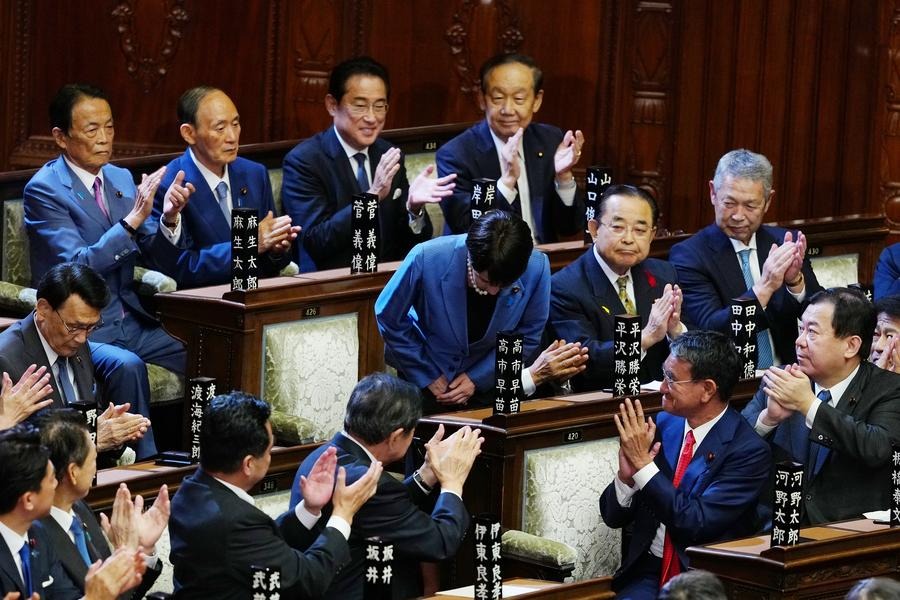
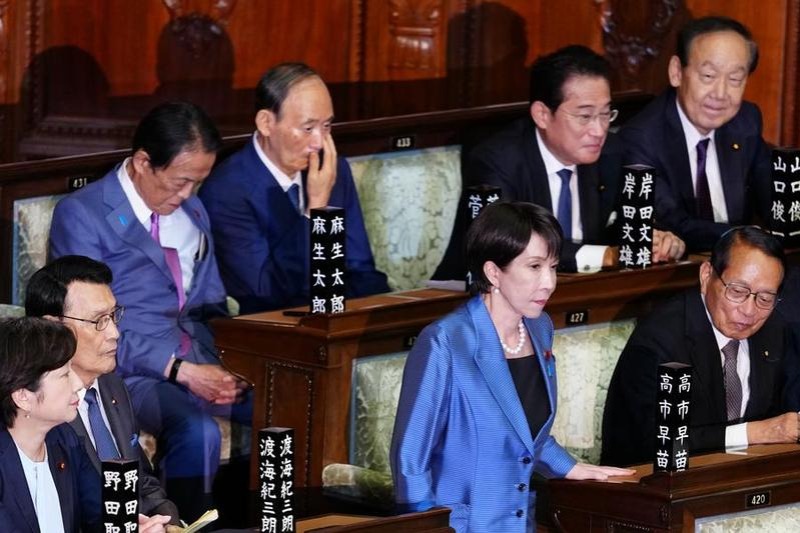
Since Japanese Prime Minister Sanae Takaichi made erroneous and dangerous remarks on the Taiwan Strait situation in the Diet on Nov 7, Beijing has lodged strong oppositions and made solemn demands that the Japanese government retract those remarks. But instead of doing so, the Japanese side has continued to equivocate, selectively citing historical legal documents and distorting relevant issues in an attempt to help Takaichi shirk her responsibility and mislead the international community.
Some recent statements by Takaichi and Japanese government officials have only deepened concerns. On Tuesday, when asked in the Diet whether Taiwan could be a "survival-threatening situation", Takaichi responded that potential cases are not predetermined and would be judged individually based on specific circumstances.
A day earlier, Japanese Foreign Minister Toshimitsu Motegi reiterated parts of the 1972 Sino-Japanese Joint Statement, saying Japan "fully understands and respects" China's position on the Taiwan question and maintains its stand under Article 8 of the Potsdam Proclamation, while also expressing the hope that the Taiwan question can be resolved peacefully through dialogue.
At first glance, such remarks might be interpreted as being conciliatory messages from the Takaichi government. Yet a closer look reveals a familiar pattern of deliberate omission and distortion.
As a Chinese Foreign Ministry spokesman pointed out, while the Japanese side repeated some clauses of the 1972 Sino-Japanese Joint Statement, it conspicuously avoided reiterating its core and indispensable commitments: that Japan recognizes the government of the People's Republic of China as the sole legal government of China, and that Taiwan is an inalienable part of China's territory. When citing the Cairo Declaration, it mentioned Taiwan but sidestepped the crucial fact that Taiwan was among the territories Japan had stolen from China.
Even more troubling, Japan has juxtaposed the 1972 Sino-Japanese Joint Statement with the so-called Treaty of San Francisco, in an attempt to resurrect the long-discredited fallacy that Taiwan's status is "undetermined". This violates Japan's commitments and the fundamental status of Taiwan which is clearly determined in international law.
Chinese Foreign Minister Wang Yi made it unequivocally clear that Taiwan's status as Chinese territory is affirmed by a complete chain of historical and legal facts, spelling those out: The Cairo Declaration of 1943 stipulated that all territories stolen by Japan from China, including Taiwan, must be restored to China. The Potsdam Proclamation reaffirmed this obligation, and the Japanese Instrument of Surrender committed it to carrying out these terms in good faith. These terms undoubtedly remain legally binding on Japan today. The 1972 Sino-Japanese Joint Statement and the 1978 Treaty of Peace and Friendship between China and Japan further codified Japan's clear commitments on the Taiwan question, leaving no room for ambiguity.
All these truths have been explicitly acknowledged by successive Japanese leaders and officials. The Takaichi government's attempts to renege on these commitments are both shameful and wantonly harmful to Japan's credibility and its relations with China.
This year marks the 80th anniversary of victory in the Chinese People's War of Resistance Against Japanese Aggression (1931-45) and the World Anti-Fascist War, as well as the 80th anniversary of Taiwan's restoration to China. Japan's colonial rule over Taiwan for half a century and the grave crimes it committed during that period impose a special historical responsibility on the country. At such a moment, it is egregious misconduct for the sitting Japanese leader to send wrong signals suggesting possible military intervention in the Taiwan question.
Japan's recent actions further heighten alarm. The Takaichi government has sharply increased the country's defense spending, despite it having steadily increased for 13 consecutive years. It has also revamped the country's security policies, loosened the constraints on collective self-defense to seek offensive strike capabilities, and it is pushing for reviewing the country's long-standing nonnuclear principles to allow it to host nuclear weapons, the first step on a slippery slope. Given Japan's history of aggression, these moves inevitably raise questions about where the country is headed.
The Taiwan question is a red line that must not be crossed. Now that Japan has dug itself into a hole, the first thing it should do is to stop digging. If the Takaichi government of Japan fails to draw the right lessons from the current crisis caused by itself, it is steering the country in a dangerous direction.